

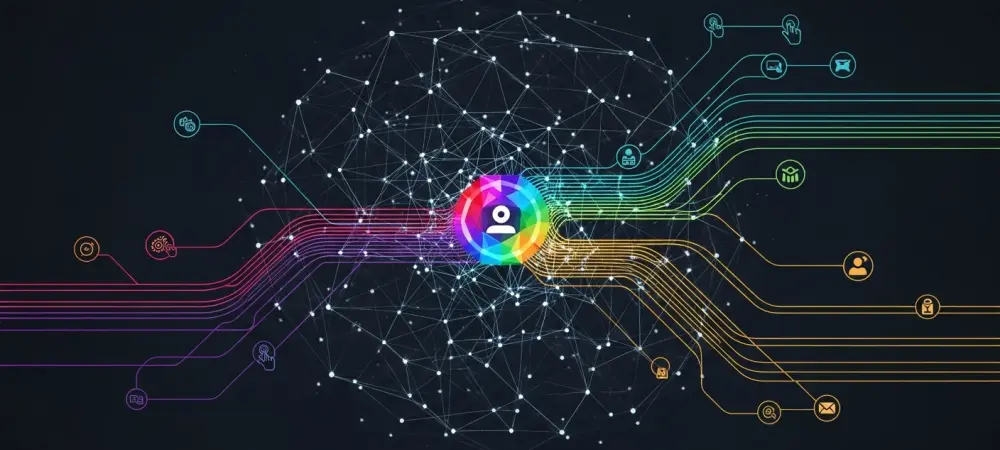
Modern corporate leadership teams currently find themselves trapped in a repetitive cycle of purchasing expensive analytics tools that generate beautiful charts while failing to resolve the fundamental friction points that drive customers away. This illusion of progress stems from a heavy reliance on sophisticated dashboards that offer visibility without providing the mechanical levers required for actual improvement. Despite the abundance of real-time data, the stagnation in modern customer experience persists because most organizations treat insights as static artifacts rather than the fuel for a dynamic operational engine. This disconnect reveals a critical systemic failure where the capacity to observe has far outpaced the capacity to act.
The current landscape suffers from a significant operational gap as the digital economy becomes increasingly fragmented. Organizations frequently mistake the collection of customer feedback for the actual management of the customer journey. However, the shift from “collecting insights” to “building systems” represents the next evolution in organizational maturity. A systems-based approach ensures that when a customer encounters a barrier, the organization does not just record the event but triggers an automated, cross-functional response. This transition requires a roadmap built on high-velocity decision-making, utilizing the DevOps parallel and diagnostic models to bridge the chasm between raw data and tangible business value.
The Rise of Systems-Based Customer Operations
Quantitative Evidence for the Integrated CX Shift
The performance gap between organizations that prioritize integrated workflows and those that rely on siloed departments is becoming increasingly evident through empirical data. Analyzing findings from the DORA State of DevOps Report reveals that fragmented operational models lead to a high volume of unplanned work and systemic burnout. Companies that successfully adopt a generative culture—one characterized by high trust and continuous feedback loops—demonstrate a 30 percent improvement in operational goal performance compared to their less integrated peers.
This efficiency metric is driving a move away from static sentiment scores toward financial metrics that resonate in the boardroom. High-performing teams are increasingly adopting “P&L metrics” such as Friction Dollars to quantify the exact cost of customer struggle. By calculating the revenue lost to abandoned carts or support overhead, these organizations create a compelling business case for systemic change. This trend reflects a broader shift where customer experience is no longer viewed as a soft qualitative discipline but as a rigorous driver of bottom-line efficiency and operational stability.
Practical Applications of the Systems Perspective
Real-world transformations illustrate the power of shifting from departmental silos to journey-based systems. For instance, the beverage company Beerwulf achieved a notable transformation by integrating service logs directly with user experience feedback. This success was not the result of a better survey; it was the result of changing how information flowed between the customer service desk and the product design team. Ultimately reducing customer email volume by 50 percent, this systemic change allowed them to identify and eliminate overlapping communications that confused users.
Moreover, leading organizations are dismantling traditional hierarchies in favor of “Journey Pods,” which are cross-functional teams that own specific customer outcomes rather than individual communication channels. These pods use telemetry and behavioral cues to capture customer friction in real-time. This transition from retrospective reporting to real-time struggle capture allows the system to repair the customer journey autonomously, significantly reducing the time it takes to resolve structural inefficiencies. By automating the response to these cues, companies can intervene the moment a user struggles with a digital interface.
Expert Strategies for Operationalizing Customer Insights
Applying DevOps Principles to Customer Strategy
Industry leaders are increasingly applying the principles of DevOps—specifically Flow, Feedback, and Continuous Learning—to the customer journey. This methodology, often referred to as “The Three Ways of CX,” focuses on optimizing the path a customer signal takes from its initial capture to a product update. The primary argument for this shift is that the role of a leader must evolve from journey mapping to increasing decision velocity. The speed and quality of organizational decisions are the only true competitive advantages in a market defined by rapid change and volatility.
Shortening the loop between a frontline signal and a developer’s backlog is essential for maintaining relevance. When insights are delayed by monthly reporting cycles, the window of opportunity to address a customer’s need often closes before action is taken. By reducing the time it takes for a signal to trigger a change, organizations can operate at a higher frequency, ensuring that the customer experience is a living, breathing system rather than a fixed strategic plan. Experts advocate for a model where every customer interaction serves as a micro-experiment.
Redefining Performance via the CAMS Framework
The CAMS diagnostic model—Culture, Automation, Measurement, and Sharing—provides a robust framework for evaluating an organization’s operational readiness. Expert perspectives suggest that the biggest bottleneck in CX is the manual processing of friction. Automation must take center stage, shifting the burden of data analysis from human researchers to intelligent systems that can identify patterns at scale. This allows the human element of the organization to focus on high-level strategy rather than getting bogged down in the minutiae of data cleaning and report generation.
Furthermore, sharing insights across the organization is no longer optional. Thought leaders advocate for embedding customer data directly into the decision-making tools used by product owners, such as Jira or Trello, rather than sequestering them in isolated CX platforms. This ensures that the financial consequences of friction are visible to those with the power to fix them. When every department understands the tangible impact of “Friction Dollars,” the entire company aligns around the goal of systemic optimization, turning customer experience into a shared operational priority.
Future Horizons and the Impact of Decision Velocity
The Role of AI in Scaling Real-Time Responses
The next generation of artificial intelligence is moving beyond simple text summarization to act as a sophisticated prioritization engine. This technology will automate the OODA loop (Observe, Orient, Decide, Act) by predicting the financial impact of specific customer behaviors and suggesting the most effective interventions. By acting as a central nervous system, AI can help organizations scale their responses to millions of individual customers simultaneously. This capability allows for a level of personalization and responsiveness that was previously impossible for human-led teams to achieve.
Looking ahead, automated experimentation will become a standard operational procedure. This self-healing approach to customer experience ensures that the journey is constantly being refined based on actual user behavior. Systems will be capable of implementing small changes as live experiments, measuring the results, and feeding the data back into the organizational learning loop without human intervention. As these systems become more prevalent, the focus of the organization will shift from solving individual problems to managing the parameters of the automated systems that solve those problems.
Long-Term Implications for Organizational Resilience
A systems-based approach provides a significant strategic advantage by allowing companies to pivot faster than their competitors during market volatility. This resilience is born from a culture of shared ownership and integrated data, which minimizes the friction of internal decision-making. However, this shift also introduces challenges, such as cultural resistance to dismantling established silos and the potential risks of over-relying on automated decision-making. Organizations must balance technical efficiency with human oversight to ensure that the systems remain aligned with the brand’s core values.
The evolution of professional roles will be a defining characteristic of this new era. The traditional customer experience researcher will likely transform into a “Systems Architect” who focuses on the flow of information across the enterprise. These professionals will be responsible for designing the infrastructure that connects customer signals to operational outputs. This change reflects the broader understanding that value is created by the system’s ability to act, not merely by its ability to perceive. Companies that embrace this evolution will be better positioned to navigate the complexities of the future digital economy.
Conclusion: Prioritizing Systems Over Static Artifacts
The shift toward systems-based customer operations was driven by the realization that disconnected insights provided no real competitive advantage. Organizations discovered that while they possessed more data than ever before, their inability to act on that information created a state of permanent instability. The most successful leaders were those who recognized that the crisis of stagnation required an operational overhaul rather than a technological band-aid. By applying the principles of flow and integrated feedback, these companies moved away from the pre-DevOps era of fragmented silos and toward a unified model of customer success. Value was ultimately created by decisions, not by the mere collection of data or the creation of journey maps. The organizations that thrived were those that built the integrated systems necessary to determine the customer experience in real-time. Moving forward, the focus should remain on increasing decision velocity and ensuring that every customer signal leads to a tangible improvement. Leadership must stop viewing the customer journey as a drawing and start treating it as a dynamic system. Investing in the infrastructure of action will provide a more resilient foundation than any static dashboard ever could.