

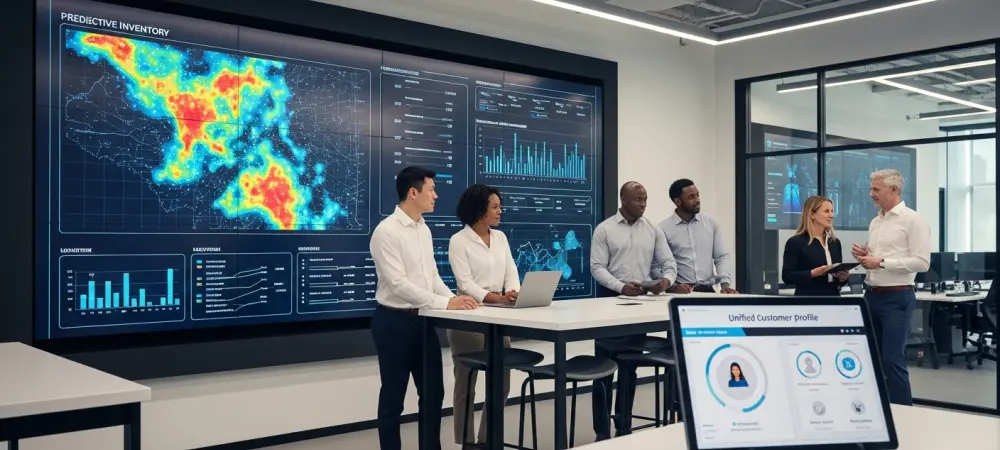
The current state of digital commerce has evolved into an environment where the ability to interpret subtle consumer intent in real time defines the boundary between dominant market leaders and those who merely exist within the margins. Organizations no longer rely on simple metrics to understand their audience; instead, they utilize a sophisticated synthesis of behavioral data that informs every strategic decision from product development to post-purchase engagement. This transition represents a fundamental shift in the retail paradigm, moving away from reactive observation toward a model of proactive intelligence. By leveraging advanced computational models, businesses now turn vast repositories of digital footprints into a coherent narrative that explains not just what a consumer purchased, but the underlying motivations and future needs that drive those choices. The integration of artificial intelligence into the core of retail operations has democratized the power of high-level data science, allowing brands of all sizes to operate with a level of precision once reserved for global conglomerates. Current assessments of the industry reveal that a significant majority of leaders have embedded these technologies into their daily workflows. These systems do not merely automate repetitive tasks; they provide a lens through which merchants can see patterns invisible to the naked eye. This evolution is particularly crucial in a market characterized by volatile consumer trends and a constant influx of information across multiple digital platforms. As a result, the role of the ecommerce professional has shifted from a manager of inventories to a curator of customer experiences, guided by insights that are as dynamic as the shoppers themselves.
Operational excellence today is measured by how effectively a brand can bridge the gap between data collection and actionable strategy. The modern merchant utilizes specialized platforms to centralize information from social media, email interactions, and support logs into a single, unified view of the customer journey. This holistic approach eliminates the silos that previously hindered growth, ensuring that every touchpoint reflects a deep understanding of the individual shopper. Consequently, the focus has moved beyond the simple transaction, aiming instead to foster sustainable, long-term loyalty through hyper-personalized interactions. In this environment, the successful implementation of artificial intelligence is not just a technological upgrade; it is the foundational infrastructure upon which modern ecommerce is built.
The End of the Guessing Game in Online Retail
In the current landscape, the era of making business decisions based on gut feelings or static monthly reports has become a relic of the past. Recent industry data indicates that 75% of ecommerce leaders have already integrated artificial intelligence into their operations, marking a definitive shift in how brands perceive their audience. This transformation is not simply about automating tasks to save time; it is about fundamentally changing the methodology behind understanding customer behavior. The shift from simply collecting data to synthesizing it into immediate, actionable intelligence has allowed small, agile teams to transform into powerhouse enterprises that frequently outmaneuver traditional corporate giants.
The democratization of these sophisticated tools means that deep analytical capabilities are no longer the exclusive domain of companies with massive research and development budgets. Today, a lean operation can utilize machine learning to identify which product features are resonating most with their audience or which marketing channels are providing the highest quality of traffic. By removing the guesswork from the equation, businesses can allocate their resources with unprecedented confidence. This precision ensures that capital is invested in strategies with a proven likelihood of success, thereby reducing the risks associated with scaling an online presence in a saturated market.
Furthermore, the disappearance of the “guessing game” has profound implications for how brands communicate with their customers. When a merchant understands the exact sentiment behind a surge in website traffic or the reason for a sudden drop in cart completions, they can respond with surgical accuracy. This level of clarity allows for a more authentic connection between the brand and the consumer. Instead of casting a wide net with generic messaging, retailers now craft experiences that feel tailored to the specific needs and desires of their audience, fostering a sense of brand affinity that is difficult for competitors to disrupt.
The Evolution From Historical Analytics to Predictive Intelligence
Understanding the “why” behind consumer behavior was once a luxury that required extensive data science departments and months of manual analysis. In the current environment, the focus has shifted entirely from historical data—simply looking at what was sold during a previous cycle—to predictive intelligence that forecasts what will happen tomorrow. This transition is vital because it addresses the greatest modern challenge for any merchant: the rising cost of customer acquisition. By moving toward a predictive model, brands can identify the lifetime value of a customer at the very beginning of the relationship, allowing for more strategic spending on advertising and retention.
Historical analytics often acted as a rearview mirror, showing where a business had been without providing clear guidance on where it should go. In contrast, predictive intelligence uses current behavioral signals to map out future scenarios with a high degree of accuracy. For instance, instead of wondering why a specific cohort of shoppers stopped purchasing, businesses now use algorithms to identify at-risk customers weeks before they actually churn. This proactive stance allows for targeted interventions, such as personalized offers or direct outreach, that can save a relationship before it is permanently severed.
Moreover, the shift toward forecasting has changed how inventory and product development are handled. Retailers no longer need to wait for a season to end to realize a product was a failure or a surprise success. Predictive models analyze early engagement signals to suggest adjustments in production or marketing focus in real time. This agility is essential for maintaining sustainability in an era where consumer preferences can shift overnight. By aligning their operations with the predicted needs of their market, brands can maintain a lean inventory while ensuring they always have the right products available at the precise moment their customers are ready to buy.
The Three-Phase Framework of AI Customer Understanding
Modern tools for interpreting consumer behavior operate through a sophisticated three-step workflow that ensures no piece of information is wasted. The process begins with comprehensive data aggregation across every digital touchpoint. In a world where a single customer might interact with a brand through an Instagram ad, a support chat, and a personalized email all in one afternoon, centralizing this data is critical. This initial phase pulls these disparate threads together, creating a holistic profile that serves as the foundation for all subsequent analysis. Without this unified view, any insights generated would be fragmented and potentially misleading. Once the data is centralized, the second phase involves the application of machine learning and natural language processing to identify patterns that are often invisible to the human eye. These technologies are capable of scanning thousands of product reviews, social media mentions, and support logs to detect subtle shifts in sentiment or emerging trends. For example, natural language processing can reveal that customers are frequently mentioning a specific design flaw in a new product line, allowing the brand to address the issue immediately. This automated pattern recognition transforms raw, unstructured information into a clear set of findings that highlight exactly what is working and what requires adjustment. The final phase of this framework is predictive modeling, where the system identifies future behaviors and outcomes before they occur. By analyzing the patterns identified in the previous steps, the AI can forecast which specific marketing campaigns will trigger the highest engagement or which customers are most likely to become brand advocates. This phase allows merchants to look ahead, spending their budget where it will have the most significant impact. By utilizing this three-part system, businesses transition from being reactive observers to being architects of their own growth, making decisions that are backed by the weight of their entire data ecosystem.
Dynamic Segmentation and the New Personalization Standard
The pillars of technological integration are most visible in the way brands now approach customer segmentation and conversion optimization. In the past, grouping consumers by simple demographics like age, gender, or geographic location was the industry standard. However, the current standard relies on dynamic segmentation based on real-time behavior. This means that a customer’s segment can change from one hour to the next based on their average order value, recent email engagement levels, or even the frequency with which they browse specific product categories. This fluidity allows for a level of relevance that was previously impossible to achieve at scale. This behavioral approach to segmentation enables hyper-personalized shopping experiences where recommendation engines understand the contextual intent of every individual visit. When a consumer arrives at a website, the system analyzes their past interactions alongside their current browsing behavior to ensure that every banner, product suggestion, and promotional offer is perfectly aligned with their needs. For example, a “win-back” email is no longer just a generic discount sent after thirty days of inactivity; it is a carefully timed message delivered at the exact second a consumer’s behavior suggests they are most likely to convert.
Furthermore, this new standard of personalization extends beyond the digital storefront and into every communication channel. By leveraging dynamic segments, brands can ensure that their messaging is always appropriate for the customer’s current stage in the buying journey. A loyal, high-spending customer receives different content and incentives than a first-time visitor who has only just discovered the brand. This precision ensures that interactions are never perceived as intrusive or irrelevant, but rather as helpful and timely. The result is a significant increase in conversion rates and a much stronger foundation for long-term customer relationships.
Expert Perspectives on the Human-AI Synergy
Industry leaders emphasize that the current surge in analytical power is an empowerment tool rather than a replacement for human creativity and intuition. Experts such as Sean Frank of the accessories brand Ridge and growth specialist Andrew Faris have noted that while the speed of data processing has increased exponentially, the strategic direction of a brand remains a human endeavor. AI can produce a comprehensive competitive analysis or a detailed customer profile report in under five minutes—a task that previously consumed days of manual labor—but it cannot replace the brand vision. The consensus among those at the forefront of the industry is that technology provides the “what” and the “how,” but the merchant must still provide the “so what.”
The role of the business owner in this new era is to interpret the findings presented by the machines and make the final strategic calls that align with the brand’s unique identity. While an algorithm might suggest that a specific discount will maximize short-term revenue, a human leader might decide that maintaining a premium brand image is more important for long-term growth. This synergy between computational power and human judgment is what separates successful brands from those that become overly reliant on automated systems. The most effective organizations are those where the staff is trained to use these tools to amplify their own expertise rather than to replace it.
Moreover, this partnership allows creative teams to focus on high-impact work rather than getting bogged down in the minutiae of data entry and report generation. When the heavy lifting of behavioral forecasting and pattern recognition is handled by an automated ecosystem, marketers and product designers have more time to innovate. They can use the insights provided to take calculated risks that push the boundaries of their industry. In this sense, the integration of intelligent systems has not diminished the human element of ecommerce; it has actually elevated it, allowing professionals to spend more time on the strategic and creative tasks that truly drive brand value.
Strategies for Building an AI-First Insights Ecosystem
To capitalize on these advancements, businesses successfully prioritized the integration of their data silos to ensure their systems had a holistic view of the customer journey. Practical implementation involved the use of specialized platforms like RetentionX or Stay AI, which allowed merchants to flag at-risk customers and automate retention flows before churn occurred. These tools successfully utilized natural language processing to turn unstructured feedback from thousands of reviews into an actionable product development roadmap. By creating a unified system where information flowed seamlessly between marketing, sales, and support, organizations eliminated the friction that previously hindered growth and innovation.
In the preceding months, merchants who adopted an ecosystem-centered approach observed a significant improvement in their operational efficiency. They moved away from fragmented tools that required manual reconciliation and instead embraced platforms that offered a single source of truth for all customer data. By focusing on the quality of their data inputs and the connectivity of their software stack, these brands established a foundation that supported rapid scaling and consistent customer satisfaction. They transformed their digital infrastructure into an active participant in their business strategy rather than a passive storage system.
The transition to an automated insights model also reshaped how brands interacted with their audience on a fundamental level. By utilizing behavioral forecasting, retailers successfully anticipated market shifts and adjusted their inventories and marketing strategies ahead of their competitors. They turned qualitative feedback into quantitative benchmarks, allowing them to measure brand sentiment with the same precision as they measured revenue. This holistic understanding of the consumer led to the development of products that more accurately met the needs of the market. Ultimately, the brands that thrived were those that recognized the value of these insights and integrated them into every aspect of their organizational culture, ensuring that every team member was empowered by the intelligence at their fingertips.