

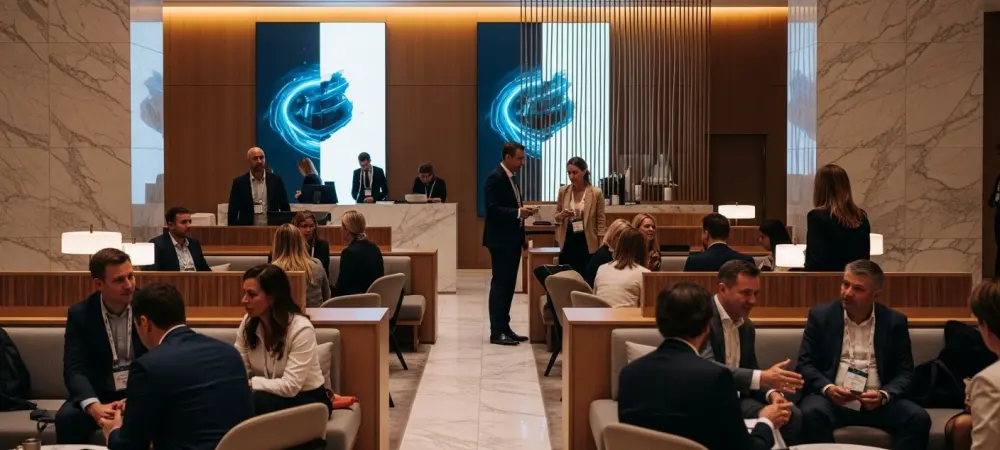
Even as the relentless logic of digital efficiency suggests that high-level commerce should thrive in a virtual vacuum, the industry’s most influential leaders continue to endure grueling travel schedules for a chance to stand in a crowded room. This persistent migration to locations like the French Riviera or the Florida coast defies the convenience of the modern age, signaling that the “Paradox of the Podium” is more relevant than ever. While technology has optimized the way tasks are completed, it has simultaneously increased the scarcity and value of physical presence. The most elite sectors of the marketing industry still flock to the sweltering heat of Cannes and the crowded lobbies of Miami, recognizing that some forms of professional capital cannot be accrued through a screen.
In a landscape increasingly dominated by automated systems and virtual interactions, the role of physical presence has shifted from a routine business obligation into a premium asset. This transformation is driven by a deep-seated need for trust and genuine human connection, which serves as a necessary counterbalance to the rise of synthesized media. Physical proximity acts as a vetting mechanism, allowing leaders to verify the authenticity of their peers in ways that are impossible during a standard video conference. Consequently, these summits have become the primary battleground for establishing the human-centric credibility that now underpins high-stakes commercial agreements.
The following analysis explores the shifting dynamics of industry gatherings, moving beyond the surface-level spectacle to uncover the tangible business rationales for such significant investments. It investigates how professionals are navigating the mounting pressure of career equity while organizations leverage these high-pressure environments for intelligence gathering and talent assessment. By examining the long-term outlook for these professional ecosystems, a clearer picture emerges of how the industry balances the immense financial and environmental costs of physical summits against the rewards of being present in the room.
The Shifting Landscape: Data and Real-World Impact
Growth Trends and the Premium on Human Interaction
Current attendance data reveals a robust rebound in physical gatherings, a trend that reinforces the concept of humanity as a new premium currency. While the efficiency of digital communication remains high, the market is placing a higher financial valuation on face-to-face engagements. Statistics show that virtual events, though effective for broad reach, often lack the depth required for complex negotiations. As a result, physical conferences have transitioned into critical hubs for high-level business development where soft assets, such as personal rapport and industry intelligence, are accumulated at an accelerated rate.
The emergence of pop-up ecosystems further illustrates this shift, as companies increasingly prioritize concentrated, high-pressure environments. These temporary hubs serve as catalysts for venture capital connections and private equity networking, where the speed of trust-building is significantly higher than in traditional settings. By condensing months of outreach into a few days of intensive interaction, these gatherings offer a strategic advantage to firms looking to secure funding or finalize partnerships in a volatile market. The focus has moved toward these high-impact zones where the concentration of decision-makers allows for a rapid exchange of ideas and capital.
Strategic Brand Activations and Field Intelligence
Major industry events provide a unique stage for strategic brand activations that transcend traditional advertising. Recent case studies show brands utilizing large-scale experiences, such as elaborate drone displays or bespoke beach installations, to project a voice that is unconstrained by standard media channels. By creating a physical footprint in a prestigious location, a brand signals its health and its commitment to the industry’s future, often establishing a narrative that persists for the remainder of the fiscal year.
Beyond the public spectacle, these summits serve as prime locations for gathering informal intel. Real-world scenarios frequently involve hotel bar networking and casual dinners where the most sensitive industry shifts are discussed. Organizations utilize these settings to gain early insights into competitor strategies and leadership movements long before they are officially announced. This field intelligence provides a competitive edge, allowing firms to pivot their strategies based on the subtle cues and whispers that only circulate within the inner sanctum of a major conference. This flow of information is often more valuable than the formal presentations occurring on the main stages.
Talent assessment also takes place within this crucible, as companies use the grueling schedule as a live-action performance review. Identifying future leaders who can maintain excellence under the physical and social pressure of a week-long summit is a priority for human resources departments. The ability to navigate logistical chaos while remaining a polished brand ambassador is a rare skill, and those who excel in these environments often find their career trajectories significantly accelerated. It is a unique opportunity for junior executives to prove their mettle in front of the global leadership team.
Expert Perspectives on the Absence Trap and Professional Equity
Industry thought leaders increasingly argue that the true return on investment for a conference is not found in immediate sales, but in the compounding interest of long-term relationships. Networking at this level is viewed as a form of career insurance, creating a resilient pool of peers that offers protection against market volatility. For a professional, the presence at these summits is a vital component of a personal brand, signaling that one is part of the industry’s decision-making core. Experts emphasize that these connections provide a safety net that digital networking simply cannot replicate. The Absence Trap theory highlights the significant risk associated with non-attendance. Experts note that once a brand has established its presence at a major gathering, a sudden withdrawal often signals financial instability or a loss of market share to competitors. Consequently, companies find themselves in a cycle where attendance is mandatory to maintain a perception of strength. The perceived cost of being out of the room often outweighs the actual financial expenditure required to be in the room, creating a strategic necessity that transcends simple budgeting and enters the realm of psychological market positioning.
Furthermore, professionals must navigate the phenomenon of false humility when discussing these events. While many publicly lament the logistical exhaustion and the physical toll of international travel, the reality is that the benefits of attendance are too significant to ignore. Balancing the perceived elitism of exclusive travel with the gritty reality of the workload is a constant challenge for today’s elite. Professionals who master this balance can leverage their participation to build deep-seated professional equity that lasts far beyond the duration of the event, ensuring they remain relevant in an ever-shifting professional landscape.
The Future of High-Stakes Industry Gatherings
Future developments indicate a move toward even more exclusive, high-value interactions as the industry seeks to justify the significant financial and environmental costs of large-scale summits. The challenge of sustainability and measurement is becoming more acute, prompting organizers to focus on deep-tier partnership data rather than just total attendance numbers. Conferences will increasingly need to prove their worth through the quality of connections made, leading to more curated experiences that cater to specific high-value segments of the market. This shift will likely result in smaller, more focused sub-events that prioritize depth over breadth.
The integration of augmented reality is expected to bridge the gap between team members on the ground and those remaining at the home office. This digital-physical hybrid model aims to mitigate internal friction and ensure that the insights gathered at the summit are distributed across the organization in real-time. While the physical and emotional toll—including the personal risk of social pressure—remains a concern, the industry consensus remains firmly in favor of being present. The necessity of high-stakes, face-to-face interaction is unlikely to diminish as long as human relationships drive the engine of high-level commerce and innovation.
Summary and Strategic Outlook
Modern marketing conferences serve as exhausting but vital pillars for brand storytelling and talent scouting. The strategic investment in showing up remains a primary driver of success, where chance encounters in lobbies often lead to multi-year partnerships and significant career advancements. As long as the industry relies on trust and human connection, these summits will remain a prerequisite for leadership. The value is found in the unexpected moments of brilliance that occur when the industry’s brightest minds are forced into close proximity under high pressure, creating a unique environment for professional growth.
The industry successfully recognized that the most impactful connections occurred in the margins of formal programming. Professionals who adopted a disciplined approach to networking and intelligence gathering secured the most significant long-term gains. By prioritizing high-value physical presence over digital reach, organizations ensured their place in the competitive landscape of commerce. The transition toward a more integrated, data-driven approach to these gatherings allowed the industry to preserve the essential human elements of business while addressing modern concerns of efficiency and sustainability. Final observations indicated that those who remained present in these high-stakes rooms were the ones who ultimately defined the trajectory of the market.