

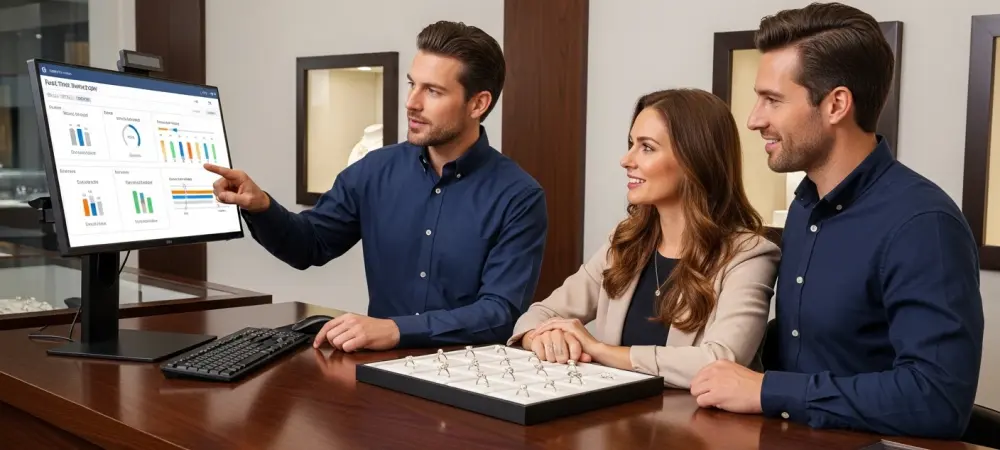
In an industry built on trust and personal milestones, the modern jeweler faces a new challenge: merging timeless service with digital efficiency. The most significant purchases in a person’s life, from engagement rings to anniversary heirlooms, have traditionally been guided by a trusted jeweler’s personal knowledge and intuition. This article explores the rising trend of Customer Relationship Management (CRM) integration, a technological shift that is redefining customer relationships and driving sales in the luxury jewelry market. This analysis will examine the data behind this trend, explore its practical applications, consider expert opinions, and look toward the future of personalized luxury.
The Ascent of Integrated Systems in Jewelry Retail
The adoption of integrated technology is no longer a peripheral strategy but a central pillar for growth in the luxury sector. As jewelers navigate a marketplace shaped by digital-native consumers, the demand for a seamless, data-informed customer experience has become a primary driver of technological investment. This shift reflects a broader understanding that disconnected systems create friction and missed opportunities, whereas a unified platform empowers sales associates and informs strategic decisions from the showroom floor to the executive office.
Market Growth and Adoption Statistics
The global CRM market continues its robust expansion, with projections indicating significant growth through 2028, particularly within the retail and luxury goods segments. Reports from leading market analysts highlight a clear trend: luxury brands that invest in data-driven strategies are outpacing their competitors. Furthermore, the adoption of integrated software is no longer confined to large enterprises. Recent data shows a marked increase in adoption among small and medium-sized jewelers, who are leveraging these tools to create the sophisticated, personalized experiences previously associated only with major luxury houses. This democratization of technology is fueled by the growing demand for a unified, 360-degree view of the customer, which is now considered a foundational element for competitive strategy.
The move toward integrated systems is a direct response to evolving consumer expectations. Today’s luxury client engages with a brand across multiple touchpoints—from social media and e-commerce sites to in-store consultations. Credible industry reports emphasize that without a centralized system to capture and analyze these interactions, valuable insights are lost. This has created a significant demand for platforms that can consolidate customer data, providing a single source of truth that informs every aspect of the business, from marketing outreach to inventory procurement.
Real-World Applications and Success Stories
The most powerful application of an integrated CRM is the creation of a comprehensive, 360-degree customer profile. Jewelers are using these systems to consolidate a client’s entire history, including past purchases, specific preferences for metal types or stone cuts, and crucial milestone dates like anniversaries and birthdays. This unified view transforms the sales process from a simple transaction into a deeply personal consultation. For example, a sales associate can proactively contact a client before their anniversary with curated suggestions that align perfectly with their partner’s known tastes, demonstrating a level of care and attention that builds unshakable loyalty.
This trend also manifests in the unification of the online and in-store journey, creating a seamless “phygital” experience. When a jeweler’s e-commerce platform, point-of-sale (POS) system, and CRM are integrated, the data flows freely between them. A client might create a wishlist of diamond earrings on the company website one evening; when they visit the showroom the next day, the sales associate can immediately access that list. This continuity eliminates the need for the customer to repeat themselves and allows the associate to pick up the conversation where it left off, creating a fluid and informed experience that builds trust and accelerates the path to purchase.
Moreover, the connection between CRM and inventory management is streamlining both sales and operations. An integrated system provides sales associates with real-time visibility into stock levels across all company locations, including other stores and central warehouses. This empowers them to confidently assist clients, even if a desired piece is not physically in their showroom. They can instantly confirm its availability elsewhere and arrange for a secure transfer, securing a sale that might otherwise have been lost. This connectivity also provides valuable data for procurement, allowing buyers to identify emerging trends and ensure that the most sought-after pieces are always available.
Industry Voices: Expert Perspectives on Integration
Leading luxury retail analysts consistently argue that personalization is no longer a perk but a core expectation of the modern affluent consumer. They point out that in a market saturated with options, the experience of being known and understood is the ultimate differentiator. From this perspective, an integrated CRM is not merely a software tool; it is the engine that powers personalization at scale. It enables a brand to remember every detail and anticipate every need, delivering the kind of high-touch service that defines true luxury.
Simultaneously, jewelry business consultants emphasize the profound operational efficiencies gained through integration. By automating routine tasks such as lead follow-ups, appointment reminders, and post-purchase thank-you notes, CRMs free up valuable time for sales associates to focus on what they do best: building relationships and closing high-value sales. This automation also significantly reduces the risk of manual data entry errors, which can lead to flawed reporting and poor customer experiences. The result is a more organized, efficient, and profitable sales pipeline.
From a technological standpoint, industry leaders stress the importance of creating a fully integrated ecosystem for making informed, strategic decisions. When sales data, customer behavior analytics, and inventory metrics reside in a single, unified platform, leadership can generate comprehensive reports that reveal the true health of the business. This holistic view allows for the precise measurement of marketing campaign ROI, the identification of top-performing products and sales staff, and the pinpointing of bottlenecks in the sales process, enabling data-driven adjustments that foster sustainable growth.
The Future Outlook: What’s Next for Jewelers and CRM?
The next evolution in jewelry CRM integration is already on the horizon, driven by advancements in Artificial Intelligence (AI) and machine learning. Future systems will move beyond simply recording customer data to actively predicting it. AI algorithms will analyze purchasing patterns, browsing history, and demographic information to forecast future trends and recommend specific products to individual clients with a startling degree of accuracy. For example, an AI-powered CRM could identify a customer segment likely to be interested in lab-grown diamonds and automatically launch a targeted marketing campaign, optimizing for conversion.
As these systems become more sophisticated, the benefits and opportunities for jewelers will multiply. Deeper integration will facilitate the creation of highly nuanced loyalty programs that reward not just purchases but also engagement and brand advocacy. It will enable proactive clienteling, where the system alerts an associate to reach out to a client not because of an upcoming anniversary, but because predictive analytics suggest they are in the market for a new purchase. Crucially, it will allow for the precise measurement and optimization of customer lifetime value (CLV), giving jewelers the tools to foster the long-term, multi-generational relationships that are the bedrock of the industry.
However, the path to full integration is not without its challenges. The initial investment in a robust, industry-specific CRM can be substantial, representing a significant capital expenditure for many independent jewelers. Furthermore, the process of migrating decades of client data from legacy systems or paper records is complex and requires careful planning to ensure accuracy and integrity. The critical need for comprehensive staff training cannot be overstated, as the technology is only as effective as the people using it. Finally, in an industry built on discretion, maintaining the highest standards of data security and privacy is paramount, requiring ongoing vigilance and investment.
Conclusion: A Strategic Imperative for Modern Jewelers
The evidence gathered clearly showed that integrating a dedicated jewelry CRM system had evolved from a competitive advantage into a foundational necessity. This analysis confirmed that a unified technological ecosystem was essential for creating the deeply personalized experiences that luxury consumers demand, for optimizing complex operations from sales to inventory, and for building the lasting customer loyalty that ensures long-term profitability. The trend’s momentum was not driven by a desire for technology for its own sake, but by the tangible returns it delivered.
Ultimately, the successful adoption of this technology was not about replacing the invaluable human touch that defines the jeweler-client relationship. Instead, it was about enhancing it. The integration of CRM provided sales associates with the insights and tools they needed to elevate their service, transforming them from salespeople into trusted advisors. It allowed them to focus on nurturing relationships, confident that the underlying data was accurate, accessible, and working to support their efforts.
This trend underscored a pivotal moment for the jewelry industry. It presented a clear call to action for jewelers to view CRM integration not as an expense, but as a strategic investment in the future of their brand. Those who embraced this technological shift positioned themselves to not only meet the expectations of the modern luxury client but to exceed them, securing their relevance and success for generations to come.