

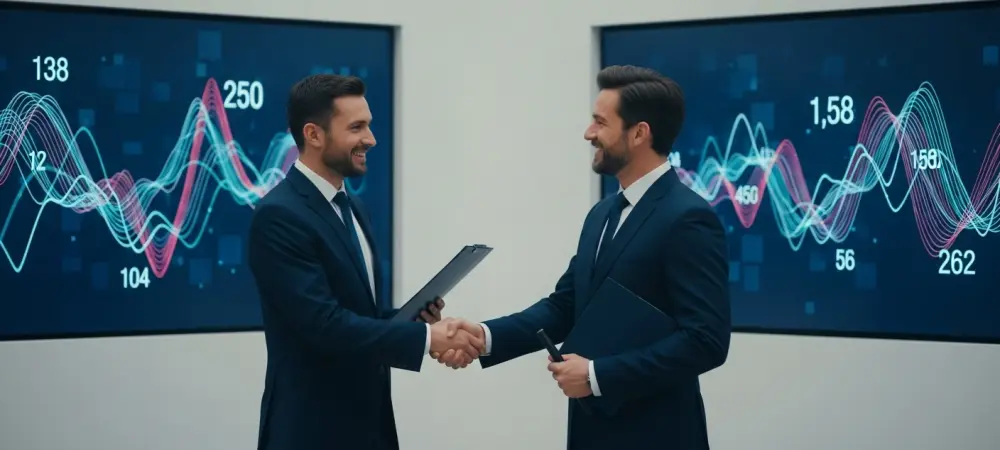
In an environment where synthetic intelligence generates thousands of personalized outreach emails per second, the value of a single genuine conversation has transitioned from a standard business practice to a rare premium commodity. As organizations lean into sophisticated algorithms to drive operational efficiency, the market is rapidly reaching a saturation point where automated personalization feels increasingly sterile and predictable. This shift creates a unique opening for companies that can balance technical scale with authentic interpersonal connection, turning biological empathy into a strategic asset.
The current landscape reflects a profound reorientation of how business-to-business value is communicated and captured. This analysis explores the transition toward hyper-automation, the distinct categories of modern selling relationships, and the reasons why interpersonal trust remains the only non-commoditizable asset in high-stakes transactions. In a world of infinite digital noise, the ability to build rapport and demonstrate genuine understanding has become the most powerful tool in the professional arsenal.
The Evolution of the Modern B2B Landscape
Analyzing the Surge in Sales Automation and AI Adoption
The rapid proliferation of CRM-driven automation and generative intelligence tools now dominates the modern sales stack, creating a high-volume prospecting environment. Organizations have invested heavily in platforms that promise to remove the friction of manual outreach, allowing small teams to contact thousands of potential buyers with minimal effort. This statistical growth indicates a broad industry consensus that scale is the primary driver of revenue, leading to a crowded digital marketplace where every prospect is targeted by dozens of simultaneous automated campaigns.
However, this reliance on technology has birthed an efficiency paradox that many leaders are only beginning to acknowledge. Data suggests that while the sheer volume of emails sent and calls logged has increased exponentially, actual win rates and engagement metrics continue to decline across almost every sector. The sheer quantity of outreach has effectively desensitized buyers, who now possess sophisticated internal filters to ignore any communication that lacks a palpable human signature or deep contextual relevance.
The widespread adoption of automated cadences has consequently led to severe buyer fatigue, diminishing the return on digital-first strategies. When every competitor uses the same algorithmic triggers to initiate a conversation, the resulting interactions become indistinguishable from one another. This saturation means that the very tools intended to create a competitive advantage are now contributing to a baseline of noise that most decision-makers have learned to bypass entirely, forcing a reevaluation of the value of high-volume tactics.
Operationalizing Efficiency Through M2M and M2H Models
The modern sales environment is increasingly defined by Machine-to-Machine (M2M) success, particularly in low-complexity procurement cycles. Automated systems now handle bulk renewals and simple replenishments with zero human oversight, streamlining transactions where the primary variables are price and availability. This model provides unparalleled speed and accuracy for transactional deals, allowing organizations to allocate their human capital toward more complex tasks while algorithms maintain the steady flow of recurring revenue.
Beyond simple renewals, the Machine-to-Human (M2H) model has become the standard “first touch” in the buyer’s journey. Companies utilize AI-driven chatbots and hyper-targeted advertising sequences to filter prospects based on firmographics and digital behavior before a salesperson is ever notified. This initial layer of automation serves as a high-speed gatekeeper, ensuring that human representatives only spend their time on leads that meet specific, data-verified criteria, thereby maximizing the productivity of the senior sales force. Leading technology firms are now prioritizing this algorithmic scale for smaller, transactional deals to focus their most talented human assets on enterprise-level complexity. This corporate shift suggests a future where the sales floor is bifurcated between high-speed automated processing and high-touch strategic consulting. By offloading the administrative and repetitive elements of the sales cycle to machines, organizations aim to create a leaner operation that responds instantly to simple needs while preserving energy for the heavy lifting of relationship-driven commerce.
Expert Insights into the Taxonomy of Selling
The Failure of Algorithms to Assess Organizational Risk
Industry leaders argue that while artificial intelligence excels at knowing what a buyer does based on data, it cannot grasp who the buyer is as a person. Decision-making in high-stakes environments is often subjective, influenced by internal politics, career aspirations, and the professional anxiety associated with making a high-ticket purchase. A machine can analyze a balance sheet, but it cannot navigate the subtle emotional currents that determine whether a stakeholder feels safe enough to advocate for a specific solution.
The trust gap remains a significant hurdle because Machine-to-Human interactions fundamentally fail to build the rapport necessary for navigating complex buying committees. When a deal involves multiple stakeholders with conflicting agendas, the ability to listen between the lines and address unspoken concerns is vital. Algorithmic outreach is incapable of detecting the nuance of a hesitant tone or the significance of a specific hesitation, leaving the buyer feeling like a data point rather than a partner in a strategic initiative.
High-stakes B2B transactions are rarely just about the product; they are personal risks for the individual buyer whose reputation is on the line. Thought leaders emphasize that a machine cannot offer the empathy or the personal guarantee required to mitigate the fear of a failed implementation. Only a human peer can provide the psychological safety that a buyer needs to commit, making interpersonal validation an essential component of the final closing process that technology simply cannot replicate.
Addressing the Decline of Sales Intuition in ##M Frameworks
A concerning trend in modern sales is the Human-to-Machine (##M) friction, where representatives effectively become servants to the CRM. When daily routines are dictated by algorithmic priorities and rigid data-entry requirements, creative problem-solving often takes a backseat to system compliance. This shift transforms dynamic sellers into administrative technicians, where the primary goal is satisfying the software’s need for information rather than addressing the customer’s need for a solution.
This focus on rigid, system-generated scripts has led to a noticeable loss of nuance during the sales process. By following a predetermined digital path, representatives often lose the ability to “read the room” or adapt their strategy based on non-verbal cues and hidden motivations. When the interaction is mediated through a strict framework of mandatory fields and automated steps, the salesperson’s natural intuition is suppressed, preventing the kind of organic discovery that often leads to the most valuable business insights.
Furthermore, a pervasive obsession with lead scores and click-through rates often masks the true sentiment of a potential partner. These metrics provide a superficial view of engagement but offer no insight into the quality of the relationship or the level of genuine intent. Experts warn that over-indexing on these quantitative signals can lead to a false sense of security, where a sales team believes they are making progress while the actual human connection with the buyer is steadily eroding.
Future Outlook: Positioning Humanity as a Premium Asset
The Emergence of ##H as a Critical Competitive Differentiator
As machine-driven interactions become the standard across all industries, the Human-to-Human (##H) connection will transition from a common practice to a premium, high-value experience. In a marketplace flooded with automated responses, the presence of a thoughtful, empathetic, and highly skilled human advisor becomes a rare luxury. Organizations that successfully lean into this scarcity will find that their ability to foster deep relationships allows them to command higher margins and secure longer-term commitments than their technology-only competitors. The emerging hybrid model suggests a future where technology handles the administrative noise of prospecting and data management, freeing up top-tier sellers to focus exclusively on strategic consultation. This synergy allows the machine to do what it does best—process information and identify patterns—while the human does what only humans can do: provide context, build trust, and solve problems creatively. By rebalancing the workload, companies can achieve both the scale of automation and the impact of a personal touch. The most successful sales professionals of the forthcoming decade will be those who use technology as a background support system rather than a frontline interface. Closing the gaps that technology cannot reach—such as personal alignment and cultural fit—will be the primary way that leading firms separate themselves from a sea of automated mediocrity.
Navigating the Long-Term Implications of the Human Advantage
Developing a human-centric sales force presents significant scaling challenges, as the training required to move representatives away from mechanical workflows is both time-consuming and resource-intensive. Transitioning a team from a volume-based mindset to one centered on high-impact advisory roles requires a cultural shift and a new set of performance benchmarks. Organizations must find ways to measure the quality of a connection with the same rigor they currently apply to the quantity of outreach, which remains a complex operational hurdle.
Despite these challenges, the positive outcomes of prioritizing the human advantage are substantial, including higher customer lifetime value and stronger brand loyalty. Authentic partnerships built on mutual trust are far more resilient to competitive displacement than those based solely on transactional convenience. When a buyer feels understood and supported by a human representative, they are significantly more likely to remain loyal to the brand through market fluctuations and organizational changes, creating a stable foundation for long-term growth.
The broader industry impact will involve a total redefinition of sales roles, shifting the focus from prospecting to high-level strategic partnership. The traditional “salesperson” will evolve into a “trusted advisor” whose primary value lies in their ability to navigate human complexity and organizational change. This evolution will likely raise the bar for entry into the profession, as the market demands a higher level of social intelligence and business acumen to complement the powerful digital tools already in place.
Conclusion: Rebalancing Technology and Human Connection
The analysis of current market trends showed that while artificial intelligence provided the necessary scale to reach thousands of prospects, only human-to-human interaction provided the trust required to close significant, high-stakes deals. The investigation revealed that an over-reliance on automation led to buyer fatigue and a decline in the quality of professional relationships. The findings highlighted that the most successful organizations were those that recognized the limitations of algorithmic personalization and intentionally carved out space for genuine human engagement. Strategic leaders recognized that the path forward required a deliberate audit of their current human-to-machine ratios. The data indicated that reinvesting in soft skills and interpersonal training served as a vital corrective to the sterility of a technology-only sales stack. The study concluded that by offloading administrative tasks to AI, sales teams were able to reclaim the time needed for deep discovery and consultative partnership. This rebalancing acted as a safeguard against the commoditization of outreach, ensuring that the brand remained relatable in an increasingly automated world.
The transition toward a trust-based advisory model suggested that the ultimate competitive edge resided in the ability to be intuitive and empathetic. Moving forward, the industry understood that technology should act as an accelerator for human connection rather than a replacement for it. The conclusion reached was that the long-term success of B2B organizations depended on their willingness to prioritize the “heart” of the deal over the volume of the funnel. By fostering authentic connections, companies prepared themselves to thrive in a landscape where being human was the most valuable asset available.