

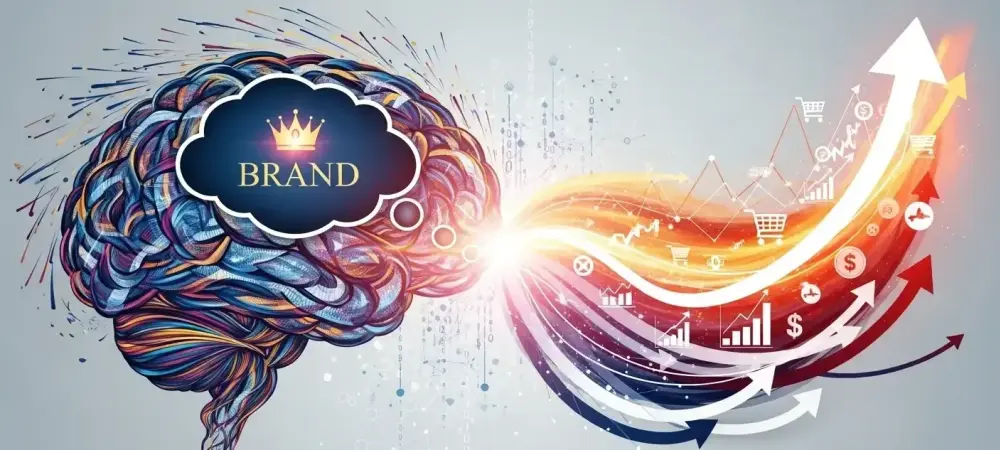
The perennial question echoing through marketing budget meetings, “Where should we invest: brand or demand?” has long guided strategic planning, but its fundamental premise is rapidly becoming a relic of a bygone era. For marketing leaders steering their organizations through the complexities of the current landscape, this question is not just outdated—it is the wrong one entirely. In an environment saturated with AI-driven content, populated by highly informed buyers, and plagued by scarce attention, the traditional division between brand-building and demand-generation activities has become an operational liability. This analysis deconstructs this false dichotomy, exploring the rise of a unified growth model where brand and demand converge, showcasing its real-world application, and forecasting the future of marketing leadership in this new paradigm.
The Shift from a Divided Funnel to a Unified Flywheel
The classic marketing funnel, with its distinct stages of awareness, consideration, and conversion, rigidly separated brand activities at the top from demand activities at the bottom. This structural division, however, no longer reflects how modern buyers operate. The journey is not linear, and trust is not a stage to be passed through but a constant requirement throughout the entire process. Consequently, a new model is emerging: a unified flywheel where brand and demand are not sequential steps but intertwined forces that continuously reinforce one another.
The Obsolescence of a Binary Framework
A growing consensus among marketing executives is that framing brand and demand as opposing forces is an outdated perspective that fosters inefficient and disconnected marketing motions. When teams are siloed, brand initiatives often lack a clear path to revenue, while demand campaigns are forced to convert prospects who have no prior context or trust in the company. This disconnect leads to wasted resources and a disjointed customer experience.
The overarching trend is a deliberate shift toward a holistic, integrated growth engine. In this model, brand and demand are understood as interdependent functions, not competing priorities. This integrated approach aligns teams around shared goals and recognizes that every marketing touchpoint, from a thought leadership article to a product demo, contributes to both building the brand and generating demand.
The core principle of this new framework is the symbiotic relationship between the two functions. A strong brand builds the foundational trust and emotional connection that make demand generation efforts more effective and cost-efficient. It creates a “gravitational pull” that draws in the right audience. In turn, successful demand capture generates the measurable revenue that provides both the financial justification and the funding for continued, long-term brand investment, creating a self-sustaining loop of growth.
Case Studies in Convergence: Pendo and Gong
The practical application of this convergence is best exemplified by companies like Pendo and Gong, which have built dominant market positions by rejecting traditional marketing silos. Their success is anchored in a brand strategy built on “diagnostic” messaging—a powerful approach that focuses on articulating a customer’s unspoken problem with startling clarity long before a solution is ever mentioned. This method establishes immediate relevance and credibility.
By leading with empathy and insight into the customer’s world, these companies build a foundation of trust that transforms the nature of their demand-capture efforts. Instead of chasing cold leads with hard-sell tactics, their demand generation becomes a natural extension of an ongoing conversation. The gravitational pull of the brand makes prospects more receptive, accelerating what Ironscales’ CMO Grant Ho calls “trust velocity” and making every subsequent marketing interaction more impactful.
This stands in stark contrast to legacy models that separate generic “awareness” campaigns, focused on reach and impressions, from aggressive “conversion” campaigns measured solely on lead volume. The integrated approach ensures that the story told at the top of the funnel is the same one that resonates at the bottom, creating a coherent and persuasive customer journey from start to finish.
Insights from the Marketing C-Suite
The philosophical shift toward convergence is echoed in the strategic and operational decisions being made by marketing leaders across the industry. Their insights reveal a unified movement away from siloed functions and toward a single, integrated system designed for sustainable growth. This evolution requires not only new terminology and metrics but also a fundamental rethinking of how marketing teams are structured and what they are empowered to achieve.
According to Grant Ho of Ironscales, viewing brand and demand as separate is an “outdated framework.” He posits that they are “two sides of the same growth system,” where brand acts as the catalyst for trust. This idea is central to the concept of “trust velocity,” which measures the speed at which a prospect’s belief in a brand translates into a willingness to engage and purchase. A powerful brand significantly shortens this cycle, making the entire revenue engine more efficient.
Kathleen Booth, CMO at Sequel.io, reinforces this view, arguing that modern buyers do not progress through a linear funnel but rather “move emotionally through a series of trust signals.” In this environment, the brand is not a passive, top-of-funnel asset; it is the foundational element of every transaction. Each piece of content, every customer interaction, and every product experience serves as a signal that either builds or erodes that essential trust.
To describe this new, integrated model, Jen Leaver, CMO of Rithum, has coined the term “brandformance.” This approach breaks down traditional walls by implementing shared planning cycles, common key performance indicators (KPIs) tied to revenue influence, and a culture that values long-term differentiation over short-term efficiency. It represents a practical framework for turning the philosophy of convergence into an operational reality.
This interconnected system is perhaps best summarized by Patrick Thomas, CMO of Backblaze, who describes it as a continuous loop: “Brand primes demand, and demand funds brand.” This succinct articulation captures the essence of the unified model, where brand-building creates the ideal conditions for demand capture, and the resulting revenue is reinvested to strengthen the brand’s market position.
The Next Frontier: Challenges and Opportunities
As the convergence of brand and demand becomes the new standard, the role of the Chief Marketing Officer is evolving dramatically. The modern CMO must be more than a manager of separate functions; they must become the architect of a single, coherent growth engine. This requires a unique combination of operational skill to foster deep integration and strategic courage to pursue bold, differentiated market positioning. The primary competitive threat in this new landscape is the insidious creep of “brand blanding”—the widespread erosion of differentiation caused by the proliferation of safe, generic, and often AI-generated content. In an effort to appeal to everyone, companies are increasingly adopting a neutral, professional tone that results in a sea of sameness. The market is saturated with brands claiming to be the “leading, AI-powered, end-to-end solution,” making it nearly impossible for buyers to distinguish one from another.
To combat blanding and build a sustainable competitive advantage, marketers must embrace radical specificity. This strategy involves developing a distinct point of view and making provable claims, even if it risks alienating a portion of the market. The goal is no longer to achieve the broadest possible appeal but to resonate deeply with a specific, target audience that shares the brand’s values and perspective.
Furthermore, the antidote to generic, machine-generated messaging is authentic storytelling. In an era where large language models can replicate corporate jargon with ease, a company’s greatest assets are its proprietary data, its unique human expertise, and its internal “secrets.” By weaving these inimitable elements into a compelling narrative, a brand can create a moat that AI cannot cross and build an emotional connection that resonates far more deeply than any algorithmically generated content ever could.
Conclusion: The Mandate for Courageous Marketing
The long-standing debate over brand versus demand has finally been resolved, not by a victor, but by the dissolution of the conflict itself. The emergence of an integrated growth model, where brand and demand are mutually reinforcing, has rendered the old binary obsolete. In this new paradigm, trust has become the ultimate currency, and the ability to earn it at scale is the primary determinant of success.
This shift has reaffirmed the critical importance of differentiation. In a digital landscape that grows more homogenous by the day, the greatest risk is not in being different but in being invisible. The pull toward safe, generic messaging is strong, but succumbing to it is a recipe for irrelevance.
Ultimately, the analysis pointed toward a clear mandate for marketing leaders. The greatest opportunity no longer lay in generating more attention, but in earning and holding trust. This required moving beyond conventional tactics and embracing a clear, consistent, and unmistakably human story—one that only their company could tell. Courage, in both strategy and execution, has become the definitive competitive advantage.