

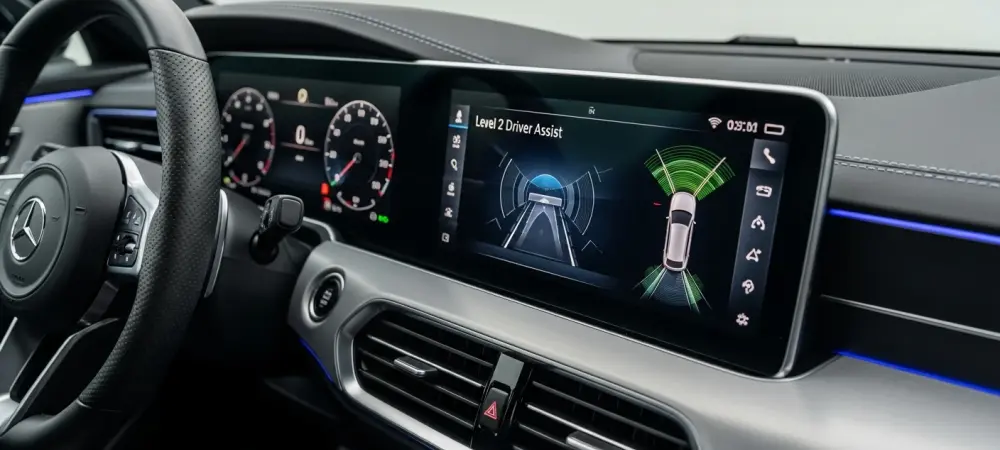
The sleek aesthetic of modern dashboards belies a growing tension between the hyperbolic language of Silicon Valley and the rigid safety mandates of government regulators who are currently redefining the boundaries of commercial speech. The central conflict lies in whether a product name is merely a marketing tool or a critical safety instruction that dictates how a human interacts with a multi-ton machine moving at highway speeds.
The Shift: From Innovation to Oversight
Market Growth: The Rise of Advanced Assistance Systems
The rapid adoption of Advanced Driver Assistance Systems (ADAS) has transformed the global automotive market into a sector projected to reach hundreds of billions of dollars by 2030. Consumers are increasingly drawn to features that promise to reduce the burden of driving, such as adaptive cruise control and lane-centering technologies. However, this growth has coincided with a widening “expectation gap,” a phenomenon where the technical reality of semi-autonomous systems fails to align with consumer perceptions of their capabilities. Data from the National Highway Traffic Safety Administration indicates that while these systems are intended to support the driver, many users treat them as fully autonomous pilots, often with disastrous consequences.
Moreover, the lack of standardized terminology across the industry has created a fragmented marketplace where the same level of automation is marketed under dozens of different names. Some manufacturers prioritize conservative branding to ensure drivers remain engaged, while others lean into aspirational terms that suggest a level of independence the hardware cannot yet support. This inconsistency has prompted a shift in focus from technical development to the psychology of the driver, as regulators realize that marketing materials function as a form of “human-factors engineering.” By shaping the driver’s mental model of the vehicle, marketing directly influences the reaction time and situational awareness required during a system failure.
Real-World Applications: Conflict in the Golden State
The most visible manifestation of this regulatory friction is the ongoing legal struggle between Tesla Inc. and the California Department of Motor Vehicles. At the heart of the dispute is Assembly Bill 3061, a piece of legislation that effectively challenges the use of terms like “Autopilot” and “Full Self-Driving.” The DMV argues that these names are inherently deceptive because the vehicles still require constant human supervision. Tesla, in contrast, maintains that these are established brand names and that their use is protected under commercial speech doctrines. This case serves as a bellwether for the entire industry, highlighting the difficulty of balancing a company’s right to create a visionary brand with the state’s mandate to prevent consumer confusion that leads to safety risks.
In contrast to Tesla’s approach, other major players like Ford and General Motors have adopted branding strategies that emphasize the collaborative nature of their systems. Ford’s “BlueCruise” and GM’s “Super Cruise” utilize driver-facing cameras to ensure eyes remain on the road, and their marketing materials generally reinforce the requirement for active supervision. However, even these systems have faced scrutiny as recent recalls and software updates highlight the technical limitations of driver-monitoring technology. The friction between a product’s marketed “vision” and its operational reality remains a primary concern for safety advocates who argue that branding should never outpace the actual silicon and sensors integrated into the vehicle.
Industry Perspectives: Expert Insights on Safety and Speech
Legal experts often point to the “Central Hudson test” as the definitive framework for resolving these disputes over commercial speech. This four-part test assesses whether the government’s interest in regulating a specific type of speech—such as car branding—is substantial enough to override a corporation’s First Amendment rights. In the context of autonomous driving, the government’s “substantial interest” is undeniably public safety. If the courts find that such terms are inherently misleading, it would grant state and federal agencies unprecedented power to dictate the naming conventions of emerging technologies.
Industry thought leaders are divided on the long-term impact of these restrictions. Some argue that aspirational branding is a necessary component of the “hype cycle” that attracts the investment required to fund expensive research and development. Without the allure of a “self-driving” future, consumer interest and venture capital might wane, potentially slowing the transition to a truly safer, autonomous transportation network. However, safety specialists counter that the cost of this hype is measured in human lives. They emphasize that branding is not just a sales tactic but a critical interface between the AI and the human user. When a driver is told a system is “autonomous,” they are psychologically primed to disengage, a state known as “automation complacency.”
Furthermore, the debate has expanded to include the ethical responsibilities of software engineers and marketing executives. There is a growing consensus among human-factors researchers that the naming of a feature is as important as the code that runs it. If a system is marketed in a way that encourages misuse, the manufacturer may be held liable even if the software performs exactly as designed. This perspective treats marketing as a part of the safety-critical system, suggesting that the era of “move fast and break things” is incompatible with the life-and-death stakes of the automotive sector. The industry is now forced to reconcile its desire for bold, disruptive messaging with the rigorous, often dry requirements of safety-first engineering.
Future Implications: The Path Toward Standardization
The resolution of current litigation will likely determine whether the United States moves toward a fragmented, state-by-state regulatory environment or a unified federal standard. A patchwork of different branding rules across state lines would be a logistical nightmare for manufacturers, potentially leading to specific features being disabled or renamed based on the vehicle’s GPS location. To avoid this, there is an increasing push for the mandatory adoption of Society of Automotive Engineers (SAE) levels in all consumer-facing materials. By requiring companies to clearly label their vehicles as Level 2 (Partial Automation) or Level 3 (Conditional Automation), regulators aim to provide an objective technical baseline that transcends marketing fluff.
As the industry moves closer to the realization of “Robotaxis” and truly driverless commercial services, the marketing framework will need another complete overhaul. The transition from supervised driving to zero-occupant liability changes the fundamental nature of the relationship between the consumer and the manufacturer. In this future, the marketing will likely shift away from the “experience of driving” toward the “reliability of the service.” Transparency will become the primary currency of consumer trust, as the consequences of a marketing failure transition from a distracted driver to a massive systemic liability for the fleet operator. Stricter regulations today are seen by many as the foundation for the “trust economy” that will be required for autonomous mobility to succeed at scale.
Moreover, the integration of AI into every facet of vehicle operation suggests that these branding challenges are just the beginning. Future disputes may involve how AI decision-making algorithms are marketed—whether they are sold as “safety-maximizing” or “efficiency-optimizing.” Each label carries distinct legal and ethical weights. The current battle over “Autopilot” is merely the opening chapter in a much longer narrative about how society manages the intersection of constitutional law and autonomous systems. For the sector to thrive, it must move beyond the current adversarial relationship with regulators and toward a collaborative model where safety and innovation are marketed as two sides of the same coin.
Summary: Strategic Outlook for a Connected Era
The analysis of autonomous driving marketing regulations demonstrated that the industry reached a critical juncture where visionary branding collided with the necessity of public safety. This transition reflected a broader societal shift toward demanding more transparency and accountability from technology companies that managed high-risk systems. Regulatory bodies successfully prioritized the mitigation of the “expectation gap,” signaling that the psychological impact of a brand name was as significant as the technical specifications of the hardware. The legal challenges surrounding terms like “Autopilot” and “Full Self-Driving” acted as a catalyst for a more standardized approach to technical communication. Automotive companies learned that they had to reconcile their aspirational goals with the rigid demands of regulatory compliance to maintain consumer trust. The strategic focus moved toward educating the public on the nuances of SAE levels rather than relying on evocative but potentially misleading nomenclature. It became clear that for autonomous technology to achieve widespread adoption, the industry needed to move beyond the hype cycle and toward a model of proven reliability. The defining lesson was that in the age of artificial intelligence, the language used to describe a product was not just a matter of speech, but a fundamental component of the safety architecture itself. For the future, the industry moved to harmonize its engineering and marketing departments to ensure that every promise made in a commercial was backed by verified operational safety.