

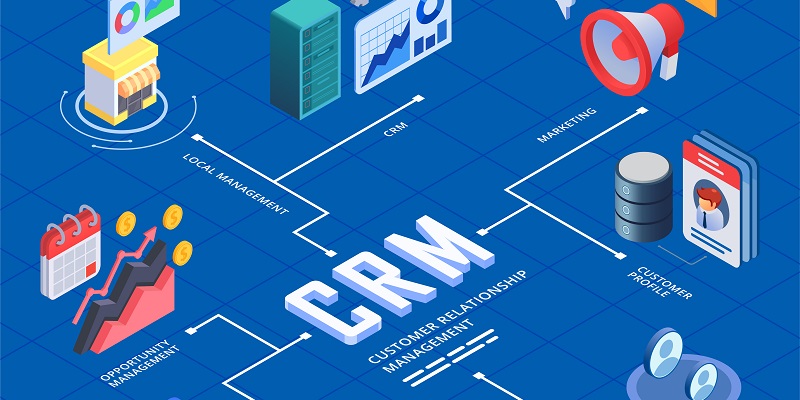
In today’s fast-paced business environment, customer relationship management (CRM) plays a pivotal role in the success of any company. Implementing automation in CRM processes offers numerous benefits for businesses. By leveraging technology to streamline and optimize routine tasks, businesses can significantly enhance their customer relationships and improve overall efficiency.
Enhancing customer satisfaction through automation
Automation can revolutionize the way businesses interact with their customers, leading to increased customer satisfaction. With automation, companies can deliver timely and personalized interactions. By gathering and analyzing customer data, automation enables businesses to understand individual preferences and tailor their engagement accordingly. Personalized interactions not only make customers feel valued but also foster loyalty and long-term relationships.
Streamlining routine tasks with automation for better customer relationship-building
One of the primary advantages of automation in CRM is that it allows businesses to automate routine tasks. Tasks such as data collection, lead scoring, and follow-ups can be completed effortlessly, freeing up valuable time and resources. With automation handling these tasks, businesses can devote their efforts to building stronger customer relationships. This entails focusing on personalized interactions, addressing specific needs, and providing exceptional customer experiences.
Real-time data analysis and data-driven decision making with automation
Automation enables real-time data analysis, empowering businesses to make data-driven decisions. By utilizing automation tools to collect and analyze customer data, businesses gain valuable insights into customer behavior patterns, preferences, and trends. This invaluable information allows companies to anticipate and meet customer needs and expectations proactively. Data-driven decision-making ensures that businesses are always one step ahead, positioning them for sustainable growth and success.
Simplify lead capturing, tracking, and nurturing processes
Automation simplifies lead capturing, tracking, and nurturing processes, saving time and improving efficiency. Automation tools facilitate the seamless integration of leads into CRM systems, reducing manual data entry errors and enhancing lead management. By automatically tracking the progress of leads, businesses can prioritize and allocate resources effectively. Moreover, automation enables customized lead nurturing campaigns, delivering personalized content and follow-ups based on individual preferences, significantly increasing the chances of conversion.
Increasing conversion rates with automated lead nurturing campaigns
Implementing automated lead nurturing campaigns can be a game-changer for businesses seeking to improve conversion rates. Automation tools allow for the delivery of personalized content and timely follow-ups, ensuring prospects are engaged throughout their buying journey. By delivering relevant and valuable information to leads, businesses can build trust, establish credibility, and nurture relationships, ultimately boosting conversion rates.
Facilitating targeted email marketing campaigns through automation
Automation plays a pivotal role in facilitating targeted email marketing campaigns. By leveraging automation tools, businesses can segment their customer base based on demographics, preferences, and purchase history. This segmentation enables the delivery of highly targeted and relevant email campaigns to specific customer segments. The result: increased open rates, click-through rates, and ultimately, improved customer engagement.
Streamlining the sales process with automation tools
Automation streamlines the sales process by automating various tasks, such as contact management, opportunity tracking, and forecasting. By automating these essential sales activities, businesses can eliminate manual errors and redundant processes. Automation helps sales teams stay organized, prioritize their activities effectively, and focus on building meaningful relationships with potential and existing customers. As a result, businesses can accelerate their sales cycles and improve overall revenue generation.
Enhancing customer support and service processes through automation
Automation revolutionizes customer support and service processes, ensuring prompt and efficient assistance to customers. By integrating automation tools into their CRM systems, businesses can automate ticket generation, assign queries to the appropriate department or agent, and provide real-time updates. Furthermore, automation enables the creation of self-service portals and knowledge bases, empowering customers to find solutions on their own. Enhancing customer support and service processes through automation leads to increased customer satisfaction, reduced churn rates, and fostered loyalty.
In today’s competitive landscape, finding the right tools and technologies is crucial to streamline processes and enhance CRM. Automation provides businesses with invaluable capabilities to optimize routine tasks, analyze real-time data, deliver personalized interactions, and streamline sales and support processes. By embracing automation, businesses can build stronger customer relationships, improve customer satisfaction, and gain a competitive edge.
In conclusion, automation has the power to transform customer relationship management, enabling businesses to deliver exceptional experiences and build long-lasting relationships. By implementing automation and leveraging the right tools and technologies, companies can streamline processes, enhance efficiency, and ultimately elevate their customer relationship management strategies to new heights.