

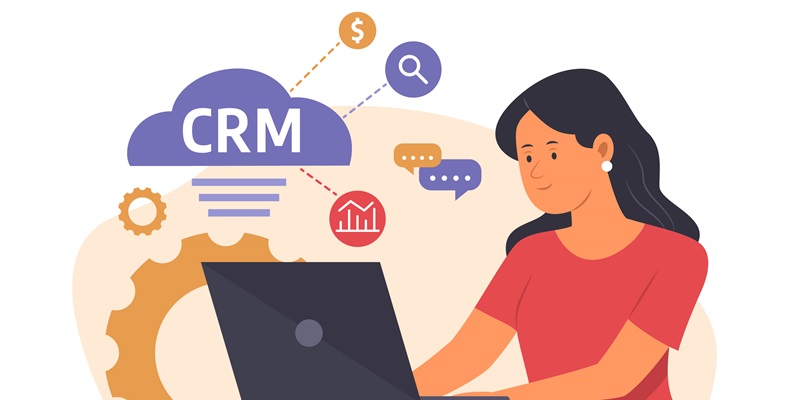
The merging of AI with Salesforce CRM is a game-changer for customer relations. Companies utilizing Salesforce’s AI advancements are undergoing a profound transformation as AI reshapes every facet of CRM, not just customer engagement. User experiences are enriched, productivity soars, and operational efficiencies increase.
With AI deeply embedded in Salesforce, the future hinges on seamless automation, more intimate customer connections, and advanced business analytics. These pillars signify the shift toward smarter, AI-driven business strategies within CRM platforms.
Salesforce’s AI integration is a testament to empowering organizations with tools for better decision-making, leading to more intelligent interactions and optimized business outcomes. This reflects a broader trend of AI transforming not just CRM but entire business ecosystems, leveraging vast data to tailor experiences and drive growth.
Enhanced Customer Connection through AI
The incorporation of AI into Salesforce CRM has redefined the concept of customer connection. Businesses now have the power to provide tailored experiences based on elaborate data analytics. AI’s role is central in interpreting customer data, which, in turn, fuels personalized recommendations, creating a shopping experience that feels bespoke. The technology digs deep into the customer psyche, emerging with insights that lead to stronger, more meaningful relationships.
Moreover, customer engagement is soaring thanks to the proliferation of AI-driven chatbots and automated interactions. Interactive chatbots are becoming a mainstay, addressing customer queries and providing support around the clock. This not only ensures prompt service but also enables humans to focus on more complex customer issues. These intelligent systems are equipped to handle a significant volume of interactions, offering quick and accurate responses, which elevate the customer experience while streamlining the workforce’s focus.
Streamlined Business Processes with Automation
Efficiency is the beating heart of a productive enterprise, and Salesforce’s AI boosts it to new heights. By introducing automation tools, Salesforce effectively streamlines business operations. Processes that once required manual input are now automated, enabling businesses to repurpose valuable time and resources toward strategic initiatives. Automated workflows cut through the tedium of routine tasks, ensuring that businesses run like a well-oiled machine.
Sales representatives, for instance, are now investing more time in actual selling, as opposed to being bogged down by administrative tasks. The liberation from these responsibilities paves the way for higher yields in productivity and sales. This significant shift in time management underscores the transformative impact of AI on Salesforce CRM, foregrounding a future where focus is aligned with growth and innovation.
BI and Predictive Analytics in Decision Making
Salesforce’s AI integration also encompasses Business Intelligence (BI) and Predictive Analytics, which are reshaping the decision-making process. These tools are empowering companies with insights into market trends and customer behaviors like never before. By analyzing data patterns, Salesforce AI can anticipate future sales trends, allowing businesses to make informed, strategic decisions.
Sales representatives are finding that much of the time once used for data entry can now be allocated elsewhere, thanks to AI automating these laborious tasks. Predictive analytics provide robust forecasts, transforming a vision of the future guided by guesswork into one backed by data. This analytical prowess allows companies to stay ahead of the curve, explicitly tailoring their strategies to meet the market’s evolving needs.
Leveraging NLP for Improved User Interactions
Natural Language Processing (NLP), a subset of AI, is simplifying the way users interact with Salesforce applications. By incorporating NLP, Salesforce enables its users to perform complex tasks through natural, conversational exchanges. This innovation is not only improving the efficiency of data analysis and reporting but is also heightening user satisfaction. Salesforce users have reported that interfaces with integrated NLP are more intuitive, leading to a more productive workflow.
The simplification of complex tasks has had a ripple effect, making Salesforce an even more indispensable tool for businesses. Users are now able to focus more of their energy on strategic thinking and innovation, rather than navigating cumbersome interfaces. NLP thus stands as a testament to the seamless integration of human language with computer intelligence within Salesforce’s ecosystem.
Commitment to Data Privacy and Security
In an age where data is invaluable, the security of AI systems cannot be overstated. Salesforce is at the forefront of integrating advanced security measures. As AI technologies gather and process vast quantities of data, the importance of maintaining robust privacy shields and preventing breaches is paramount. Salesforce understands this and deploys sophisticated security protocols to ensure that user data is protected.
The confidence that clients place in Salesforce is reinforced by the company’s clear commitment to security. Surveys and polls routinely reflect high levels of trust in Salesforce’s ability to safeguard data. This trust is crucial for businesses to confidently leverage AI’s power within their CRM systems while knowing their information remains secure.
Adaptive Learning Models: Staying Ahead with AI
In the dynamic world of consumer behavior and market trends, Salesforce remains at the forefront, thanks to its AI-driven adaptability. Salesforce’s AI-powered platform leverages advanced adaptive learning models to stay attuned to shifting market demands, ensuring that it doesn’t just keep pace with changes but anticipates them. This capability is met with acclaim from users who value the technology’s ability to smartly evolve alongside their changing needs.
Salesforce’s AI continuously learns from user interactions and incoming data, honing its recommendations and workflows. This perpetual learning underscores the platform’s ability to not just meet current user expectations but to seamlessly transition as new trends and requirements emerge. For businesses, this means a CRM solution that is not static but a dynamic, evolving partner capable of adjusting to the unpredictable nature of the market, aligning with both present and future needs.
Democratizing Technology: The Rise of No-Code AI Solutions
Salesforce’s no-code artificial intelligence solutions mark an era where cutting-edge technology is no longer locked behind coding barriers. These AI tools empower even non-tech-savvy users, such as marketers, to craft personalized experiences for customers. By simplifying the creation process, ideas can come to life faster, fostering an inclusive space where strategic innovation outshines technical skill.
This shift is transformative, particularly for businesses of all sizes, as it levels the playing field. Salesforce’s no-code AI is pivotal, leading to a new frontier where customer relationship management is seamlessly integrated with AI. The result is smarter business operations, enhanced customer engagement, and deeper insights.
In essence, Salesforce is spearheading a CRM revolution. It’s blending AI into the core of business-customer interactions, redefining the landscape of customer service, and gearing organizations toward a future where intelligent, AI-driven customer engagement is the norm.