

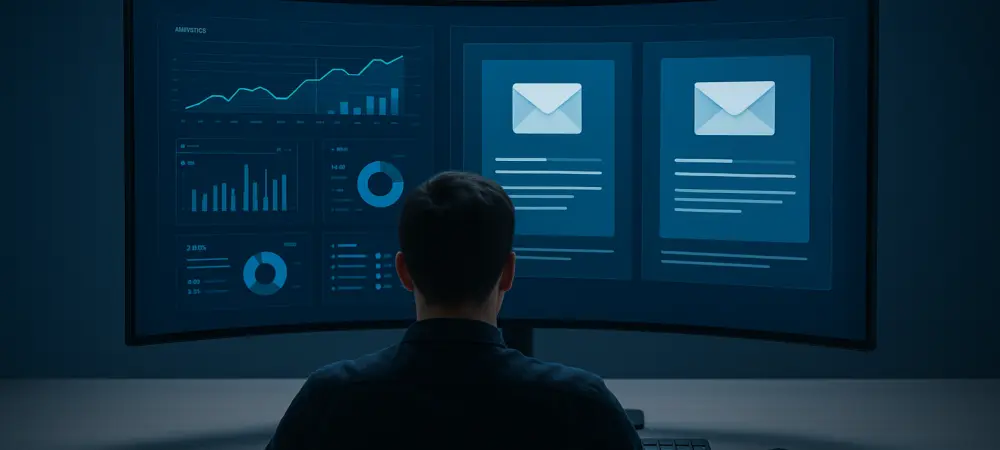
Digital marketers are discovering that the most valuable real estate in the modern economy is not found on a billboard or a social feed, but tucked quietly between a bank statement and a colleague’s meeting invite. In the current 2026 landscape, the digital environment has become so saturated with fleeting advertisements that the inbox remains one of the few places where a brand can capture undivided attention. This shift represents a fundamental change in how performance media is executed, moving beyond the simple search bar into a hybrid space where intent meets a personal communication environment.
Why the Modern Inbox Is the Last Great High-Intent Sanctuary
The psychological state of a user checking their inbox is fundamentally different from that of a user scrolling through a social media timeline. On platforms designed for infinite scrolling, the user is often in a passive, discovery-oriented mindset where the goal is entertainment or distraction. In contrast, the inbox is a center for life management. Whether a person is clearing out work tasks, reviewing personal finances, or tracking a shipment, the “work mode” mindset is prevalent. This distinction is vital for advertisers because an ad served in this environment encounters a consumer who is already prepared to make decisions and process information.
Overcoming the noise of the standard display network requires a more controlled environment than the chaotic landscape of third-party websites and mobile applications. The average display network ad often falls victim to banner blindness or appears in contexts that lack relevance to the user’s current activity. However, email placements reside in a digital sanctuary where the user has already vetted the space. By appearing within an interface that users trust for their most sensitive communications, paid search placements leverage a borrowed credibility that is difficult to replicate on the open web.
The distinction between a standard search query and a personal message placement lies in the continuity of the experience. When a user performs a search, they are hunting for a specific answer; when they check their email, they are managing their digital life. A well-placed ad in Gmail or Outlook does not just provide an answer; it provides a solution within the context of their daily routine. This nuance allows for a deeper level of engagement, as the placement feels less like an interruption and more like a relevant extension of the user’s ongoing personal administration.
Understanding the Migration From Traditional Search to Hybrid Placements
The current evolution of platforms like Google Demand Generation and Microsoft Audience Ads signifies a departure from the rigid boundaries of the Search Engine Results Page. These systems now allow search engine data to follow the user into their personal ecosystem. In 2026, the industry moved toward an audience-first model where the data gathered from billions of searches is used to predict what a user might need before they even return to the search bar. This hybrid approach allows advertisers to reach high-intent prospects in the inbox based on their recent keyword history, effectively blending the power of search with the visual appeal of display.
The emergence of “Search Themes” has been a pivotal development in this migration. Rather than relying solely on the contents of an email or the general interests of a user, these themes allow keywords to act as a bridge. For instance, if a consumer recently searched for “best insurance rates for families,” the search engine can now trigger a highly relevant placement in that user’s inbox shortly after. This keyword-based targeting outside of the traditional search bar creates a persistent brand presence. It ensures that the brand remains top-of-mind during the critical window between the initial research phase and the final purchase decision.
Furthermore, the transition from traditional display to native email units has been accelerated by the increasing value of first-party data. As privacy regulations continue to reshape the digital world, the ability to target users within an authenticated environment—where they are logged in with a permanent identity—is invaluable. Email placements rely on this direct relationship between the platform and the user, allowing for more accurate tracking and attribution than traditional cookie-based display ads. This shift toward authenticated traffic ensures that marketing spend is directed toward real humans rather than automated bots.
Key Performance Indicators and Vertical Sensitivity in Email Marketing
Measuring the success of email placements requires a departure from the metrics used in standard search campaigns. While a search ad on a results page might drive an immediate click and conversion, email placements often contribute to a broader “Halo Effect.” Visibility in the inbox frequently drives an increase in branded searches later in the day or week. Consequently, marketers must look at view-through conversions and assisted conversion paths to understand the true impact. In the current cycle from 2026 to 2028, companies that prioritize multi-touch attribution are finding that email placements are often the silent engine behind their most profitable search queries.
Vertical sensitivity plays a massive role in how these placements perform. For e-commerce brands, these ads are exceptionally effective for remarketing. If a user leaves a shopping cart abandoned, an email placement serves as a persistent, visual reminder in a space the user checks multiple times a day. In contrast, for prospecting in sectors like insurance or financial services, the success patterns differ. In these high-stakes verticals, the inbox provides the necessary space for a user to consider a complex offer. A well-timed placement can reach a prospect when they have the mental bandwidth to engage with a professional service, leading to higher quality leads compared to social media leads.
The argument for incrementality is perhaps the most compelling reason to invest in this channel. Many digital site visits would simply never happen through organic channels because the brand would not be present in the user’s moment of “life management.” By isolating email placements and testing them against a control group, brands have identified that these units capture a segment of the audience that is active but not currently searching. This incremental reach prevents competitors from monopolizing the user’s attention during the gaps in their active search sessions, ensuring a more comprehensive market coverage.
Expert Analysis on the Limitations of Performance Max Automation
Performance Max has become a staple of modern advertising, but its “black box” nature often creates a path of least resistance problem. The underlying algorithms are designed to find the cheapest and easiest conversions to satisfy the set goal. Often, this means the system will favor traditional search or shopping ads because they have a higher immediate probability of conversion. As a result, the algorithm frequently ignores email placements entirely, or it shifts budget away from them over time as it seeks a more immediate return on investment. This documented decay in inbox visibility can leave a brand vulnerable in the long term.
Avoiding cannibalization is a critical challenge for any sophisticated advertiser in 2026. When email placements are lumped into a single automated campaign, it becomes difficult to determine if those ads are actually driving new growth or simply appearing in front of users who were already going to convert through another channel. To combat this, experts suggest isolating standalone Demand Generation campaigns. By creating a specific campaign dedicated to email and social-adjacent placements, marketers can protect their budget and ensure that the inbox remains a consistent part of the media mix, regardless of the fluctuations in search volume. Research findings have consistently shown that email placements can produce superior click-through rates compared to the broader Google Display Network. The reason is simple: the inbox is a high-attention environment with less clutter. While a display ad on a news website is competing with articles, videos, and other banners, an email ad is often one of the only visual elements in a list of text-based messages. This lack of competition allows for a much higher engagement rate. However, if these placements are buried within an automated Performance Max campaign, the advertiser loses the ability to optimize specifically for this unique environment, often resulting in wasted potential.
A Proven Framework for Creative Optimization and Campaign Structure
Effective creative for the inbox must follow the “30-character rule.” Engineering a headline to be 30 characters or fewer ensures that the primary hook is visible even in a crowded inbox. This requires a shift in copywriting strategy, moving toward punchy, action-oriented language that communicates value instantly. The goal is to stand out among the subject lines of personal and professional correspondence without appearing like intrusive spam. Designing for the “two-stage” experience is another tactical requirement for success. The first stage is the teaser—the small image and headline that appear in the inbox list. The second stage is the expanded ad, which appears once the user clicks. The transition between these two stages must be seamless. The expanded ad should act as a “closer,” providing the lifestyle imagery and detailed call to action that justifies the initial click. This structural best practice ensures that the user is not just clicking out of curiosity but is being led through a deliberate journey from interest to intent.
From a structural standpoint, separating video and display assets is essential for preserving data integrity. When video assets are mixed with static images in a hybrid campaign, the platform often prioritizes video due to its high engagement metrics, even if the static email placements are driving better actual sales. By keeping these assets in separate campaign buckets, marketers can accurately measure the return on each format. This allows for a clean testing environment where budgetary strategies can be adjusted based on real-world performance rather than the preferences of a generalized algorithm.
The transition toward email-integrated paid search offered a necessary pivot for brands seeking resilience in a cluttered market. Marketers who moved away from total automation found that granular control over inbox placements secured a more stable acquisition cost. The analysis demonstrated that while search queries captured existing demand, the strategic use of the inbox created it. This shift in media buying transformed the email client from a simple communication tool into a sophisticated engine for incremental growth. By prioritizing first-party data and refined creative constraints, advertisers turned the most private digital space into their most effective growth channel. This evolution solidified the role of hybrid placements as a cornerstone of modern digital strategy.