

The split-second decision a consumer makes when opening a promotional email often rests on the clarity and speed of the visual assets greeting them in the inbox. In a digital environment where attention is the most valuable currency, the “visual hook” serves as the primary driver for engagement. Data suggests that a well-executed visual strategy can lead to a 42% boost in click-through rates, making the technical execution of images just as important as the creative direction itself. However, many brands struggle to navigate the delicate balance between high-resolution aesthetics and the rigid technical constraints imposed by modern email clients.
This struggle highlights the paradox of the contemporary inbox, where the desire for cinematic quality often clashes with the reality of data limits and rendering engines. When a brand fails to optimize its visual assets, the consequences are immediate and damaging. Improperly embedded images frequently lead to “clipping,” a phenomenon where an email client cuts off the message prematurely due to excessive file size. Furthermore, slow load times frustrate the recipient, often resulting in an immediate delete or, worse, a report to the spam filter. Avoiding these pitfalls requires a shift in perspective, moving away from viewing images as mere decorations and toward treating them as functional, high-performance software components.
Are Your Brand’s Visuals Reaching the Inbox or the Trash?
The high stakes of digital marketing in the current landscape mean that every pixel must earn its place within the limited real estate of a mobile screen or desktop window. Achieving that 42% boost in click-through rates is not merely a matter of choosing a pretty picture; it hinges on the seamless delivery of that image to the end user. When an image fails to load or appears distorted, the perceived credibility of the brand takes an immediate hit. This visual failure signals a lack of professional oversight, suggesting to the consumer that the brand may be equally careless in its product quality or customer service.
The technical errors that lead to these failures are often invisible to the sender but glaringly obvious to the recipient. For instance, an uncompressed high-resolution hero banner might look stunning on a designer’s wide-screen monitor, but it becomes a liability when it triggers a spam filter or causes a three-second delay on a cellular connection. This delay is often the difference between a conversion and a bounce. By the time the image finally renders, the user has likely moved on to the next notification. Technical precision is therefore the foundation upon which creative success is built, ensuring that the brand’s message is actually seen rather than discarded.
The Evolution of Visual Communication in 2026
The era of the “image-only” email, which was once a popular shortcut for designers, has officially come to an end in favor of a more functional, hybrid approach. Modern marketing demands that visuals be integrated with live text to ensure that the core message remains accessible even if the recipient has image-loading disabled. This evolution reflects a growing sophistication in consumer behavior; users now expect emails to be as responsive and interactive as a standalone website. Consequently, the design process has shifted toward creating assets that serve a specific communicative purpose, rather than just filling empty space.
A major part of this evolution is the total transition from file attachments to integrated assets. Traditional image attachments are now considered a relic of a less efficient era, as they increase the weight of the email and frequently trigger security protocols that hide the content from the user. In contrast, the current standard involves the use of linked assets that reside on high-speed servers, allowing the email body to remain lightweight while still delivering high-impact visuals. As mobile-first consumption continues to dominate the landscape, these delivery protocols have become more refined, prioritizing vertical layouts and rapid rendering to accommodate the “on-the-go” nature of modern life.
Technical Foundations for High-Performance Imagery
Establishing the correct dimensions is the first step toward universal compatibility across the fragmented landscape of email clients like Gmail, Outlook, and Apple Mail. The “sweet spot” for image width currently sits between 600 and 800 pixels, a range that ensures the content fits perfectly within the standard viewing pane without requiring horizontal scrolling. While high-density displays may tempt designers to use larger files, maintaining this specific width allows for fluid scaling on smartphones while preserving enough detail for desktop viewers. This technical boundary acts as a safeguard against the erratic rendering behaviors often seen in older versions of desktop software.
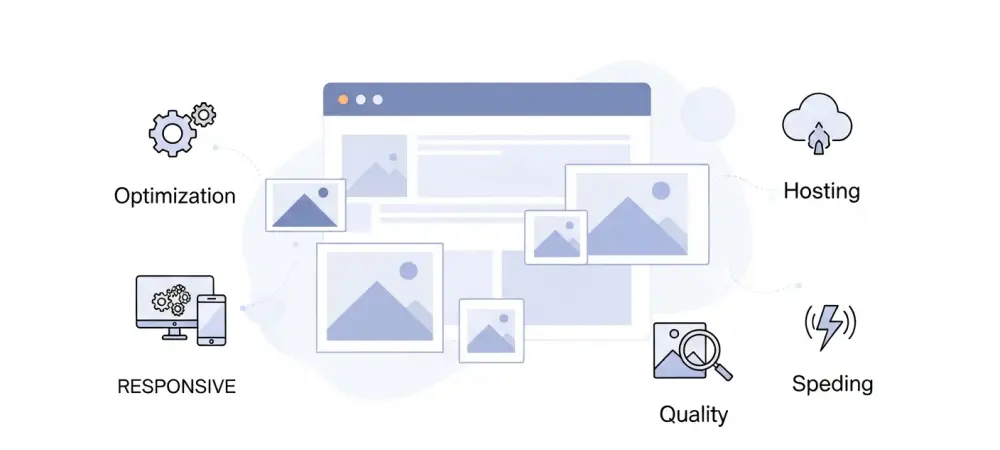
Managing the “weight of speed” is equally critical, with the industry standard for individual image files now firmly set below 200KB. Keeping files under this limit is the most effective way to prevent message truncation and reduce the likelihood of a user bouncing due to slow load times. To achieve this, strategic format selection is necessary. JPEGs remain the preferred choice for lifestyle photography and complex scenes due to their superior color depth at smaller file sizes. Conversely, PNGs are the better option for logos, icons, and UI elements that require sharp edges or transparent backgrounds. This distinction ensures that every asset is optimized for its specific role within the template.
The move from high-fidelity design tools to email-ready assets involves a rigorous compression workflow. Designers often start in environments like Figma or Adobe XD, where they can create at maximum resolution. However, before these assets are deployed, they must pass through specialized compression software that strips away unnecessary metadata without sacrificing visual clarity. This process ensures that the final image retains its professional sheen while being light enough to travel through the most congested network conditions. By mastering this workflow, brands can maintain a high aesthetic standard without risking the deliverability issues associated with heavy files.
Industry Benchmarks and Expert Methodologies
High-growth commerce brands have largely adopted the “Design-Export-Compress-Embed” standard to maintain consistency across their global campaigns. This professional workflow is designed to eliminate human error by creating a repeatable sequence of events that guarantees quality. By separating the design phase from the optimization phase, teams can focus on creative storytelling without getting bogged down by the technical limitations of individual email clients until the final stages of production. This methodology ensures that every asset is scrutinized for both its beauty and its performance before it ever reaches a subscriber’s inbox.
Expert perspectives on image delivery have also shifted, particularly regarding the technical methods used to place images within the code. While Content ID (CID) embedding was once a popular way to ensure images were present even without an internet connection, it has largely fallen out of favor due to its lack of support among web-based clients and its tendency to increase the total email weight. Instead, technical specialists now favor linked inline images. This approach keeps the email file itself extremely small, as it only contains a reference to an image hosted on an external server. This keeps the delivery process fast and ensures that the email is less likely to be flagged by automated spam detection systems. The reliability factor has led to the adoption of external hosting via Content Delivery Networks (CDNs) as the gold standard for modern email imagery. A CDN ensures that the image is served from a location geographically close to the recipient, further reducing load times. Furthermore, using a CDN allows marketers to update an image in real-time even after the email has been sent, providing a level of flexibility that was previously impossible. This data-driven insight into server performance has made the use of a reliable hosting infrastructure a non-negotiable component of any sophisticated marketing stack, as it provides the most consistent experience for a diverse audience.
Practical Frameworks for Strategic Image Deployment
The reinforcement principle dictates that every visual must instantly answer the question of what the customer is receiving. Using stacked product displays or clear, uncluttered arrangements allows a brand to communicate variety and value within seconds of the email being opened. This strategy minimizes the cognitive load on the recipient, making it easier for them to process the offer and move toward the call to action. When images work in tandem with the headline, they create a cohesive narrative that guides the user through the conversion funnel with minimal friction.
Establishing a visual-textual equilibrium is another essential framework for ensuring both accessibility and deliverability. By balancing high-quality lifestyle shots with live, selectable text, brands ensure that their message is conveyed even to users who have images blocked by default. This approach also benefits individuals using screen readers, as the live text provides the necessary context that an image-only email would lack. Mastering alt-text as a fail-safe is a key part of this strategy; writing descriptive, conversion-oriented alt-text ensures that even a blank box can contribute to the campaign’s success by informing the user of what they are missing.
Vertical optimization has become the mandatory standard for mobile-first audiences, requiring a complete rethink of traditional design layouts. Tall, narrow hero images are more effective on smartphones as they take advantage of the natural scrolling motion and eliminate the need for pinching or zooming. This demonstrative approach also applies to the “Show, Don’t Tell” rule, where images are used to highlight product textures, real-world applications, or the sensory details of a physical item. By providing these visual cues, brands reduce consumer uncertainty and build trust, as the recipient can clearly see the quality and utility of the product before making a purchase decision.
The strategic integration of imagery in modern email marketing reached a turning point where technical efficiency and creative intent became inseparable. Marketers realized that the most beautiful design was useless if it failed to load or triggered a spam filter. Consequently, the focus moved toward a “function-first” philosophy, where every image was optimized for speed, clarity, and mobile responsiveness. By adopting external hosting through CDNs and utilizing high-performance compression workflows, brands ensured that their visuals reached the inbox with consistency and precision. This shift allowed for a more accessible user experience, as descriptive alt-text and live-text overlays provided a robust fallback for diverse viewing conditions. Ultimately, these methodologies transformed the inbox into a dynamic storefront, where carefully placed visuals acted as the primary bridge between consumer curiosity and brand conversion. This disciplined approach to imagery provided the foundation for the next generation of digital communication, ensuring that visual storytelling remained a powerful tool for engagement regardless of the recipient’s device or connection speed. This progress was defined by a commitment to technical standards that respected the recipient’s time and attention.