

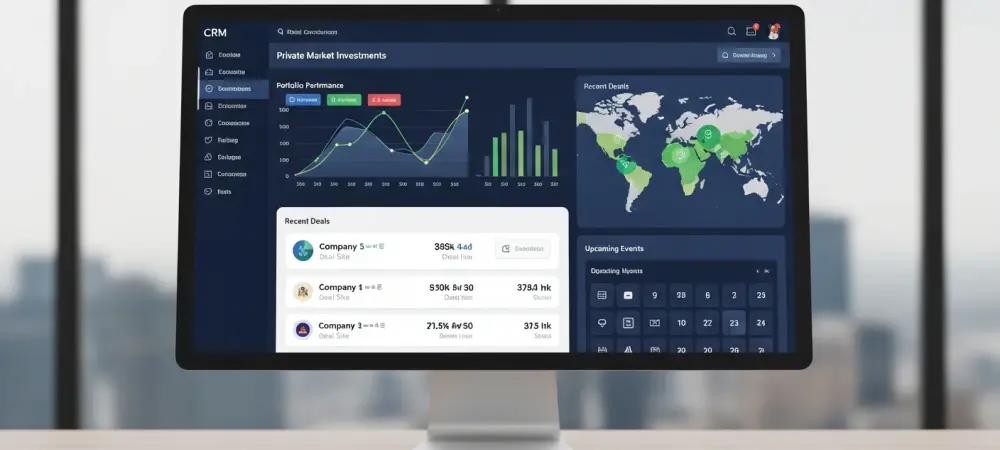
The long-standing wall between a venture capital firm’s back-office accounting and its front-office deal-making is finally crumbling under the weight of modern data demands. Historically, investment professionals have been forced to oscillate between generic relationship management tools and specialized fund administration software, leading to a fragmented view of their own operations. The emergence of integrated solutions, most notably through Carta’s expansion into the CRM sector, signals a fundamental shift toward a unified operating system for private markets. This evolution aims to transform the CRM from a passive digital Rolodex into a dynamic engine that drives the entire investment lifecycle.
The Evolution of Verticalized CRM in Private Markets
The transition from horizontal SaaS to verticalized platforms marks a turning point for private equity and venture capital firms. For years, these organizations relied on tools like Salesforce or HubSpot, which required extensive, costly customizations to track the unique nuances of capital calls and cap tables. The current trend represents a departure from these “one-size-fits-all” models toward industry-specific architectures that understand the underlying mechanics of private equity.
By embedding CRM capabilities directly into the fund administration layer, platforms like Carta provide a context that generic tools lack. This integration means that when a partner views a contact, they are not just seeing a name and a phone number; they are seeing a live link to that individual’s holdings, historical participation, and legal standing. This technological shift reflects a broader market demand for “operating systems” that handle the specific regulatory and operational burdens of alternative investments without requiring third-party plugins.
Core Architectural Components and Functionalities
Seamless Fund Administration Integration
The defining technical achievement of an integrated CRM is the bidirectional flow of data between the front office and the back office. In traditional setups, if an investor’s bank details changed, an IR professional would update the CRM, but the fund administrator might still use the old data, leading to failed distributions. Integrated systems solve this by creating a single source of truth where a single update propagates across the entire infrastructure, ensuring total data integrity.
This structural alignment allows for real-time visibility into liquidity and dry powder. Instead of waiting for a quarterly report to understand a fund’s position, deal teams can see exactly how much capital is available for deployment based on the latest capital calls and distributions recorded in the ledger. This connectivity reduces human error and eliminates the manual reconciliation processes that previously bogged down investment operations.
End-to-End Investment Lifecycle Management
Managing an investment from sourcing to exit requires a system that can handle diverse data types, from subjective meeting notes to rigid legal documents. The integrated CRM provides a structured environment where due diligence materials, term sheets, and cap table data coexist. This allows firms to track the “pedigree” of a deal, seeing exactly how a relationship evolved from an initial coffee chat to a Series B board seat.
Furthermore, the technology enables more sophisticated portfolio monitoring. By linking the CRM to the company’s actual cap table, the system can automatically flag when a portfolio company is nearing a new funding round or when an exit event is imminent. This proactive monitoring replaces the reactive nature of legacy systems, giving firms a competitive edge in fast-moving markets where timing is everything.
Unified Investor Relations and Engagement Tracking
Investor Relations (IR) professionals benefit from a centralized repository that tracks every interaction alongside financial performance. These tools allow for granular tracking of Limited Partner (LP) behavior, such as which investors are opening reporting portals or downloading tax documents. This level of insight enables IR teams to tailor their communication strategies, identifying which LPs might be interested in a follow-on fund based on their past engagement patterns.
Centralization also streamlines the heavy lifting of capital calls and distributions. When the CRM is aware of the fund’s legal commitments, it can automate the generation and tracking of notices. This reduces the administrative burden on the team and provides a more professional experience for the investor, who can access all their historical data through a single, secure interface.
Emerging Trends in Private Market Software
The industry is currently witnessing a massive consolidation of the “tech stack” as firms battle tool fatigue. The previous decade was defined by a modular approach, where firms bought the best tool for each specific task. However, the resulting data silos proved too inefficient. Today, the priority has shifted toward consistency and speed, leading firms to favor all-in-one platforms that offer a cohesive user experience across all departments.
Moreover, there is an increasing demand for real-time financial transparency. As the private markets become more institutionalized, investors are no longer satisfied with static PDF reports sent months after a quarter ends. The move toward integrated CRMs is driven by a need for live dashboards that provide an up-to-the-minute view of portfolio health, valuation changes, and internal rates of return (IRR).
Real-World Applications and Sector Impact
Venture capital firms are deploying these integrated systems to automate what were once manual, labor-intensive processes. For example, when a new deal is closed, the system can automatically update the cap table, notify the fund administrator, and log the transaction in the CRM without a single line of data being entered twice. This automation allows small teams to manage much larger portfolios and more complex fund structures than was previously possible.
In the private equity sector, the impact is seen in the consolidation of fragmented data. Firms managing multiple funds with overlapping LPs can now view their entire exposure across the board. This unified view is essential for compliance and risk management, particularly when dealing with “Know Your Customer” (KYC) and Anti-Money Laundering (AML) requirements, as the platform can maintain a single, verified identity for each investor.
Implementation Hurdles and Technical Constraints
Despite the clear benefits, migrating to an integrated CRM is not without its challenges. The primary obstacle remains the migration of historical data from legacy systems, which are often unstructured and filled with inconsistencies. Ensuring that decades of investment history align perfectly with a new, rigid data model requires significant technical oversight and can lead to temporary operational friction during the transition period.
Additionally, cross-platform compatibility remains a work in progress. While an integrated system works well within its own ecosystem, firms often need to export data to other specialized tools for tax preparation or deep-dive analytics. Ongoing development in API connectivity is essential to ensure that “integrated” does not mean “isolated,” allowing the CRM to remain the hub while still speaking to the broader financial software landscape.
Future Projections and Market Transformation
The next phase of this technology will likely involve the application of machine learning to the vast amounts of proprietary data these platforms hold. We are moving toward a future where a CRM can proactively suggest deal opportunities by identifying patterns in successful portfolio companies or predict which LPs are most likely to commit to a new fund. This predictive capability will transform the CRM from a record-keeping tool into a strategic advisor.
Long-term, this integration will contribute to a more liquid and transparent private market. As data becomes more standardized and accessible, the friction associated with secondary market transactions and investor reporting will diminish. The professionalization of the back office, powered by these integrated engines, will ultimately make private equity more accessible to a broader range of institutional and individual investors.
Summary of the Integrated CRM Landscape
The transition of the CRM from a standalone contact list to the core engine of an investment firm reflected a critical maturation of the private markets. This review found that by bridging the gap between back-office data and front-office relationships, platforms like Carta significantly reduced operational risks while increasing the speed of execution for deal teams. While data migration hurdles remained a notable friction point, the shift toward verticalized, all-in-one “operating systems” proved to be an inevitable response to the complexity of modern alternative investments. Moving forward, firms must prioritize the cleanup of historical records to fully leverage the predictive power of these unified systems. The competitive landscape for fund managers now depends less on having a unique Rolodex and more on the ability to harness integrated data for superior decision-making and investor transparency.