

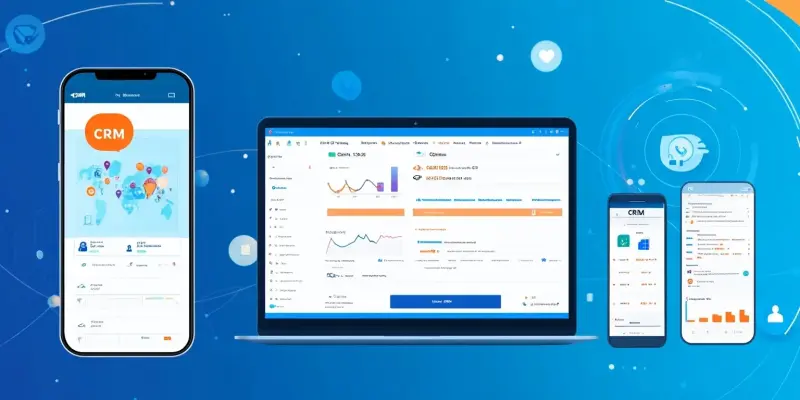
HubSpot has unveiled its Smart CRM platform, aiming to revolutionize the way businesses manage customer data, teams, and applications within a single, cohesive ecosystem. This cutting-edge platform promises to improve the customer journey by centralizing data from various customer-facing functions such as sales, service, marketing, operations, content, and commerce. By seamlessly uniting these diverse functions, HubSpot’s Smart CRM is poised to elevate both team efficiency and customer satisfaction to unprecedented levels.
The launch of this innovative platform addresses the growing need for an integrated approach to managing customer interactions. Businesses often struggle with fragmented data systems that lead to inefficiencies and missed opportunities in engaging with customers. HubSpot Smart CRM tackles these challenges by providing a unified view of customer data, making it easier for teams to collaborate and create seamless customer experiences. In essence, HubSpot’s Smart CRM links the various facets of customer relationships into one streamlined, effective hub.
A Unified Approach to Customer Data
HubSpot Smart CRM is engineered to gather and align data from various departments, ensuring that customer-facing teams work in harmony. This integration eliminates the silos that typically separate sales, marketing, and customer service functions, fortifying the entire customer experience. Through converging these departmental data streams, HubSpot supplies businesses with what it terms a “single source of truth,” offering a holistic and accurate view of the customer.
By eradicating complex configuration requirements, this unified approach simplifies the implementation process for businesses of all sizes. Teams can leverage the unified data to develop and automate workflows that span multiple departments, enhancing efficiency and productivity. Collaboration becomes more seamless as everyone operates with the same up-to-date information, which is crucial in today’s fast-paced business environment. This comprehensive alignment allows teams to streamline their processes, reduce redundancies, and focus more on delivering value to customers.
The platform’s user-friendly nature also ensures that businesses can quickly adapt and start reaping the benefits without the technical headaches often associated with adopting new technologies. As a result, HubSpot Smart CRM not only improves internal coordination but also contributes to faster decision-making and better customer insights, ultimately leading to more meaningful customer interactions and stronger business outcomes. The unification of data and processes creates a robust foundation for businesses to build and nurture their customer relationships effectively.
Key Features and Engagement Hubs
At the core of HubSpot Smart CRM are its six distinct Engagement Hubs, each specifically tailored to enhance different business functions. These hubs cater to the unique needs of marketing, sales, service, content, operations, and commerce teams, offering specialized tools and features to support each domain.
Marketing Hub and Sales Hub
The Marketing Hub is a versatile tool that encompasses everything from managing PPC campaigns to creating landing pages and newsletters. Designed originally for “inbound marketing,” it also includes features for lead capture and scoring, automation of marketing campaigns, and social media management. A standout aspect is its AI-powered capabilities through HubSpot Breeze, which assist in generating marketing strategies, monitoring campaign results, and creating high-quality content. These AI features allow marketing teams to make data-driven decisions and optimize their efforts, ensuring maximum reach and engagement.
The Sales Hub, on the other hand, serves as an all-encompassing solution for managing the entire sales process. It includes communication tools such as VoIP software, email, live chat, and advanced lead management systems. Meeting scheduling, CPQ (Configure, Price, Quote) software, sales reports, and performance management features are all integrated within this hub. AI is leveraged extensively within the Sales Hub for tasks like forecasting, lead qualification, and personalized outreach. By automating routine tasks and offering insightful data, the Sales Hub enables sales teams to focus on closing deals and nurturing relationships with customers.
Service Hub and Content Hub
The Service Hub is dedicated to unifying customer support and success strategies. It comes equipped with a comprehensive ticketing system, customer portal, knowledgebase software, and analytical tools that streamline support operations. AI applications within the Service Hub help automate ticket resolution processes, providing agents with instant suggestions and support during customer interactions. This results in quicker issue resolution and heightened customer satisfaction, as customers receive timely and accurate responses to their queries.
The Content Hub, a relatively new addition, centralizes tools for creating and managing content across various platforms. From a website builder to an AI-powered case study generator, this hub provides all the necessary tools for businesses to enhance their digital content. The AI features help in crafting content that is optimized for search engine rankings and consistency across multiple channels. Whether it’s generating blog posts, articles, or even podcasts, the Content Hub ensures that businesses can maintain a strong and cohesive online presence.
Operations Hub and Commerce Hub
The Operations Hub is designed to streamline and automate business processes across different departments. It offers programmable automation software, data sync solutions, and customizable reporting dashboards, all aimed at ensuring data accuracy and operational efficiency. The Data Quality Command Center provides a centralized hub for monitoring the health of your data, which is critical for maintaining the integrity and reliability of customer information.
The Commerce Hub focuses on managing all aspects of commerce processes, including quote creation, payment processing, and recurring subscription options. It supports end-to-end workflows for billing and payment tracking and integrates with third-party accounting tools like QuickBooks. This hub allows businesses to manage payments in over 20 countries using HubSpot Payments, making it easier to conduct global transactions and track revenue accurately.
AI Integration and Pricing Structure
A vital element of HubSpot Smart CRM is its robust AI integration through the HubSpot Breeze suite. This suite includes Copilot and other AI intelligence solutions that are embedded across all six Engagement Hubs. These AI tools are designed to automate routine tasks, provide advanced data insights, and support decision-making processes, significantly enhancing the platform’s overall functionality. For instance, the Breeze Social agent can oversee entire social media campaigns, while the AI-prospecting agent assists sales teams in identifying and targeting decision-makers.
The upcoming Agent.AI platform is set to further expand the capabilities of HubSpot Smart CRM. This new layer of AI aims to offer even more advanced features, making it easier for businesses to extract actionable insights from their customer data and improve their overall CRM strategies. With AI-driven innovations continuously being added, HubSpot ensures that its Smart CRM remains at the forefront of technological advancements, providing users with the best tools to optimize their workflows.
HubSpot’s pricing model is both transparent and flexible, accommodating a variety of business needs. Users can access a wide range of free tools across all six hubs, after which they have the option to upgrade to more advanced functionalities. Individual hubs start with “Starter” options priced around $20 per seat per month, while more comprehensive “Professional” and “Enterprise” options are available at higher price points. For businesses looking to integrate all hubs into a single Smart CRM, HubSpot offers “Customer Platform” plans at different tiers—free, Starter, Professional, and Enterprise. These comprehensive plans combine features from all six hubs, starting at $15 per month for the Starter plan, $1,170 for Professional, and $4,300 for Enterprise. Notably, some of these plans include Breeze AI capabilities, while advanced Breeze Intelligence features are offered on a “per credit” basis.
Conclusion and Insights
HubSpot Smart CRM is designed to collect and consolidate data from diverse departments, ensuring sales, marketing, and customer service teams work seamlessly together. This integration breaks down traditional silos, improving the overall customer experience. By merging these departmental data streams, HubSpot provides what it calls a “single source of truth,” delivering a comprehensive and accurate view of each customer.
This unified approach simplifies the implementation process for businesses of all sizes by eliminating complex configuration requirements. Teams can use this integrated data to create and automate workflows that span multiple departments, increasing efficiency and productivity. This seamless collaboration ensures everyone operates with up-to-date information, which is vital in today’s fast-paced business world. By aligning comprehensively, teams can streamline processes, reduce redundancies, and concentrate more on adding value to the customer experience.
The platform’s intuitive nature guarantees that businesses can quickly adapt and start benefiting without the technical headaches commonly associated with new technology. Consequently, HubSpot Smart CRM enhances internal coordination and fosters faster decision-making and improved customer insights. This leads to more significant customer interactions and stronger business outcomes. By unifying data and processes, HubSpot Smart CRM creates a solid foundation for businesses to effectively build and cultivate customer relationships.