

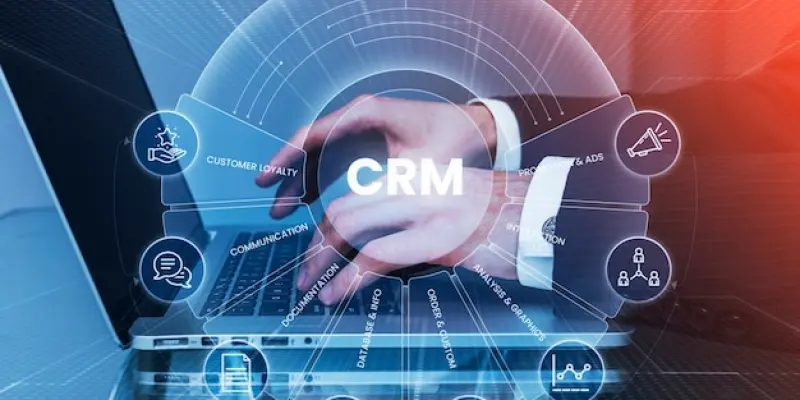
HubSpot’s recent innovation in integrating customer relationship management (CRM) with advanced artificial intelligence (AI) sets a new benchmark in business insights. The new CRM connector with ChatGPT enables over 250,000 businesses to delve deeply into their customer data, transforming the information into actionable insights across marketing, sales, and service functions. By allowing users to pose complex research questions tailored to specific data contexts, this tool accelerates the process of deriving meaningful outcomes. HubSpot’s integration comes at a time when organizations increasingly rely on AI to remain competitive. Businesses today seek enhanced efficiency, accessibility, and precision in data analysis, a demand addressed by this cutting-edge tool. Users gain unique capabilities in understanding customer behaviors and needs, optimizing internal workflows, and crafting more personalized engagement strategies. The partnership with OpenAI exemplifies the synergy between HubSpot’s platform and state-of-the-art AI technology.
Empowering Business Units with AI Insights
The introduction of AI-driven insights into HubSpot’s CRM has profound implications for various business units within organizations. Marketing teams can refine their strategies by analyzing customer engagement trends through customized workflows, thereby improving overall conversion rates. By employing AI-powered insights, marketers can also pinpoint high-value consumer segments, informing targeted campaigns and reducing churn. Similarly, sales teams benefit from better segmentation of target companies based on industry parameters, uncovering new business opportunities. This AI enhancement enables teams to forecast market demands and customize offers, leading to more effective customer acquisition strategies. Moreover, customer success teams can identify inactive companies with growth potential, deploying re-engagement strategies that are both targeted and effective. AI insights assist in understanding client journeys, identifying pain points, and fostering lasting relationships. These data-informed methods pave the way for proactive business strategies that can adapt swiftly to market changes.
Additionally, support teams using HubSpot’s AI-powered CRM can forecast staffing needs with unparalleled accuracy. By analyzing ticket volume trends, these teams can preemptively allocate resources, ensuring customer service remains seamless even during peak periods. This level of insight keeps operations running smoothly and mitigates the risk of service disruption. Overall, the integration of AI capabilities across units aligns strategies with actual consumer behavior, driving more coordinated and dynamic responses. By empowering different departments with powerful analytical tools, HubSpot reinforces its commitment to enhancing business efficacy and alignment.
Promoting Data Accessibility and Security
Beyond enhancing business insights, HubSpot’s integration with ChatGPT democratizes complex data analysis tools. Providing non-technical users access to sophisticated insights without needing extensive technical resources marks a significant shift in how businesses operate. As a result, decision-making becomes more inclusive and informed, leading to more holistic organizational growth. Importantly, maintaining data security is at the forefront of HubSpot’s integration. == Users have secure access only to their permissible CRM data, ensuring that privacy standards are upheld.== In doing so, HubSpot protects sensitive information while also encouraging confidence among users who leverage AI-driven insights. It should be noted that customer data from HubSpot is not used in AI training for ChatGPT, further reinforcing trust in secure data handling. This assurance of data privacy is crucial as organizations increasingly depend on AI for strategic decision-making. The global availability of this integration feature in multiple languages makes it incredibly versatile, allowing even more businesses to benefit from AI insights. HubSpot’s emphasis on data protection coupled with its offering of sophisticated AI tools carries a strong message to the business world: AI-driven data analysis can be both insightful and secure. As a result, companies adopting HubSpot’s CRM with ChatGPT can enjoy leveraging AI innovations while maintaining robust data governance frameworks.
The Future of AI-Powered Business Operations
HubSpot’s latest advancement in CRM technology, combined with sophisticated AI, establishes a new standard for business insights. The CRM connector integrated with ChatGPT empowers over 250,000 enterprises to explore their customer data fully, converting this information into actionable intelligence across marketing, sales, and service operations. By enabling users to ask intricate research questions specific to their data contexts, this tool speeds up deriving significant outcomes. The integration arrives as organizations increasingly depend on AI to stay competitive and meet the demand for improved efficiency, accessibility, and precision in analyzing data. This state-of-the-art tool provides users with the ability to comprehend customer behaviors and requirements, refine internal processes, and craft more tailored engagement strategies. HubSpot’s collaboration with OpenAI illustrates the harmony between its platform and advanced AI, showcasing how modern technology is effectively harnessed to elevate business performance.