

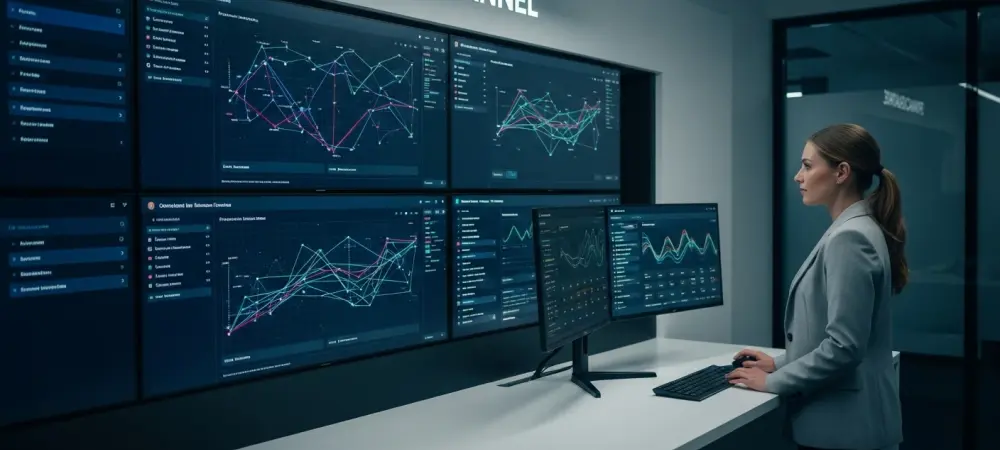
Most corporate digital transformation projects begin with the optimistic assumption that simply seeing a customer’s problem is the same thing as having the power to fix it. This misunderstanding explains why a staggering 79% of consumers still expect seamless interactions across departments, yet more than half find themselves repeating their basic account details every time they move from a chat window to a phone call. The disconnect is not caused by a lack of data, but by a fundamental failure in how that data is translated into real-time movement. While high-level executives often take pride in their wall-sized journey maps, these visual aids frequently serve as monuments to past frustrations rather than blueprints for future agility. The stakes for resolving these bottlenecks are no longer just about convenience; they are about survival in a market where loyalty is as thin as a smartphone screen. Research from Qualtrics indicates that poor customer experiences can drain an average of 8% of annual revenue, a figure that translates into billions of dollars in preventable churn within the United States alone. To move beyond the stall, organizations must transition from journey mapping—a static exercise in observation—to true journey orchestration, which functions as a living operating system. This evolution requires shifting from a mindset of recording where buyers hesitate toward a model where the business identifies and remedies friction in the exact second it occurs.
Moving Beyond the Map: Why Orchestration Often Fails to Launch
The promise of customer journey orchestration is genuine, offering a way to fix the decades-old frustrations of dead-end self-service and confusing channel handoffs. When a system works correctly, it eliminates the “random walk” that customers often experience when navigating through marketing, sales, and support. However, many CX leaders find themselves trapped in a cycle of perpetual planning where they possess impressive maps but lack any capability for real-time engagement. This gap exists because a journey map is essentially a historical document, whereas true orchestration requires an active execution layer that functions across every digital touchpoint.
The liability of a stalling orchestration project becomes apparent the moment a customer encounters a “dead end” in a self-service portal. Even if the journey map correctly identified this point as a source of friction months ago, the lack of an orchestration engine means the system cannot automatically escalate the session to a live agent with the full context of the user’s struggle. Instead of a cohesive omnichannel experience, the customer is left to restart their journey from scratch. Without an active logic layer to trigger interventions, the most detailed journey maps in the world remain nothing more than decorative charts in a conference room.
The Reality Check: Distinguishing Visual Design from Active Action
To fix a stalling orchestration project, it is essential to understand that a journey map is merely a static picture, whereas true orchestration is an operating system. Mapping focuses on identifying where things go wrong, but orchestration is the act of taking real-time action to change the outcome. A map can show that a buyer frequently hesitates at the checkout stage, but only orchestration can trigger a personalized incentive or a proactive chat invitation at that specific moment of indecision. This distinction is the difference between diagnosing a problem and performing the surgery required to fix it.
Furthermore, journey maps lose their strategic value the moment they are finalized because they rely on stale data. In contrast, orchestration relies on live signals, identity resolution, and cross-system action to maintain relevance. If a business cannot resolve a customer’s identity across different devices or platforms in real-time, it cannot provide a consistent experience. Successful engagement requires the core pillars of a modern infrastructure: the ability to capture an event, decide the next best action through predictive logic, and push that action back into the touchpoint systems where the customer is currently interacting.
Common Roadblocks: Why Orchestration Projects Hit a Wall
Most orchestration efforts stall not because of the technology itself, but because companies treat them as simple software implementations rather than a full framework overhaul. One of the primary culprits is the fragmented data environment, where marketing, sales, and service departments each maintain their own “version of the truth.” When data is siloed, a customer might receive an aggressive sales follow-up email at the exact moment they are on the phone with technical support trying to resolve a product failure. This lack of shared context makes the brand appear disorganized and indifferent to the customer’s immediate reality.
Another significant barrier is the failure to account for the half-life of journey moments. In a world that demands immediate reaction, batch processing and scheduled data syncs are no longer sufficient. If the system takes hours to update a customer profile after an interaction, the window of opportunity to influence their behavior has already closed. Beyond the technical hurdles, functional silos and KPI conflicts often leave the “middle” of the journey ignored. Because no single department owns the transition points between acquisition and support, these handoffs become the places where customers most frequently drop out of the experience.
The Commercial Stakes: Expert Insights and Real-World Impact
The cost of fragmented experiences is quantifiable, and the revenue gap created by poor orchestration is a weight that many enterprises can no longer carry. Data from BCG and Microsoft suggests that organizations that successfully implement orchestration can drive revenue gains of up to 20% while simultaneously reducing operational costs by 25%. These are not just theoretical gains; they represent the difference between a business that scales and one that stagnates. When the orchestration layer works, it turns every customer interaction into a data point that refines the next step of the journey, creating a virtuous cycle of efficiency and satisfaction.
Real-world examples illustrate the transformative power of connecting disparate systems. For instance, Smarter Furnishings achieved an 80% reduction in quote turnaround times by integrating its ERP and CRM workflows, ensuring that sales data and operational capacity were always in sync. Similarly, FedPoint utilized data integration to raise its IVR containment rates and drastically reduce answer speeds, proving that better data flow leads directly to better service outcomes. Even massive institutions like HSBC have implemented rigorous operating disciplines to projected values of $60 million through improved abandonment and transfer rates, showing that orchestration pays dividends even at the highest levels of enterprise complexity.
A Practical Framework for Reviving Your Orchestration Strategy
Fixing a stalled project requires a shift from static optimization to live journey management through a disciplined, phased approach. The first step involves targeting high-friction segments rather than trying to overhaul the entire customer estate at once. By focusing on specific commercial pain points—such as stalled quote requests or repetitive self-service resets—teams can demonstrate immediate value and build the internal momentum necessary for larger changes. This targeted approach allows the organization to test its logic and infrastructure in a controlled environment before scaling to more complex, multi-stage journeys.
Once the targets are set, the focus must shift to building the event-to-action infrastructure. This means ensuring that the technology stack can capture behavioral events, resolve identities across channels, and push decisions back into the systems that actually touch the customer. Data integration must be prioritized over mere aggregation; it is more important to have data that is “useful” and “current” than to simply have a large repository of historical records. By establishing cross-functional ownership and adopting live journey management through AI-driven health signals, companies can move away from reactive troubleshooting and toward a proactive, orchestrated future.
The shift toward orchestration demanded a complete departure from the traditional, siloed methods of managing customer interactions. Organizations that succeeded were those that treated the customer journey not as a series of departmental handoffs, but as a single, continuous conversation powered by integrated data. Leaders realized that the map was never the destination; the goal was always the movement. By prioritizing real-time identity resolution and cross-functional accountability, businesses finally closed the gap between what customers expected and what the technology could deliver. This transition transformed customer experience from a vague marketing promise into a precise, measurable driver of commercial growth.