

The difference between a thriving digital storefront and a logistical nightmare often hinges on the invisible systems managing the chaotic flow of thousands of individual parcels. While traditional distribution models focused on shipping large pallets to a handful of retail locations, modern ecommerce operations must navigate the intricate demands of thousands of single-unit orders traveling to diverse residential doorsteps. This shift has rendered manual logging and basic spreadsheets entirely obsolete, as the sheer volume of data required to track every SKU, order status, and return exceeds human capacity. Relying on “tribal knowledge” or the memory of a few key warehouse employees creates a dangerous single point of failure that can crumble during periods of high demand. As online shopping continues to dominate the retail landscape, the gap between businesses using manual processes and those utilizing professional warehouse management software has become a chasm that determines long-term survival.
Professional fulfillment centers now operate in a high-stakes environment where a single error can lead to a public relations crisis or a permanent loss of customer trust. The modern consumer expects near-instantaneous processing, with many retailers now competing on the ability to move an item from the shelf to the delivery truck in under an hour. Achieving this level of speed requires a digital architecture that eliminates guesswork and provides a clear, actionable roadmap for every floor worker. Transitioning to a dedicated system is no longer just about organizing physical space; it is about building a scalable engine that can absorb the pressures of viral marketing hits and holiday surges without breaking. This evolution represents a fundamental change in how retail businesses perceive their back-end operations, moving fulfillment from a cost center to a primary competitive advantage.
The current market reality is that the logistical landscape has shifted toward a model defined by extreme fragmentation and high frequency. With the global warehouse management system market projected to reach ten billion dollars by 2030, the acceleration toward digital integration is undeniable. This investment is driven by the realization that manual warehouses are simply too slow and too error-prone to keep up with the real-time demands of multi-channel selling. For any organization looking to scale, the implementation of a sophisticated management platform is the only way to maintain visibility across complex supply chains. This foundation allows for the precision necessary to meet modern standards while providing the analytical insights required to optimize every square foot of storage space.
Ditch the Spreadsheets Before Your Next Flash Sale
Relying on manual spreadsheets in a modern warehouse environment is comparable to trying to navigate a complex city with a hand-drawn map from a decade ago. While a spreadsheet might track basic inventory levels, it fails to capture the dynamic movement of stock in real time, leading to discrepancies that inevitably result in overselling or stockouts. This lack of visibility becomes especially dangerous during a flash sale or a seasonal peak, where the rate of incoming orders can easily overwhelm a team that relies on manual data entry. When every second counts, the time spent updating a central log or searching for a misplaced item is a direct drain on profitability. Furthermore, the reliance on paper-based systems often means that critical information resides only in the minds of a few senior staff members, creating an environment where the absence of a single person can grind the entire operation to a halt.
Transitioning toward an automated system eliminates the “tribal knowledge” trap by digitizing every aspect of the warehouse layout and inventory movement. Instead of a picker wandering through aisles based on memory, a dedicated warehouse management system provides optimized routes that ensure the most efficient path is taken for every order. This level of organization is essential for maintaining order accuracy when SKU counts begin to multiply into the thousands. By removing the cognitive load of remembering where specific items are located, the system allows staff to focus entirely on the speed and precision of their tasks. This shift not only increases the number of units that can be processed per hour but also significantly reduces the stress on the warehouse floor during high-pressure sales events.
The economic reality of 2026 dictates that efficiency is the only way to preserve margins in an era of rising shipping costs and competitive pricing. A warehouse that continues to operate via manual logs is essentially choosing to accept a higher rate of errors and slower turnaround times, both of which carry significant financial penalties. In contrast, a digital management system provides a single source of truth that aligns the warehouse team with the sales and marketing departments. This alignment ensures that when a flash sale is launched, the logistics team is already equipped with the data and tools necessary to handle the surge. Moving away from spreadsheets is not just a technical upgrade; it is a strategic decision to insulate the business from the volatility of modern ecommerce demand.
Why Ecommerce Warehousing Demands a Specialized Solution
Traditional warehouse management systems were originally designed for a world of predictable replenishment cycles and bulk movements, where the primary goal was to move large quantities of identical items. In contrast, ecommerce fulfillment is characterized by a high volume of small, diverse orders that require a completely different logistical approach. The pressure of multi-channel selling means that a single inventory pool must satisfy demand from a website, various social media marketplaces, and third-party platforms simultaneously. This complexity requires a specialized solution that can synchronize stock levels across all channels in real time, preventing the dreaded “out of stock” notification after a customer has already completed a purchase. Without this level of specialization, the risk of overselling becomes a constant threat to a brand’s reputation and its standing on major marketplaces.
Another defining characteristic of ecommerce logistics is the relentless pressure of the “returns tax,” where roughly 20% of all online orders are eventually sent back to the warehouse. Handling these returns requires a specialized reverse logistics module that can quickly inspect, grade, and restock items to make them sellable again. A generic warehouse system often treats returns as an afterthought, leading to piles of unprocessed inventory that tie up capital and waste valuable floor space. In the current retail environment, where consumers expect seamless and rapid return processes, the ability to handle reverse logistics efficiently is just as important as the ability to ship orders out. A specialized ecommerce warehouse management system builds this functionality into its core, ensuring that the return loop is as optimized as the initial fulfillment path.
Customer expectations for delivery speed have reached a point where anything longer than a three-day window is often viewed as a failure. This reality forces ecommerce operators to adopt systems that can prioritize orders based on shipping deadlines and carrier cut-off times. Unlike traditional warehousing, where a delay of a few hours might not impact the final delivery to a retail store, a few hours in an ecommerce warehouse can mean the difference between a parcel making it onto the evening outbound truck or sitting until the next day. Specialized software provides the necessary “wave planning” capabilities to group orders logically, ensuring that the most urgent shipments are processed first. This level of granularity is what allows online retailers to fulfill the promises they make on their checkout pages while maintaining a manageable workload for their staff.
Essential Features for Modern Online Retail
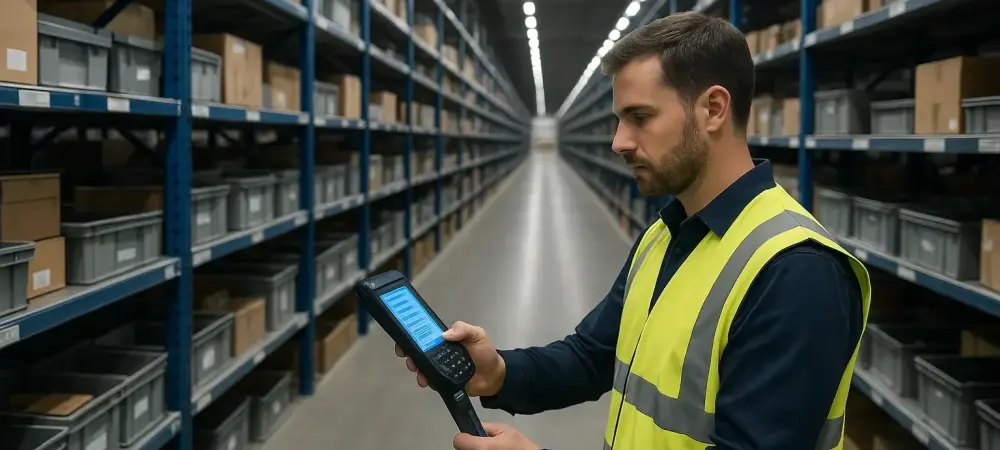
At the heart of any effective ecommerce management system is the principle of real-time visibility supported by rigorous barcode discipline. Utilizing handheld scanning or RFID technology transforms inventory tracking from a periodic manual count into a continuous, automated verification process. This level of precision is what enables the system to distinguish between physical stock on the shelf and “available to promise” stock that has already been spoken for by an open order. When accuracy levels rise above 95%, the entire operation gains the confidence to run with leaner inventory levels, knowing that the data reflected on the screen matches the physical reality of the warehouse floor.
Efficiency within the warehouse is also deeply tied to intelligent picking and slotting logic, which aims to minimize the travel time of every employee. A high-quality system uses historical data to identify fast-moving items and suggests they be placed in “golden zones” near the packing stations. This directed put-away strategy ensures that the most popular products are always the easiest to reach, significantly reducing the physical strain on workers and increasing the speed of fulfillment. Furthermore, the software should support advanced picking strategies—such as batch, cluster, or zone picking—to allow a single person to fulfill multiple orders during a single trip through the aisles. By optimizing the pick path, the system effectively multiplies the productivity of the existing workforce without requiring additional labor.
The modern ecommerce warehouse must also address the financial impact of shipping costs through advanced dimensioning and cartonization features. A sophisticated management system captures the exact measurements of every SKU and uses that data to recommend the smallest possible carton for every order. This process, known as cartonization, not only reduces shipping fees but also minimizes the amount of packing material required, contributing to both profitability and sustainability goals. When scaled across thousands of shipments, the savings generated by automated box selection can often pay for the entire software implementation in a matter of months.
Integrated reverse logistics represents the final essential pillar of a specialized ecommerce system, turning a typically chaotic process into a structured workflow. Because returns are an inherent part of the online shopping experience, the system must allow for scan-based returns that immediately update the order status and trigger customer notifications. The software should guide the warehouse staff through a quality grading process, determining whether an item can be returned to the shelf, needs repair, or must be liquidated. Capturing detailed reason codes during this process provides the merchandising team with invaluable insights into why certain products are being returned, allowing them to adjust product descriptions or improve quality control. By treating returns as a first-class operational function, a robust warehouse management system ensures that the business can recover as much value as possible from every returned item.
Strategic Benefits for Business Growth
Investing in a professional warehouse management system provides a foundation for growth that goes far beyond simple organization. One of the most immediate strategic benefits is the drastic improvement in order accuracy and fulfillment speed, which are the primary drivers of customer satisfaction. By implementing scan verification at both the picking and packing stages, companies can virtually eliminate the “wrong item” errors that lead to expensive reships and refunds. This increase in precision allows the brand to maintain high ratings on marketplaces and reduces the burden on the customer support team. When the fulfillment process becomes a reliable, automated engine, leadership can shift its focus from firefighting daily operational crises to high-level strategic planning and market expansion.
Scalability is another critical advantage, as a proper system allows a business to add new sales channels or SKUs without introducing incremental chaos. Whether the company is expanding into new international markets or launching a secondary warehouse location, a modern management platform can be configured to handle the new complexity with ease. The software acts as a central hub that can coordinate stock movements across multiple nodes, ensuring that orders are always routed to the location that can fulfill them most efficiently. This flexibility is essential for businesses that plan to grow rapidly, as it prevents the logistics infrastructure from becoming a bottleneck. With a scalable system in place, the organization can confidently pursue aggressive growth targets, knowing that the back-end operations can keep pace.
The ability to onboard and train temporary staff quickly is a strategic necessity in an industry defined by extreme seasonality. During peak periods, many ecommerce warehouses must double or triple their workforce with seasonal hires who have no prior experience with the building’s layout. A system-directed warehouse management platform simplifies the training process by providing clear, step-by-step instructions on a handheld screen. Instead of needing weeks to learn the location of every product, a new hire can become productive in a matter of hours simply by following the optimized paths and scanning prompts provided by the software. This rapid onboarding capability ensures that the business can meet the surge in demand during the holidays or a major promotion without seeing a spike in errors or a drop in productivity.
A Framework for Selecting the Right Platform
Selecting the ideal warehouse management system requires a methodical approach that prioritizes long-term fit over superficial features. The first step involves documenting every specific requirement of the operation, from peak daily order volumes to the unique handling needs of different product categories. It is essential to look toward the future and consider where the business will be in three years, ensuring the chosen platform can handle that projected scale. Before committing to a demo, the internal team should identify the critical integrations needed for their existing storefronts and carriers. A system that cannot communicate seamlessly with Shopify, Amazon, or major shipping providers will only create more manual work in the long run.
Once a shortlist of potential platforms has been created, the evaluation must move beyond standard demos and into the realm of real-world data testing. Insisting on a proof of concept using the company’s own SKU data and complex order scenarios is the only way to reveal the true capabilities of the software. Many systems look impressive with perfect demo data, but they may struggle with the messy realities of varied packaging sizes or multi-unit orders. This testing phase should also involve the people who will be using the system every day—the warehouse floor staff. Their feedback on the usability and speed of the interface is vital, as a system that is too cumbersome will inevitably lead to workarounds that defeat the entire purpose of the digital transformation.
The final stage of the selection process involves planning the implementation timeline and ensuring that the organization is prepared for the transition. A realistic roadmap usually spans four to twelve weeks, covering everything from data preparation and hardware setup to staff training and system configuration. One of the most important rules for a successful go-live is to avoid scheduling the transition during the busiest months of the year. Choosing a quiet period allows the team to stabilize the system, clean up any remaining data issues, and gain confidence in the new workflows before the next major sales event. By following this structured framework, businesses can ensure that they are not just buying software, but are instead building a robust foundation for their future logistical success.
The transition toward a sophisticated warehouse management system represented a pivotal shift in the ecommerce landscape. Leaders who successfully implemented these platforms discovered that operational agility became their greatest competitive advantage. They moved away from reactive management and embraced a proactive approach that prioritized clean data and automated precision. This strategic evolution allowed organizations to master the complexities of multi-channel fulfillment and reverse logistics, ensuring that they were prepared for the relentless pace of modern retail. By the time these systems were fully integrated, the businesses found that they could scale their operations with a level of confidence that was previously impossible. The legacy of this shift was a more resilient industry, where the focus remained on delivering exceptional customer experiences through technological excellence. The organizations that thrived were those that recognized early on that the warehouse was not just a storage space, but the heart of their entire brand promise. They invested in the right tools, trained their teams thoroughly, and reaped the rewards of a perfectly synchronized supply chain. As the retail environment continued to evolve, these robust systems provided the flexibility needed to adapt to new market trends and consumer behaviors. The success of these implementations proved that while technology was the enabler, the true value lay in the clarity and efficiency it brought to the human element of fulfillment. In the end, the move toward professional warehouse management was the defining characteristic of the decade’s most successful ecommerce enterprises.