

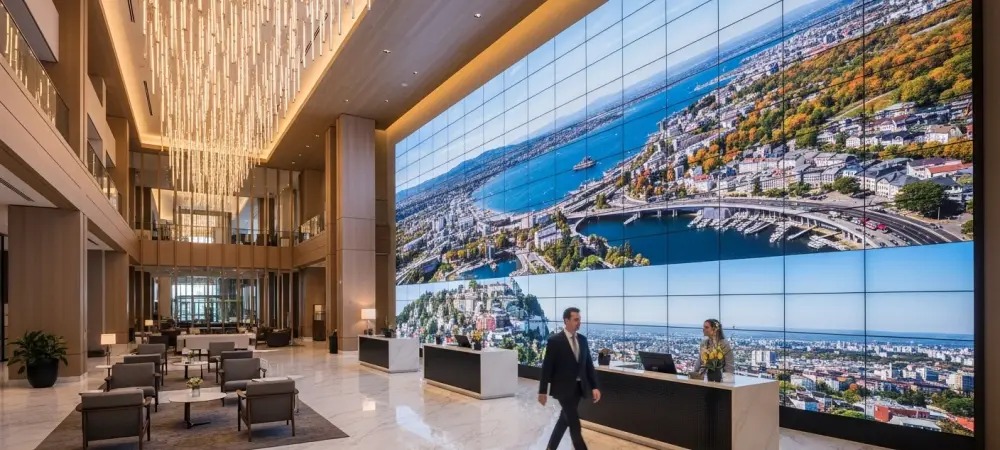
The modern hotel lobby has transitioned from a mere transit point to a vibrant digital canvas that responds to the subtle psychological cues of the global traveler. Travelers now arrive at a property with expectations that extend far beyond a comfortable mattress and a functional bathroom; they seek an environment that reflects their personal aesthetic and technological fluency. This fundamental shift has forced the hospitality industry to reconsider the very nature of the guest stay, moving away from static interactions and toward a model of constant, meaningful engagement. As a result, the integration of high-definition displays and interactive media has become the primary language through which a hotel communicates its brand identity and commitment to service.
The End of the Passive Stay: Why Travelers Demand More Than a Bed
Modern travelers no longer view a hotel room as a simple commodity or a place to store luggage between excursions; instead, they view it as a curated extension of their lifestyle. A recent industry shift reveals that guests are increasingly making booking decisions based on the “vibe” and technological sophistication of a property rather than just its geographic location. This evolution has turned the traditional hospitality model on its head, forcing hoteliers to move away from static environments toward dynamic, responsive spaces. The digital screen is no longer just a television mounted on a wall; it is the primary interface through which a brand speaks to its guests, transforming a routine stay into a memorable, tech-driven narrative.
The psychological impact of these digital environments cannot be overstated, as they bridge the gap between the physical and digital worlds. When a guest enters a lobby and sees localized, artistic content that reflects the culture of the city, the emotional connection to the brand strengthens immediately. This move toward “experiential hospitality” ensures that every touchpoint, from the elevator bank to the bedside tablet, contributes to a sense of place. Consequently, properties that fail to adopt these immersive technologies risk being perceived as obsolete in a market that increasingly values innovation and personalized attention over traditional luxury markers.
The Shift From Hardware to Holistic Hospitality Ecosystems
The background of this transformation lies in the merging of professional audiovisual technology with traditional hotel design. Historically, furniture and technology were handled by separate departments, often leading to a disjointed aesthetic where screens felt like intrusive afterthoughts or poorly placed obstacles. Today, the industry is moving toward a full-property digital ecosystem where technology is woven into the very fabric of the building. This trend matters because it addresses the modern guest’s need for seamlessness; when digital signage, lighting, and audio are synchronized, they create an immersive atmosphere that simple décor cannot achieve on its own. As the market becomes more competitive, the ability to integrate these elements into a cohesive brand experience has become a critical differentiator for luxury and boutique brands alike. Operators are now looking at end-to-end solutions that ensure the technology is as durable as it is beautiful. By treating Pro AV as an extension of the interior design rather than a standalone utility, hotels can maintain a consistent visual language. This holistic approach reduces visual clutter and ensures that the technology serves the architecture, creating a refined environment where the hardware disappears and the experience remains.
Breaking the Silos: Design, Data, and Strategic Engagement
The modern hospitality environment relies on the convergence of Furniture, Fixtures, and Equipment (FF&E) with Pro AV solutions to create unified guest retreats. For instance, outdoor pool areas are being reimagined with weather-resistant displays and integrated audio that transform functional spaces into high-end lounges. Beyond aesthetics, the transition to software-driven ecosystems allows property owners to move away from digital noise and toward purposeful communication. Instead of looping generic advertisements that guests often ignore, smart signage now delivers real-time value through event schedules, local transportation updates, and personalized concierge services. This data-centric approach also provides hotel operators with essential business intelligence, allowing them to track guest engagement levels and measure the actual return on investment for every screen on the property. By analyzing which content draws the most attention or which interactive kiosks see the highest usage, managers can refine their service offerings in real-time. This shift from hardware-centric to insight-driven management ensures that the technology remains an asset rather than a maintenance burden. Moreover, the ability to update content across a global portfolio with a single click ensures brand consistency while allowing for the hyper-local customization that guests crave.
Expert Perspectives on Intentional Interactivity and Sustainability
Industry leaders emphasize that for technology to be effective, it must serve a functional purpose rather than acting as a gimmick. Experts from the Pro AV sector point out that the current era has solidified the importance of contactless engagement, with QR codes and interactive kiosks becoming essential for frictionless service. However, the true value lies in clear intent—using touchscreens for intuitive wayfinding or self-service check-ins that actually save the guest time and reduce anxiety. The goal is to empower the guest with information that is accessible at the exact moment they need it, without requiring intervention from staff.
Furthermore, the conversation is shifting toward environmental responsibility. Future-ready properties are now prioritizing energy-efficient hardware and remote management tools that reduce the carbon footprint of the building while maintaining a high standard of impact. This move toward sustainable, intelligent connectivity represents the next frontier in guest-centric design. By utilizing sensors that dim displays when areas are unoccupied or choosing hardware with longer lifecycles, hotels are aligning their technological investments with the green values of their clientele. Sustainability is no longer a separate initiative; it is an integrated feature of the modern digital ecosystem.
Strategies for Implementing a Value-Driven Digital Strategy
To successfully redefine the guest experience, hospitality operators adopted a framework that prioritized the guest journey over the hardware itself. First, teams conducted a journey map to identify high-traffic zones where digital assistance was most needed, such as lobbies, elevator banks, and transit hubs. Second, they ensured that content was dynamic and hyper-local; providing a guest with the local weather and a nearby dinner recommendation was found to be far more effective than a static brand video. Third, the integration of AV planning into the earliest stages of interior design ensured a seamless physical look that avoided the clunky appearance of retrofitted tech.
Finally, operators leveraged analytics to monitor device health and engagement patterns, ensuring the technology remained an asset rather than a maintenance burden. By treating digital signage as a core service pillar, hotels fostered deeper brand loyalty and provided the frictionless, high-tech experience that modern travelers expected. This evolution proved that when technology was applied with purpose, it did more than just fill a space; it created an environment where guests felt understood and valued. The successful properties of this era were those that viewed every screen as an opportunity to enhance the narrative of the guest’s journey.