

Organizations often find themselves drowning in a sea of quantitative metrics while remaining fundamentally disconnected from the underlying psychological drivers that dictate customer behavior in the current market. This disconnect creates a “revenue gap” where sales pipelines look healthy on paper but fail to convert at the final stage due to unaddressed buyer anxieties or misaligned value propositions. Today, the competitive landscape demands more than just knowing what happened; it requires a granular understanding of why it happened. Traditional methods of data collection, such as generic post-purchase surveys or quarterly business reviews, often fall short because they prioritize speed over depth. Consequently, strategic decisions are frequently based on internal assumptions rather than empirical evidence gathered directly from the market. To bridge this divide, revenue operations must adopt a structured framework that treats qualitative feedback as a primary driver of growth. This transition necessitates a departure from passive observation toward a proactive, evidence-based strategy.
1. Identifying Strategic Gaps and Buyer Viewpoints
The initial phase of optimizing feedback involves a rigorous assessment of where internal knowledge gaps are causing the most significant financial leakage within the sales cycle. Instead of launching a broad campaign to gather opinions from every available customer, leadership should focus on specific, high-stakes scenarios where the current explanation for success or failure remains speculative. For example, if a software firm notices a sudden spike in churn within its mid-market segment in a specific geographic region, the priority should be uncovering the localized drivers of that attrition. Similarly, when prospects consistently exit the pipeline after the initial technical demonstration, the focus must shift to identifying the exact disconnect between product capabilities and buyer expectations at that specific touchpoint. By narrowing the scope to these critical friction points, teams can avoid the paralysis of data overload and ensure that every piece of information collected serves a direct purpose in solving a known business challenge that impacts the bottom line.
Once the core business problems have been identified, the next step involves determining which specific cohort of buyers holds the answers necessary to resolve those issues effectively. Not all customer perspectives carry the same weight when attempting to solve a particular revenue challenge; therefore, a high-quality sample is far more valuable than a high-volume one. For instance, if the goal is to improve the conversion rate of enterprise-level deals, interviewing low-tier trial users will yield misleading results that do not reflect the complex procurement processes of larger organizations. Teams should segment their target audience based on recent interactions, such as those who chose a primary competitor or those who recently upgraded to a premium subscription. By isolating these groups, companies can uncover the specific triggers and barriers that exist within high-value segments. This precision ensures that the resulting insights are applicable to the specific personas that have the greatest influence on the company’s total addressable market.
2. Selecting Methods and Analyzing Qualitative Data
Selecting the appropriate channel for gathering information is a balancing act between the depth of the insights required and the operational resources available to the team. Traditional live interviews remain the gold standard for uncovering deep psychological nuances and emotional drivers, as they allow a skilled interviewer to probe deeper into unexpected answers. However, these sessions are time-intensive and difficult to scale across a large customer base without significant overhead costs. On the other end of the spectrum, automated surveys provide quick, quantifiable data but often fail to capture the “why” behind a user’s response. In the current technological environment of 2026, AI-powered interviewing platforms have emerged as a powerful middle ground. These sophisticated tools can engage in dynamic, natural language conversations with thousands of participants simultaneously, asking intelligent follow-up questions based on previous remarks. This allows organizations to achieve a level of qualitative scale while maintaining the richness of detail. Transforming raw feedback into actionable intelligence requires a shift from anecdotal observation to rigorous thematic analysis that can influence broad organizational strategy. It is not enough to simply catalog complaints; instead, teams must identify recurring patterns and psychological triggers that define the buyer’s journey in 2026. This process involves grouping related sentiments into structured categories such as “product usability,” “pricing friction,” or “competitive differentiation,” and quantifying the frequency of these themes to determine their overall impact on the pipeline. This methodology turns qualitative data into an empirical resource that marketing and product teams can utilize to justify roadmap changes or messaging pivots. By creating a clear link between buyer sentiment and revenue loss, teams build a persuasive case for organizational change.
3. Integrating Signals and Scaling Market Intelligence
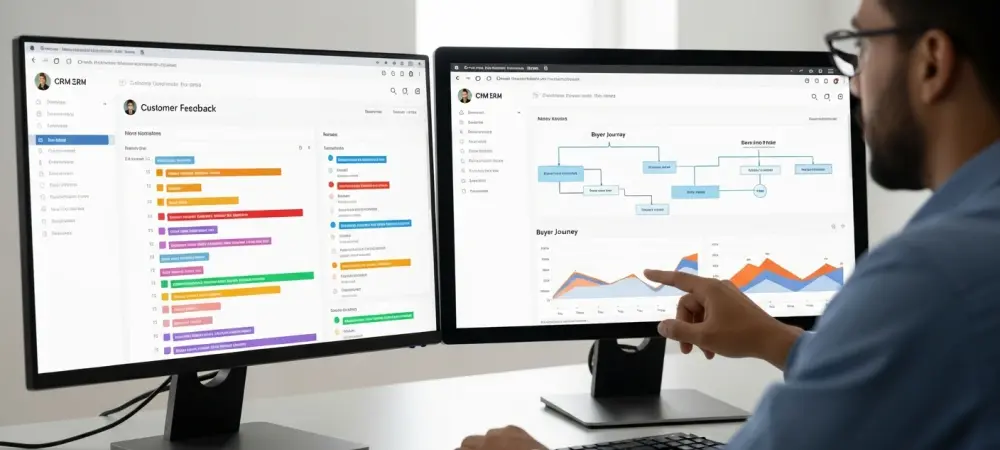
Information only provides value when it is integrated into the specific digital environments where revenue teams perform their daily responsibilities and make critical decisions. In 2026, the era of static PDF reports has been replaced by dynamic data streams that feed directly into CRM platforms, communication channels, and project management tools. For instance, when a buyer provides feedback about a friction point during a discovery call, that insight should automatically populate the lead’s profile for the next representative to review. Similarly, product teams should receive real-time notifications via specialized chatbots or Slack integrations when specific trends emerge in the feedback loop. This seamless distribution of knowledge ensures that buyer intelligence is democratized across the organization, preventing the formation of information silos that often hinder growth. When insights are available at the point of action, the transition from gathering feedback to generating revenue becomes an automated and repeatable business process.
The rapid advancement of AI-powered interviewing technologies has fundamentally altered the landscape of customer intelligence by allowing companies to scale qualitative research. Unlike traditional surveys that limit participants to a predetermined set of multiple-choice answers, these modern systems engage in open-ended dialogues that uncover the true motivations behind a buyer’s choice. This capability provides a level of depth that was previously only achievable through expensive, manual interview processes, but it does so at a fraction of the cost and time. By leveraging these tools, organizations can now collect candid and high-quality information from thousands of individuals simultaneously, ensuring that their market strategy is based on a representative sample of the actual audience. This technological shift has transformed feedback from a secondary administrative task into a primary strategic asset that directly influences product development. As these tools continue to evolve, the ability to harvest and act upon buyer signals will remain a definitive advantage.
Operationalizing High-Fidelity Market Intelligence
The successful integration of these high-fidelity feedback loops required organizations to abandon the traditional reliance on internal guesswork and instead commit to a future of evidence-based revenue generation. Leadership teams established clear protocols for pinpointing knowledge gaps and selecting the most relevant buyer cohorts, which ensured that every data collection effort was aligned with specific financial objectives. By 2026, the transition toward AI-powered interviewing allowed firms to maintain a constant pulse on the market, effectively reducing the friction in the sales process and increasing customer retention. Teams consistently synthesized raw data into actionable findings that were shared across existing workflows, making the voice of the buyer an omnipresent force in every strategic discussion. Moving forward, companies should prioritize the automation of these feedback channels and the democratization of insights to ensure that market intelligence remains a living asset. This proactive approach solidified qualitative feedback as the essential engine for driving growth.