

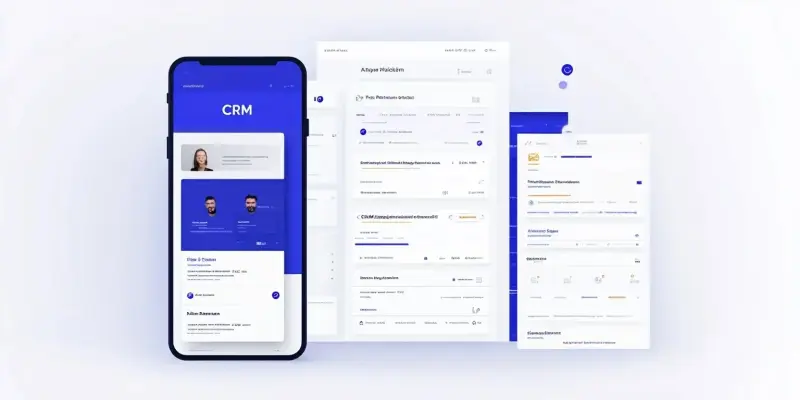
The digital era has significantly transformed the way small businesses operate, introducing both opportunities and challenges. Technologies such as AI, IoT, Big Data, and Cloud Computing have become essential tools for staying competitive. However, many small businesses struggle with inefficiencies due to fragmented processes, disjointed software, and limited resources. Integrated project and CRM systems offer a promising solution to these issues, centralizing tools and automating processes to enhance operational efficiency. For instance, the integration of all functional areas into a cohesive platform simplifies workflow, improves transparency, and enhances overall productivity.
The Significance of Integrated Systems
Integrated project and CRM systems bring numerous benefits to small businesses by consolidating various functionalities into a single platform. These systems centralize customer and project data, allowing businesses to manage information more effectively without the need for multiple platforms. With customer data and project tasks in one place, businesses can streamline operations and reduce time spent on administration.
Automation of repetitive tasks is another substantial advantage. By eliminating manual processes such as emailing spreadsheets, businesses can increase productivity and reduce errors. Automation also frees up valuable time, allowing employees to focus on more critical activities and strategic initiatives, thereby driving business growth. This centralized approach to managing business processes reduces the complexity and fragmentation typically associated with using disparate software for different functions. Moreover, integrated systems help maintain consistency and accuracy across all customer interactions, thereby boosting client satisfaction.
Enhanced Customer Interaction and Sales Efficiency
Having an integrated system allows businesses to improve their customer interactions. With centralized data, it becomes easier to segment customers and personalize communications, ensuring that each customer receives relevant and timely information. This personalized approach not only enhances customer satisfaction but also aids in building long-lasting relationships.
Integrated project and CRM systems also significantly boost sales efficiency. By combining project data with customer insights, sales teams can craft tailored solutions that meet customer needs more accurately. This holistic view of customer and project information supports more efficient sales strategies and can lead to increased sales success. Enhanced ability to track customer interactions, manage sales pipelines, and generate accurate forecasts allows businesses to be more responsive to market demands and customer needs.
Improved Collaboration and Resource Management
Collaboration within an organization can be challenging, especially when teams are using multiple systems. Integrated solutions foster better collaboration by breaking down silos and ensuring that all team members have access to the same information. This transparency enhances teamwork and communication, which is crucial for successful project execution and customer management. Centralized systems encourage cross-functional teamwork by providing a common platform for sharing information, updating project statuses, and reviewing customer feedback in real-time.
Resource management is another key benefit of integrated systems. Through detailed reporting and analytics, businesses can gain insights into resource allocation and utilization. This enables better planning and optimization of resources, ensuring that critical tasks are prioritized and completed efficiently. Additionally, comprehensive reports support informed decision-making, helping businesses to operate more strategically. Improved visibility into resource usage allows managers to identify underutilized assets and optimize staffing levels, leading to cost savings and increased operational efficiency.
Popular Integrated Systems for Small Businesses
There are several integrated project and CRM systems popular among small businesses, each offering unique features. Planfix is highly versatile and customizable, making it suitable for businesses of various sizes. Zoho offers modular and flexible solutions, although costs can increase with additional modules. Salesforce is known for its deep analytical capabilities and extensive integrations, while Monday is intuitive and ideal for team collaboration, albeit lacking some CRM features.
For IT-focused businesses, Jira is popular for its comprehensive task tracking and productivity tools. Trello is favored for its visual task management approach and simplicity, though it lacks robust CRM functionalities. These varied options ensure that businesses can find a system that matches their specific needs and budget constraints. Each system offers unique advantages, and understanding the specific needs of a business is crucial in selecting the right solution.
Practical Implications and Real-World Examples
To illustrate the practical benefits of integrated systems, consider a small marketing agency that transitions from using spreadsheets and disparate communication methods to an integrated system like Planfix. This shift results in centralized infrastructure, where all data and interactions are managed through one interface. Clients can assign tasks and communicate directly within the system, improving efficiency and collaboration.
The agency also benefits from automated routine tasks, which leaves more time for creative and high-value activities. Real-time control and analytics provide timely reports, helping to identify and address bottlenecks before they escalate into significant issues. This example demonstrates how an integrated system can transform operations and drive business success. By adopting an integrated approach, the agency not only boosts its operational performance but also builds stronger, more resilient customer relationships.
Conclusion
The digital age has profoundly changed how small businesses function, bringing with it both opportunities and challenges. Technologies like AI, IoT, Big Data, and Cloud Computing have become vital tools for maintaining a competitive edge. Yet, many small enterprises face inefficiencies caused by fragmented processes, disjointed software, and constrained resources. An integrated project and CRM system can be an effective solution to these problems. By centralizing tools and automating processes, these systems can significantly boost operational efficiency. Integrating all functional areas into a single, cohesive platform streamlines workflows, enhances transparency, and increases overall productivity. This approach not only simplifies complex tasks but also empowers small businesses to operate more smoothly and respond swiftly to market changes, ultimately fostering growth and sustainability. Embracing these technologies is crucial for small businesses to thrive in today’s fast-paced digital landscape, allowing them to better serve their customers and compete more effectively.