

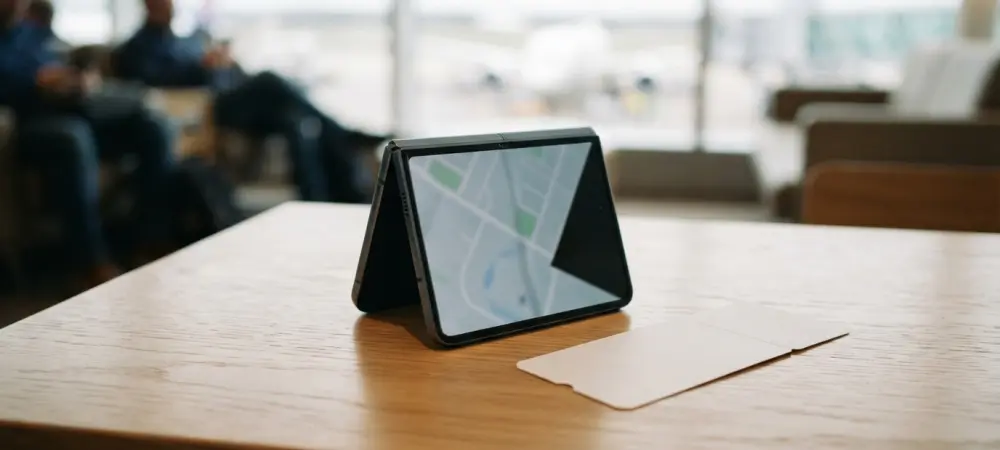
The tactile snap of a folding phone closing marks more than just the end of a conversation; it signifies a fundamental transition where the digital interface vanishes and reappears in fragments across different states of being. Today, the landscape of Customer Relationship Management (CRM) has evolved into a sophisticated dance of hardware capability and algorithmic intelligence. This transformation reflects a broader shift toward utility-first marketing, where the objective is no longer to drive traffic to a website but to provide immediate, actionable value within the user’s immediate context.
The End of the “Push-and-Pull” Era: Why Clicks No Longer Tell the Whole Story
For decades, the efficacy of a digital campaign was judged by the “push-and-pull” dynamic, where a business pushed a notification and the user pulled the information by clicking. However, this model has largely collapsed under the weight of the “glanceable” economy, where users derive total utility from a locked screen or a miniature external display. If a user can see their package delivery status, confirm a reservation, or view a discount code without ever unlocking their phone, the traditional “open rate” becomes a deceptive and largely irrelevant metric. The focus has shifted from capturing a click to capturing a moment of recognition, forcing a complete overhaul of how success is measured in modern engagement strategies.
Moreover, the reliance on deep-link clicks to mobile applications has decreased as consumers favor frictionless experiences that occur within the notification layer itself. Consequently, the value of a CRM strategy is now found in the ability to reduce the steps between a notification and a completed action, prioritizing convenience over traditional engagement metrics.
The Convergence of Hardware and AI: Understanding the New Ecosystem
The current state of mobile hardware, exemplified by the widespread adoption of foldable devices like the Samsung Galaxy Z Flip7, has introduced a multi-state reality for digital content. This hardware evolution dictates that content must be modular, allowing for “semantic scaling” where the core message remains intact regardless of the screen size. The device itself has become an active participant in the communication process, often determining how much of a message is shown based on the physical state of the phone.
Simultaneously, the integration of Artificial Intelligence into mobile operating systems has created a new gateway for brand communication. AI assistants now act as sophisticated filters, summarizing long-form content and deciding which alerts deserve the user’s attention. This ecosystem demands that brands move away from vague or overly clever copy toward high-utility communication that an AI can easily interpret. When the hardware determines the display and the AI determines the priority, the brand’s role shifts toward providing the raw, structured data that these systems need to serve the user effectively.
Multi-State Experiences and the Evolution of Modern Messaging Channels
As messaging protocols like Rich Communication Services (RCS) and WhatsApp for Business become the standard, the definition of a “message” has expanded into a full-service environment. These channels allow for a seamless transition from a simple notification to a complex, two-way interaction without the user ever leaving the thread. This shift emphasizes a move toward service-led CRM, where the brand’s utility is demonstrated through helpfulness rather than just promotional frequency.
The adoption of these platforms also enables a more fluid use of “tent mode” or “mini-laptop mode” on foldable devices, where users interact with content in more relaxed, hands-free ways. For instance, a recipe service might display a step-by-step guide on the top half of a folded screen while the bottom half manages a timer or a shopping list. The goal is to ensure that the CRM experience remains cohesive and functional even when the user’s hands are busy or the device is only partially open.
From Aesthetic Creative to Semantic Clarity: The AI Intermediary Perspective
The visual heavy lifting of CRM—once the domain of high-resolution images and elaborate layouts—is being replaced by a demand for semantic clarity. Because an AI assistant often reads and summarizes an email before a human ever sees it, the structural logic of the message has become more important than its color palette. Brands must now optimize for “machine readability,” ensuring that the core value proposition is easily extracted by the software that manages the user’s digital life.
Furthermore, the aesthetic appeal of a brand must now be conveyed through “glanceable” elements like icons, brand-specific colors, and concise typography that works on the smallest possible scale. When a user looks at their wrist or a small external phone screen, they should instantly recognize the source of the information through a minimalist visual language. The most successful brands in 2026 are those that have mastered the art of being recognizable in forty characters or less, proving that clarity is the new gold standard in digital communication.
Orchestrating a Unified Strategy for a Fragmented Digital Landscape
The path forward requires a radical departure from the siloed channel strategies that defined the early digital era. Organizations that succeed in this transition move toward a unified orchestration model where every touchpoint serves a specific, complementary purpose within a larger ecosystem. This holistic approach ensures that the brand remains a constant, helpful presence without becoming a source of digital noise. Marketers ultimately prioritize the mapping of user intent across different physical device states rather than just tracking delivery rates. They invest in flexible content architectures that allow for automated adaptation between a tiny cover display and a full-sized tablet view. By shifting the perspective from “pushing content” to “enabling actions,” brands create a service-oriented framework that respects the user’s time and cognitive load. The result is a more sophisticated engagement model that relies on the seamless interplay between hardware capabilities and intelligent data processing, which sets a new standard for customer-centric communication. Future success depends on maintaining this balance between technical precision and human-centric design.