

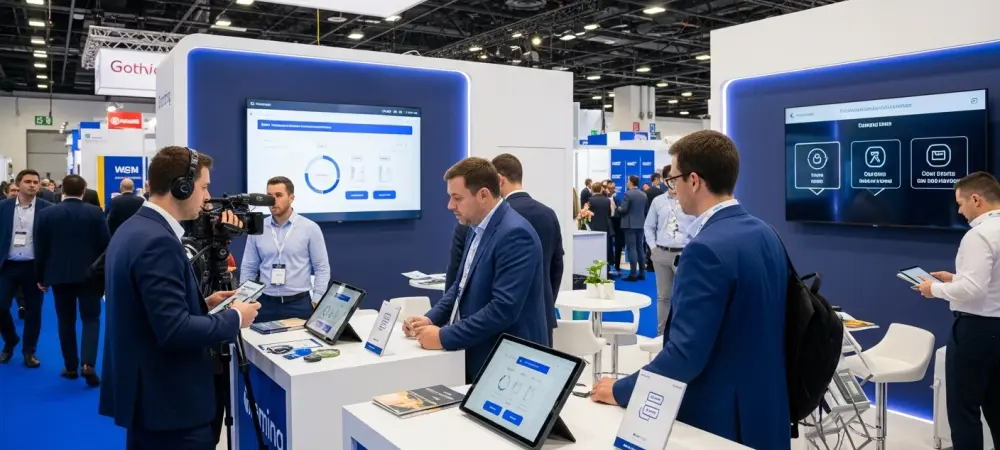
Lead: The Moment the Booth Stopped Being the Story
Conference aisles still blaze with towering booths, outsized banners, and looping sizzle reels, yet the contracts that matter now pivot on provable outcomes, credible voices, and content that leaders finish, save, and circulate. The stage looks familiar, but the performance has changed: being seen by everyone has given way to being believed by the few who sign. Data underscored the shift. While digital channels earned a modal preference of 10 out of 10, 58% of teams still did not formally measure ROI—an uneasy contrast that put accountability at the center of budget debates.
Executives have grown wary of feel-good metrics and vague claims. “Give me proof I can take to the committee,” a COO at a tier-one operator said during a recent planning session, summing up a mood that now shapes both spend and storytelling. In European markets where compliance and scrutiny drive decisions, marketers no longer win by shouting; they win by showing.
Nut Graph: Why the Stakes Rose and the Old Map Faded
Tighter buying cycles, more hands-on committees, and heightened regulation combined to raise the bar for what counts as marketing success. Oversized booths, blanket print, and mass banners struggled to justify their cost in the absence of a data trail, particularly when CFOs compared them to digital programs that tagged every touch to pipeline movement. The change was not anti-event or anti-print; it was pro-evidence.
Decision-makers asked for narratives that link a live problem to a specific solution and a defensible outcome. “If it doesn’t connect to revenue, risk reduction, or efficiency—and show me how—it’s decorative,” a commercial director noted. The new playbook aligned short-term lead capture with long-term credibility, stitching media and moments together across the full deal cycle rather than treating shows and channels as isolated bets.
Body: The Shift From Exposure to Engagement
Outcome-driven marketing redefined what “good” looks like. Rather than counting footfall and logo sightings, leading teams tied events to digital content and targeted distribution, using a dual-speed approach: 0–6 months for lead generation and 6–18 months for thought leadership. Brands that connected both speeds avoided the trap of either chasing quick wins that faded or investing in reputation without converting interest into opportunities.
Digital dominance flowed from traceability and compliance pressure. Some respondents disengaged at the mere mention of print, but print did not vanish; it moved into a prestige role. A CEO feature in a high-visibility magazine could still land, provided it was embedded in a trackable sequence—executive social amplification, newsletter syndication, and CTAs that drove senior meetings. Print became a strategic accent, not a cornerstone.
Content preferences shifted decisively toward depth. Long-form editorial and co-branded research topped C-suite demand because substance, not volume, earns trust. Yet tension persisted. Easy-to-buy formats like display and generic webinars continued to soak up budget because they were simple to launch and report. “Convenience is not strategy,” a media partner cautioned, urging marketers to prioritize formats that answer a sharper question: why partner here and now?
A persistent KPI gap complicated progress. Despite data-rich cultures, 58% of teams did not measure ROI formally, while 48% leaned on top-of-funnel indicators. Best-in-class programs reframed success with sanity metrics: ICP-fit rate, meeting acceptance, stage progression, pipeline value, win-rate lift, sales cycle change, and revenue contribution. Qualitative signals—seniority of engagement, content completion depth, executive feedback—rounded out the picture and helped defend spend. Trust-based partnerships emerged as a differentiator. Nearly 60% favored relationships lasting 6–12 months or longer, enabling compounding impact and cleaner attribution. Skewed reporting, however, poisoned trust. “Show me the misses and I’ll believe the hits,” one VP of marketing said, valuing transparency over flattering dashboards. Media partners who acted as consultative allies outpaced inventory sellers. Events remained anchor points, but media became essential connective tissue. Fully 78% said media was vital to event success, with value spiking when pre-, on-site, and post-event content was integrated. Exhibiting without an always-on plan left demand uncaptured, particularly as buyers moved research and validation online before stepping onto the show floor. Budgets reflected concentration and caution. Roughly 20% of total spend went to media, with the lion’s share directed to a small circle of trusted publications. Reliability, audience quality, and editorial standards ranked higher than raw reach. “Fewer platforms, deeper programs, better proof.”
Body: Field Notes, Frameworks, and the New Craft
Real-world programs illustrated the new craft. A supplier released co-branded research two weeks before a major show, scheduled on-site demos that mapped findings to product workflows, then published a post-event ROI brief featuring early adoption data. MQL volume stayed flat, but opportunity quality rose; meeting acceptance among target accounts climbed and second-call rates improved. “We traded noise for traction,” their agency partner observed.
Another vendor traded quarterly banner bursts for a six-month thought-leadership series aligned to regulatory change. Articles anchored by interviews with risk and compliance leaders fed into ABM, retargeting, and SDR sequences. Lead count fell, yet late-stage conversion and deal velocity improved as champions circulated credible narratives inside committees. The shift favored depth over frequency and outcomes over optics.
A practical plan took shape around dual-speed execution. In the near term, targeted ABM, high-intent content offers, retargeting, and SDR-aligned cadences captured demand. Over a longer arc, long-form editorials, co-branded research, executive interviews, and speaking slots built authority. Shared themes, consistent CTAs, and progressive profiling tied the speeds together, ensuring that a reader of a thought piece could become a qualified meeting within weeks.
Measurement matured through a unified dashboard that tagged content, channels, and event touchpoints to opportunities. Teams paired revenue-linked metrics with qualitative notes from sales—who engaged, what they asked, whether content influenced scope. “Alignment is the metric,” a sales leader quipped, reflecting how marketing proof had to match the way deals actually moved. Partner selection and governance tightened. Audience verification, transparent reporting, and editorial rigor became minimum standards. UTM discipline, lead verification, and source-to-opportunity tagging were enforced, with quarterly business reviews replacing loose recaps. Exclusivity, when available, protected share of voice during critical launches without diluting reach.
Media–event lifecycle integration provided the operating rhythm. Pre-event, agenda-setting articles and ICP-targeted ads seeded interest and secured calendars. On-site, live insights, booth-side interviews, geotargeted social, and rapid demo clips extended presence beyond the aisle. Post-event, tailored debriefs and role-specific nurture paths converted curiosity into consensus.
Conclusion: What Marketers Should Do Next
The playbook now favored brands that paired creativity with accountability and storytelling with data. Teams that concentrated spend with two or three trusted platforms, reserved a small test fund for emerging channels, and treated print as a prestige accent inside trackable sequences found more leverage per dollar. Content stacks centered on quarterly research, regulatory impact briefs, and ROI calculators, amplified by executive op-eds, podcasts, sharp data visuals, and customer proof, created momentum across committees.
The most durable change had come from discipline. Marketers who insisted on sanity metrics, governed partner reporting, and embedded media across the event lifecycle protected budgets and earned internal confidence. Those who ran dual-speed plans—capturing today’s demand while compounding tomorrow’s influence—reduced waste and improved pipeline quality. The next step was clear: build the proof engine first, let it inform channels and creative, and then scale the stories that decision-makers finish and circulate. In doing so, exposure gave way to engagement, and engagement converted to outcomes.