

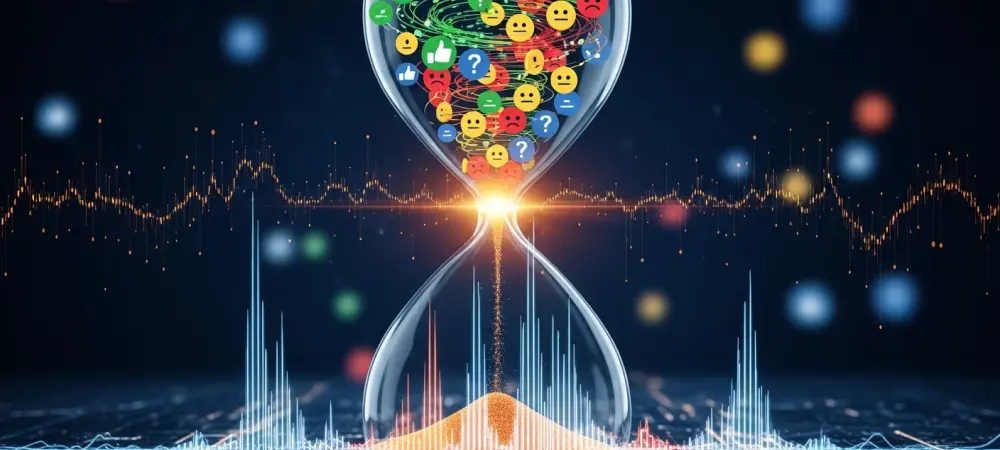
The velocity of modern product development often obscures the reality that every piece of feedback carries an invisible expiration date known only to the individual who sent it. When a user submits a support ticket or posts a scathing review, they are not merely offering a critique; they are frequently issuing a silent ultimatum that dictates the future of their relationship with the brand. While businesses invest millions of dollars and countless hours attempting to decipher exactly what a customer wants, they routinely ignore the most volatile variable in the relationship: the internal deadline the customer has already established. In a global market where software iterations happen weekly and foundational models evolve overnight, failing to recognize whether a request is a elective suggestion or a non-negotiable requirement for tomorrow is often the primary driver of churn.
Identifying these silent signals requires a fundamental shift in how organizations perceive the utility of feedback. It is no longer sufficient to categorize data by theme or sentiment alone, as the intensity of a user’s language does not always correlate with their willingness to wait for a solution. A loyal advocate might remain patient through a year of minor bugs, while a new user might abandon a platform after a single twenty-four-hour delay in a critical workflow. This inherent unpredictability makes the “action horizon”—the expected window for a response—the most critical metric for any product team hoping to maintain its competitive edge in the current hyper-digital economy.
The Invisible Clock Ticking in Your Customer Data
Every interaction a customer initiates serves as a timestamp in a larger narrative of expectations and tolerance levels. When a support log or a community forum post is created, it starts a metaphorical clock that ticks away in the background of the organization’s decision-making process. The danger lies in the fact that this clock is invisible to the internal teams who prioritize backlogs based on volume or ease of implementation. Consequently, a request that seems minor from a technical perspective may actually be the final straw for a significant segment of the user base that is currently evaluating alternative solutions.
The stakes of ignoring this temporal dimension are amplified by the ease with which users can transition between competitors. In the modern software landscape, loyalty is often a byproduct of reliability and responsiveness rather than brand affinity alone. If a customer feels their urgent needs are being relegated to a distant roadmap, they perceive a lack of alignment between the company’s innovation cycle and their own operational reality. This misalignment creates a vacuum that competitors are eager to fill, often by highlighting their own speed and agility in addressing real-time user pain points. Strategic success therefore depends on the ability to listen for the “when” just as much as the “what.” This involves a sophisticated analysis of how individual users perceive the passage of time relative to the value they receive. By recognizing that some feedback is a ticking time bomb and other feedback is a seed for future growth, executives can allocate their limited development resources with far greater precision. This proactive stance prevents the common pitfall of treating every negative comment as a fire to be extinguished, allowing the company to focus on the specific fires that are actually capable of burning down the house.
The Evolution of Customer-Centricity and the Data-Timing Gap
Modern organizations are currently drowning in a sea of data provided by social media, support logs, and intricate community ecosystems. To manage this influx, many have turned to sophisticated AI analytics that are remarkably efficient at measuring global sentiment and identifying recurring topics. However, these systems frequently create an “illusion of understanding” by distilling complex human experiences into simple charts and numerical scores. While a dashboard may show that 80% of users are satisfied, it often fails to highlight that the remaining 20% are on the verge of departure due to a specific, time-sensitive failure in a core feature.
This gap in traditional listening models has become a major strategic liability as the pace of innovation continues to accelerate. Sentiment analysis can tell a manager that a customer is angry, but it rarely explains the duration of that anger or the deadline for its resolution. Without a clear view of the action horizon, organizations often find themselves reacting to the loudest voices rather than the most critical ones. This reactive posture leads to a fragmented product strategy where long-term vision is sacrificed for short-term appeasement, even when those loud voices would have been willing to wait for a more robust solution. Bridging this gap requires moving beyond the surface-level metrics of customer-centricity and toward a more nuanced understanding of temporal dynamics. Organizations must recognize that the value of information is tied to its timing; a insight that arrives after a customer has already churned is a historical artifact, not a strategic asset. By integrating temporal urgency into their analytics frameworks, companies can begin to predict when a specific cohort of users will reach a breaking point. This shift from descriptive analytics to predictive temporal alignment is the hallmark of a truly responsive enterprise in the digital age.
Decoding the Action Horizon: Distinguishing Sentiment from Urgency
Temporal urgency is an implicit timeline that exists independently of the emotional intensity a customer displays during an interaction. It is entirely possible for a user to express extreme frustration while remaining committed to a product for the long term, provided they see a clear path toward a resolution. Conversely, a calm and professional request may hide an immediate deal-breaker that will force a switch to a competitor if it is not addressed by the next release cycle. Distinguishing between these two scenarios is essential for prioritizing a roadmap that reflects the actual utility of the product in the field.
To identify these hidden signals, product teams must look beyond global sentiment scores to find specific linguistic markers within the feedback. These cues often involve descriptions of daily routine disruptions or expressions of hesitation regarding the adoption of upcoming features. For example, a user describing a “workaround” that adds thirty minutes to their morning task is signaling a high level of urgency, regardless of how polite their tone may be. These subtle indicators provide a map of the customer’s internal deadline, allowing teams to separate high-volume noise from high-consequence requirements.
By isolating the intensity of the emotion from the urgency of the need, organizations can move toward a prioritization model based on real-world necessity. This allows for a more strategic distribution of effort, where “must-fix” items for tomorrow are given precedence over “nice-to-have” features for next year. When a company successfully aligns its release schedule with the actual action horizons of its users, it creates a sense of partnership and trust. This alignment demonstrates that the organization is not just listening to words, but is deeply attuned to the lived experience and time constraints of its global community.
Strategic Pivot Points: Lessons from OpenAI, Epic Games, and Microsoft
Real-world evidence from industry leaders highlights how temporal alignment functions as a high-stakes balancing act for global brands. In early 2025, OpenAI demonstrated a keen sensitivity to these signals when it briefly modified the conversational tone of its flagship model. Recognizing that this was not a preference to be debated over months but a disruption that required immediate reversal, the organization moved with unprecedented speed to restore the previous settings within days.
A similar dynamic was observed in the gaming sector when Epic Games introduced a major change to a core mechanic in the popular title Fortnite. By reversing the change within twenty-four hours, the company proved that responding to high-urgency signals can preserve community trust and prevent a mass exodus of the most engaged participants. This quick pivot illustrated that in some cases, the cost of being wrong is far lower than the cost of being slow.
In contrast, Microsoft’s experience with its “Recall” feature provided a different lesson: sometimes the most critical temporal signal is a demand to slow down. Microsoft’s decision to delay the broad rollout and pivot toward a more controlled preview signaled that they had heard the “not yet” embedded in the feedback. By prioritizing trust over the speed of the launch, they demonstrated that listening for urgency often means having the courage to halt innovation until the market is ready to receive it.
A Strategic Framework for Synchronizing Innovation with User Expectations
To effectively bridge the gap between gathering feedback and taking timely action, executives should adopt a hybrid approach that integrates automated tools with localized human intelligence. This process began by ensuring that the original linguistic context of every review and ticket was preserved, as translation tools often smoothed over the subtle nuances of urgency. By maintaining the raw data, product teams were able to catch the specific cultural and technical markers that signaled a looming churn event before it appeared in the high-level metrics. Furthermore, successful organizations implemented a system for categorizing every major feedback theme into specific action horizons. These horizons ranged from “Act Now” for security vulnerabilities and workflow breaks to “Long-term Roadmap” for elective strategic evolutions. This structural change forced cross-functional teams to debate the timing of a feature as rigorously as its functionality. This categorization allowed managers to decouple the volume of complaints from their actual priority, ensuring that a quiet but critical signal from a small group of high-value users was not drowned out by a louder but less urgent majority. Finally, the most resilient firms established urgency-driven operational protocols that bypassed traditional hierarchy during high-consequence events. When a signal was flagged as both high-urgency and high-impact, it triggered an automatic review process involving engineering, product, and customer success leaders within a forty-eight-hour window. By treating timing as a core product feature rather than a secondary concern, these organizations transformed their feedback loops into a powerful engine for sustained competitive advantage.
The shift toward decoding temporal urgency represented a fundamental evolution in how corporate leadership approached the concept of customer-centricity. Organizations that mastered this discipline observed a significant reduction in churn, as they no longer allowed critical issues to languish in long-term backlogs. They discovered that by prioritizing the “when” of a request, they fostered a level of user trust that was impossible to achieve through sentiment analysis alone. Success was ultimately measured by the degree to which a firm could match its internal clock to the ticking demands of its customers, proving that in a hyper-digital economy, the most valuable currency was time. Leadership teams that implemented these frameworks found that the ability to wait was a luxury their users rarely afforded them, and they acted accordingly to secure their future in the market.