

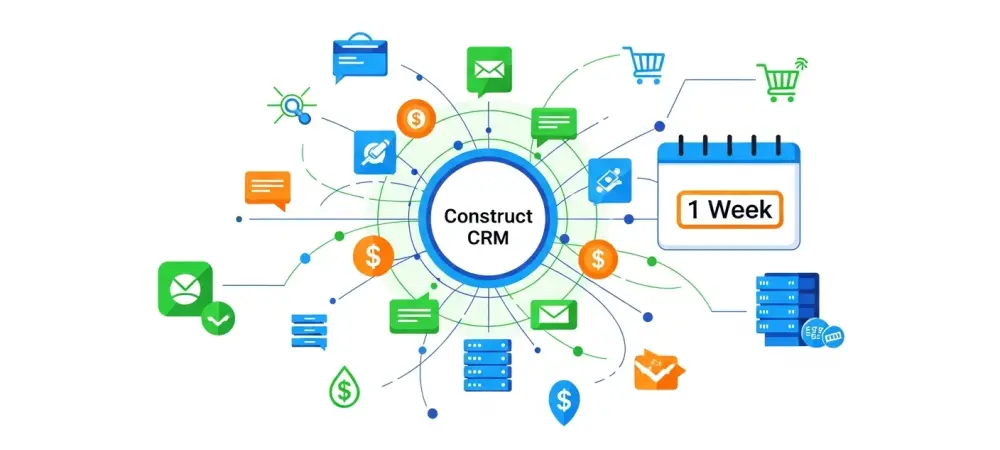
As a MarTech expert with a deep focus on integrating technology into marketing and customer data platforms, Aisha Amaira has a unique vantage point on the digital transformation sweeping through B2B industries. Today, she shares her insights on a radical new approach to ERP and eCommerce integration for distributors, a sector often hampered by legacy systems and slow technology adoption. We’ll explore the implications of a one-week implementation timeline, the shift from traditional software subscriptions to outcome-based pricing, and how artificial intelligence is being practically applied to enrich product data and automate sales, ultimately driving significant growth.
A one-week ERP-to-eCommerce implementation is remarkably fast. Could you detail the key milestones within that week, and what specific preparations must a distributor complete with their Epicor or Infor systems to make this rapid rollout a success? Please share some practical steps.
It’s a timeline that genuinely makes people lean in and ask, “How is that even possible?” The key isn’t magic; it’s meticulous preparation and a highly standardized process. Before that one-week clock even starts, a distributor must complete a critical “pre-flight checklist” with their ERP data. This means ensuring customer data, pricing tiers, and inventory information within their Epicor, DMSI, or Infor system are clean and structured. The first two days of the implementation are all about the technical handshake: connecting the systems and mapping that core data—catalogs, order history, customer specifics. By day three and four, the AI-powered product information management tools get to work, automatically enhancing the catalog with images and better descriptions, which is a massive leap from the often-cryptic ERP data. The final days are for branding the white-label contractor portal and running a quick but vital user acceptance test before going live. The speed is possible because the platform doesn’t try to reinvent the ERP; it simply builds an intelligent, user-friendly layer on top of it.
Shifting from traditional SaaS subscriptions to an outcome-based model tied to profitable orders is a significant change. How does this model redefine risk for distributors, and what specific metrics do you use to define a “profitable order” for billing? Please provide an example.
This pricing model is a game-changer because it fundamentally realigns the relationship between the technology provider and the distributor. It shifts the risk away from the distributor. For decades, they’ve paid hefty upfront fees or monthly subscriptions for software, crossing their fingers that it would eventually deliver a return. Here, the provider is essentially saying, “We don’t get paid unless you do.” It forces shared accountability. A “profitable order” isn’t an arbitrary term; it’s a pre-defined metric based on the distributor’s own financial model. For example, a distributor might define a profitable order as any sale with a gross margin above 15% after accounting for the cost of goods sold. The system tracks this automatically. So, if an order comes through the platform but doesn’t meet that margin threshold, it isn’t a billable event for the technology provider. This ensures the distributor is only paying for technology that directly contributes to their bottom line, which completely reframes the ROI conversation from a speculative projection to a tangible, real-time calculation.
The use of AI to enrich product catalogs with images and refined descriptions, without altering core ERP data, sounds powerful. How does this technology practically work, and what is the typical “before and after” impact on a distributor’s digital sales channel? Please share some specific examples.
This is one of the most practical and immediately impactful applications of AI we’re seeing. The core ERP system remains the “single source of truth” for pricing and inventory—that data is sacred and isn’t touched. The AI works on a presentation layer built on top of the ERP. It scans the raw product data, which is often just a part number and a terse, technical description. The AI then scours manufacturer databases and public information to find and associate high-quality product images, writes user-friendly descriptions focused on benefits, and intelligently groups related items. The “before” is a digital catalog that feels like a spreadsheet: searchable only if you know the exact part number and visually unappealing. The “after” is a modern, intuitive eCommerce experience. For instance, a contractor searching for “1/2 inch copper elbow” using “fuzzy search” will find the right product, see a clear image, and be prompted to add related items like solder or flux. This move from a clunky parts list to a rich, guided shopping experience is what drives the projected 15-20% sales growth. It removes friction and makes it easier for customers to buy more.
Distributors often receive orders via unstructured emails and texts. How does your AI technology process these messages into structured ERP orders, and what kind of accuracy rates are you seeing in practice? Can you describe the workflow for handling exceptions or errors?
This is where AI directly tackles a massive operational headache. Inside sales reps spend an incredible amount of time manually deciphering emails and texts from contractors on a job site and keying that information into the ERP. The AI automates this by using natural language processing to read the message, identify the customer, and parse the product quantities and part numbers, even with typos or informal language. It then transforms this jumble of text into a structured, formatted sales order ready for the ERP. We’re seeing this reduce manual data entry by up to 90%, which is a staggering efficiency gain. Of course, no system is perfect. For exceptions—like an ambiguous product name or an item not found—the system doesn’t fail; it flags the order and routes it to a human for a quick review in a simple dashboard. The AI learns from these corrections, so its accuracy improves over time. This workflow keeps orders moving quickly while ensuring a human is still the ultimate backstop for quality control.
Achieving a projected 15-20% sales growth requires significant contractor adoption. What strategies do you use to embed your tools into these workflows to drive online orders, and what have been the biggest hurdles in changing long-standing contractor purchasing habits?
You can build the most beautiful platform in the world, but if contractors don’t use it, it’s worthless. The strategy here is not to force a new workflow but to meet them where they already are. The platform is delivered as a free, white-label CRM that the contractor can use to manage their own business. It becomes their tool for creating quotes, managing jobs, and, most importantly, ordering materials. The biggest hurdle is habit. Contractors are used to firing off a quick text or making a call. The key is to make the digital channel not just an alternative, but a demonstrably better and faster one. When a contractor realizes they can see their specific pricing, confirm real-time inventory at their local branch, and get instant order status updates 24/7 without waiting for a call back, the value becomes undeniable. We’ve found that the initial pushback from old habits fades quickly once they experience the control and efficiency of the digital tool. The true “aha!” moment is when they place an order at 10 p.m. for a 7 a.m. pickup and know with certainty the materials will be waiting for them.
What is your forecast for the role of AI in distributor sales channels over the next five years?
Over the next five years, AI will become as fundamental to a distributor’s sales operation as the delivery truck is today. It will move beyond the current practical applications like order entry and catalog enrichment into more proactive and predictive roles. Imagine an AI that doesn’t just process an order, but analyzes a contractor’s project history to predict what materials they’ll need for their next job and proactively creates a draft order for their approval. We’ll see AI-powered pricing engines that dynamically adjust margins based on inventory levels, customer value, and market demand to maximize profitability on every single transaction. It will also completely transform the role of the inside sales rep, freeing them from tedious data entry to become true strategic advisors who use AI-driven insights to help their customers grow their businesses. AI will become the invisible engine that powers a more efficient, profitable, and customer-centric distribution channel.