

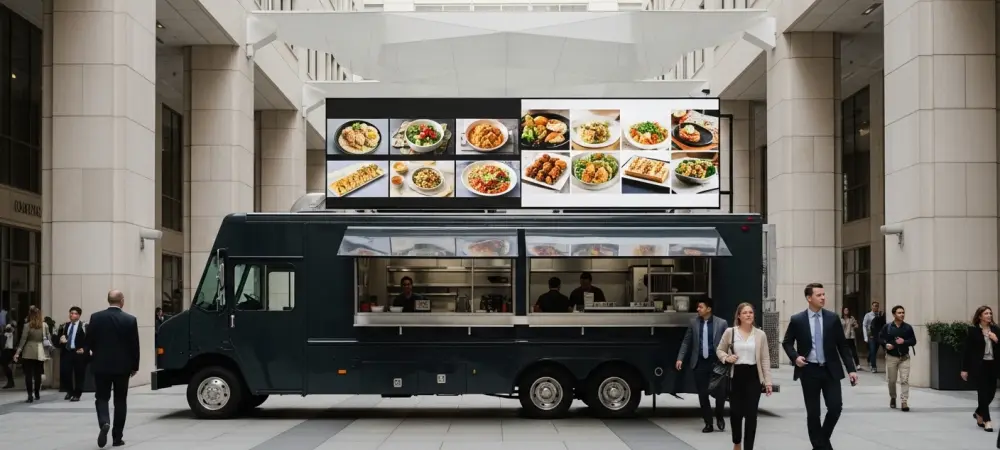
The modern culinary landscape has moved far beyond the days of simple sidewalk carts and static menu boards, transitioning into a high-stakes arena where digital visibility dictates a business’s ultimate survival. As metropolitan streets become increasingly saturated with diverse food options, the reliance on traditional vinyl wraps and chalkboard signage has proven insufficient for capturing the attention of a fast-moving, tech-savvy public. Digital Out-of-Home advertising, or DOOH, has emerged as the primary catalyst for this shift, empowering food truck operators to convert their vehicles into mobile beacons of high-definition engagement. By utilizing LED screens that emit vibrant light and fluid motion, these businesses are no longer passive participants in the city’s background noise. Instead, they have become active participants in the attention economy, leveraging brightness and movement to stop pedestrians in their tracks and influence dining decisions in real-time, effectively blurring the lines between physical presence and digital marketing.
Strategic Timing and Geographic Precision
The concept of dayparting has redefined how mobile vendors allocate their promotional resources, moving away from a one-size-fits-all strategy toward a more nuanced, time-sensitive approach. Rather than exhausting a marketing budget on advertisements that run during quiet morning hours or late-night lulls, food truck owners are now synchronizing their screen content with specific windows of high consumer intent. For instance, a truck specializing in gourmet sandwiches can intensify its visual presence between 11:30 a.m. and 1:30 p.m., targeting the peak lunch rush when office workers are actively scanning their surroundings for immediate meal solutions. This surgical precision ensures that the most enticing imagery—such as steam rising from a freshly prepared dish—is displayed exactly when the physiological triggers of hunger are most acute. By concentrating impressions within these high-value intervals, operators maximize the conversion potential of every dollar spent.
Beyond the mastery of timing, the inherent mobility of digital billboards facilitates a level of geographic precision that remains entirely out of reach for stationary billboard formats. These mobile units do not simply traverse city streets at random; they follow carefully curated routes informed by real-time pedestrian density data and historical traffic patterns in dense commercial districts. By aligning the billboard’s trajectory with the food truck’s physical location, a powerful localized marketing halo effect is created, essentially claiming the surrounding environment as the brand’s own territory. This visual dominance is particularly effective in high-traffic corridors where competitors might be numerous but less visible. The ability to pulse specific messages as the truck enters a new neighborhood allows for an unprecedented level of relevance, as the advertisement effectively introduces the kitchen before it even arrives, reducing wasted impressions and maintaining a competitive cost-per-view.
Psychological Impact and Revenue Innovation
In the bustling environment of a modern food truck park or a crowded downtown plaza, consumers are frequently overwhelmed by an abundance of choices, leading to a phenomenon known as choice paralysis. A high-resolution digital landmark acts as a psychological anchor, providing a clear and compelling visual signal that simplifies the decision-making journey for a distracted pedestrian. Unlike a static image that fades into the urban landscape, full-motion video and synchronized sound cues provide a multisensory experience that cuts through the visual clutter of standard city life. This technological edge helps transition the potential customer from a state of indecision toward a specific, motivated action by making the digitally-equipped truck appear as the most professional and trustworthy option available. By establishing this level of prominence, the vendor effectively dictates the flow of foot traffic, ensuring their brand is the primary destination for those seeking an engaging experience. One of the most significant shifts in the economic structure of mobile food vending is the transformation of a standard marketing expense into a consistent and predictable profit center. Because modern digital screens are capable of cycling through multiple advertisements with seamless transitions, food truck operators are no longer limited to promoting their own menus. They have the unique capacity to sell premium advertising slots to non-competing, complementary businesses such as local craft breweries, beverage distributors, or upcoming regional event organizers. This dual-revenue model represents a paradigm shift in how small business owners approach their physical presence, allowing them to generate passive income while simultaneously operating their primary food service. In many cases, the revenue generated from third-party advertisements can fully offset the initial investment in hardware, providing a financial safety net that traditional vendors lack and creating a more sustainable business model.
Technical Flexibility and Data-Driven Insights
The technical agility offered by digital mobile billboards provides a massive operational advantage over legacy print media, which is inherently slow to produce and prohibitively expensive to update. In an industry where daily specials might sell out in an hour or a sudden weather shift might necessitate a change in location, the ability to update creative content remotely and instantly is an invaluable asset. If a truck runs out of its signature dish, the operator can switch the screen to highlight a secondary item within seconds, preventing customer disappointment and managing expectations before they reach the window. This level of responsiveness ensures that the marketing efforts are always perfectly aligned with the real-time status of the inventory and the physical whereabouts of the vehicle. Such adaptability is crucial for maintaining a professional image in a fast-paced environment where circumstances can change without warning, allowing the business to remain nimble and relevant throughout the entire day. Modern Digital Out-of-Home platforms have successfully replaced traditional marketing guesswork with a sophisticated framework of data-driven accountability and verified performance metrics. By integrating advanced GPS tracking and digital analytics, food truck campaigns are now backed by a verified proof of execution that details exactly when and where each advertisement was displayed. Operators can access specialized dashboards to monitor verified impressions, estimated reach, and the specific demographics of the areas they have traversed, allowing for a level of transparency previously reserved for online advertising. This integration of physical presence and digital intelligence enables vendors to measure their return on investment with extreme precision, identifying which routes yield the highest engagement and which time slots are most lucrative. This analytical approach empowers business owners to refine their strategies continuously, shifting toward a scientific methodology that guarantees the most effective use of their budget.
Strategic Evolution and Operational Outcomes
The transition toward digital mobile billboards provided a framework for food truck operators to bridge the gap between high-quality culinary offerings and sophisticated audience engagement. Operators who successfully integrated these systems recognized that the hardware was only as effective as the data driving it, leading to a more disciplined approach to market analysis. The most successful vendors prioritized dynamic content that reacted to environmental triggers, such as temperature-based advertisements for cold drinks or rain-specific comfort food promotions. This evolution required a shift in mindset where the vehicle was viewed not just as a kitchen, but as a sophisticated media asset capable of high-level interaction. Industry leaders discovered that partnering with local data providers to refine their routing yielded the highest returns on ad spend. By treating every kilometer driven as a strategic opportunity to collect and utilize insights, these businesses established a dominant market position.
The successful implementation of digital screen technology necessitated a robust maintenance schedule and a commitment to high-quality visual content that mirrored the excellence of the food being served. Early adopters who invested in weather-resistant LED panels and reliable cellular connectivity experienced far fewer technical disruptions and maintained a stronger brand image. To maximize long-term impact, savvy operators developed a strategy of rotating creative assets weekly to prevent visual fatigue among regular commuters. Furthermore, the integration of interactive elements, such as QR codes that linked directly to mobile ordering platforms, streamlined the customer journey from discovery to purchase. These historical advancements showed that the fusion of mobility and digital flexibility was not merely a trend, but a fundamental restructuring of how independent vendors competed with established franchises. This proactive adoption allowed the industry to achieve a level of professionalism that was once considered impossible.