

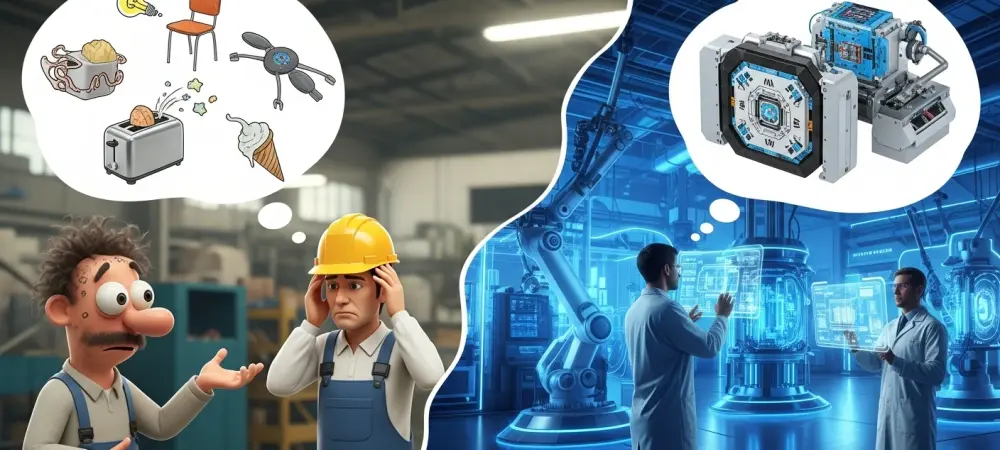
The moment a customer submits a design that appears technically impossible or economically irrational, a unique tension arises between creative ambition and industrial reality. This friction often serves as the primary catalyst for significant technological breakthroughs, forcing manufacturers to reassess their internal logic and the structural limits of their machinery. In the high-stakes world of precision laser cutting and automated fabrication, a “crazy” request is rarely just a distraction; rather, it is a high-intensity stress test that identifies previously invisible bottlenecks in software, hardware, and logistical workflows. When an unconventional vision pushes existing systems to their breaking point, it creates a rare opportunity for engineers to migrate from ad-hoc problem-solving toward more robust, scalable infrastructures that can eventually handle such complexities as standard procedure. By embracing the outlier, a company shifts the threshold of what is considered feasible, ensuring that the radical experiments of today become the reliable services of tomorrow.
Technical Evolution: Forging Capability Under Extreme System Pressure
High-complexity projects frequently expose significant gaps in a company’s technical infrastructure, particularly concerning the way data is processed and translated into physical movement. A notable example involved a request for massive, intricate copper lace patterns, which generated a staggering 750,000 lines of G-code for a single project. This volume of data completely overwhelmed the computer systems controlling the laser, which were originally optimized for significantly lower levels of geometric complexity. While the project initially seemed like a financial break-even endeavor due to the disparity between the automated quote and the four hours of actual production time required, its long-term value was found in the forced modernization of the firm’s quoting algorithms. By identifying exactly where the software failed to account for intricate geometry, the engineering team was able to rebuild the platform to handle massive data sets with much higher precision.
The resolution of such technical bottlenecks translates directly into long-term competitive advantages that can be valued in the millions of dollars. When a system is rebuilt to accommodate an outlier project, it gains a permanent increase in efficiency that benefits all future clients who require high-precision, complex parts. This process of technical evolution is not merely about buying faster hardware; it involves a deep dive into the logic of production software and the physics of the manufacturing floor. By solving the challenges posed by extreme geometric density, manufacturers can refine their pricing models to be more accurate, ensuring that they remain profitable while offering capabilities that competitors might still view as impossible. These rigorous upgrades turn the production environment into a more resilient ecosystem, capable of maintaining high-speed throughput even when faced with designs that would have caused a total system crash only a short time before.
Educational Gatekeeping: Defining the Boundaries of Material Reality
While industrial innovation is frequently driven by the desire to push physical boundaries, successful manufacturing also requires a disciplined understanding of material science and functional reality. There is often a fine line between fulfilling a customer’s specific vision and allowing a project to proceed toward an inevitable and costly failure. A cautionary tale in the industry involves a client who insisted on using thin, mild steel for a marine environment tool, despite professional warnings that the material would lack the necessary structural integrity and would quickly succumb to corrosion. The customer’s desire to save costs by ignoring engineering advice resulted in a product that began to rust before it even reached its destination. This experience highlighted the critical importance of the manufacturer acting as an educational gatekeeper, ensuring that the integrity of the finished product is never sacrificed for the sake of a sale.
Protecting a brand’s reputation and the client’s investment requires a firm stance on material limitations and design feasibility. Professional manufacturers must be willing to provide assertive guidance and, in some cases, refuse projects that are destined for functional failure. This proactive approach to customer education serves as a filter that separates high-quality engineering from poorly conceived experiments. By setting clear expectations and explaining the “why” behind material recommendations, a company builds a deeper level of trust with its clientele. This shift toward an advisory role transforms the relationship from a simple service transaction into a professional partnership. Ultimately, standing firm on engineering principles ensures that every completed order represents a viable, long-lasting solution rather than a temporary fix that will eventually damage the reputations of both the designer and the fabricator in the marketplace.
Systematic Scalability: Transforming Manual Efforts Into Protocols
A recurring challenge in industrial growth is the tendency of production teams to provide manual, non-standardized treatment to small, specialized orders. While “going the extra mile” to ensure a prototype looks perfect is a natural instinct, it creates significant risks if the process is not documented for future scalability. For instance, a manufacturer once produced a small set of ornaments using specialized manual finishing techniques that were not recorded in the standard operating procedures. When the client returned with a bulk order for 5,000 units, the production floor lacked any record of the specific steps used for the originals. This lack of documentation led to massive quality discrepancies, requiring a total and expensive rework of the entire batch. This situation underscored the reality that specialized treatment is only beneficial if it is repeatable, ensuring that a high-volume run matches the prototype perfectly.
The necessity for rigorous Standard Operating Procedures (SOPs) becomes most apparent when a company attempts to scale its innovation from a single unit to thousands. To maintain consistent quality across large-scale production, every unique solution or specialized finishing process must be integrated into a searchable and accessible database. This systematic approach allows the company to replicate complex results without relying on the memory or presence of specific individual technicians. By formalizing these once-manual processes, a business ensures that its “extra mile” efforts are sustainable and profitable rather than being a drain on resources. The goal is to create a manufacturing environment where the transition from a specialized prototype to a massive production run is seamless and predictable. This focus on documentation and standardization serves as the bedrock of modern quality control, allowing firms to grow without sacrificing the precision that earned them their reputation.
Collaborative Innovation: The Modern Partnership of Design and Engineering
As a manufacturing organization matures and its technical guidelines become more defined, the nature of unconventional requests begins to evolve from simple technical errors into genuine engineering feats. Modern industrial innovation is increasingly characterized by a collaborative partnership between the service provider and the visionary customer. Projects such as custom vehicle components for experimental off-road machines or hardware for private aerospace ventures provide real-time feedback loops that help manufacturers refine their service offerings. These high-stakes collaborations allow the fabrication team to discover new applications for their existing technology and to experiment with exotic materials in a controlled, purposeful manner. This synergy effectively transforms the manufacturing floor into a live laboratory for real-world problem-solving, where every ambitious design serves as a test case for future capabilities.
These collaborative efforts foster a culture of shared innovation where the manufacturer and the client are equally invested in the technical success of the project. When a designer brings a truly ambitious concept to the table, such as a specialized component for a high-performance engine, it forces the manufacturer to explore the absolute limits of their equipment’s tolerances. The insights gained from these unique projects are then folded back into the company’s standard workflows, benefiting a wide range of more conventional clients. This cycle of continuous improvement ensures that the firm remains at the cutting edge of the industry, constantly expanding its repertoire of available techniques and materials. By viewing these ambitious projects as partnerships rather than just orders, manufacturers can leverage the creative energy of their customers to stay ahead of market trends. This dynamic relationship is what keeps the industrial sector vibrant and capable of addressing the complex engineering challenges of the modern era.
Strategic Integration: Turning Outliers Into Sustainable Advantages
The long-term trajectory of a successful manufacturing firm was ultimately determined by its ability to synthesize radical ideas into a cohesive and high-quality production framework. Outlier projects were not viewed as mere distractions but were recognized as the primary catalysts for institutional growth and the next generation of technological upgrades. By leaning into these difficult challenges rather than avoiding them, the organization successfully transformed its most daunting technical bottlenecks into proprietary advantages that were difficult for competitors to replicate. This cyclical process of adaptation ensured that the “impossible” requests of the previous year became the standard, highly efficient services of the present. The company’s commitment to iterating based on difficult feedback loops allowed it to maintain a leadership position in a rapidly evolving market, proving that the most difficult clients were often the most valuable.
Leadership in the fabrication space eventually required a shift in perspective, where the focus moved from simply completing tasks to actively seeking out projects that tested the boundaries of what was possible. The management team implemented a strategy that prioritized the documentation of every unique problem solved, ensuring that the knowledge gained from one difficult project was never lost. This approach to knowledge management allowed the firm to build a massive repository of engineering solutions that could be applied across diverse industries. By the time the production systems were fully optimized, the company had established a reputation for being the go-to partner for innovators who were tired of being told “no” by more traditional shops. The result of this strategic integration was a more resilient and versatile manufacturing operation that flourished by turning the chaos of unconventional demands into the order of a standardized, world-class fabrication system.