

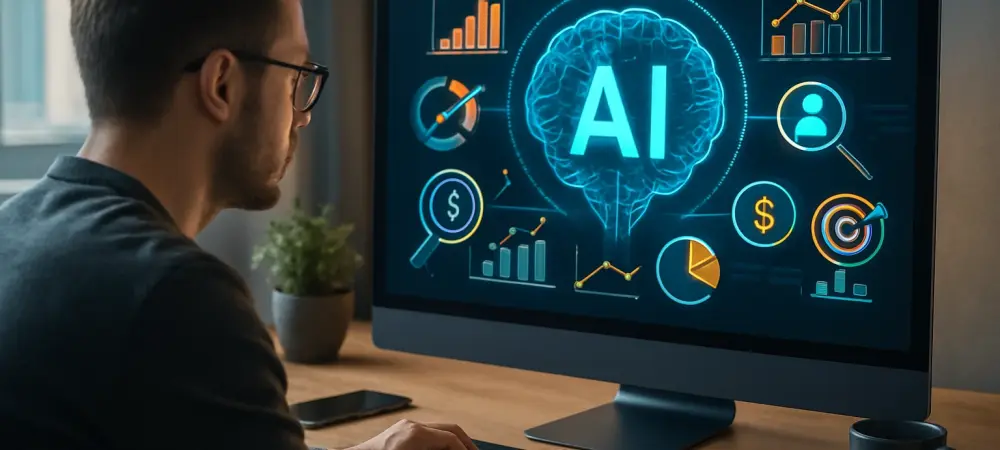
Setting the Stage for a Marketing Revolution
Imagine a world where a small business can launch a global ad campaign with the precision and impact of a multinational corporation, all thanks to a single technological ally. In today’s digital landscape, artificial intelligence (AI) is making this vision a reality, transforming how marketers strategize, execute, and connect with audiences. With billions of data points processed in mere seconds, AI is not just a tool but a game-changer that amplifies human creativity and efficiency. This review dives into the capabilities, trends, and real-world impact of AI in digital marketing, exploring how it reshapes an industry hungry for innovation.
The significance of AI extends beyond mere automation; it represents a paradigm shift in understanding consumer behavior and optimizing campaigns. From personalized recommendations to predictive analytics, this technology empowers marketers to make informed decisions at unprecedented speeds. As businesses grapple with ever-growing competition, the integration of AI offers a competitive edge that can redefine success in the digital realm.
Core Features and Performance of AI in Marketing
Unlocking Data-Driven Insights
At the heart of AI’s prowess in digital marketing lies its ability to analyze vast datasets with pinpoint accuracy. By sifting through consumer interactions, social media trends, and purchase histories, AI uncovers patterns that inform highly targeted strategies. This capability ensures that campaigns resonate with specific audience segments, driving engagement and boosting return on investment.
Performance metrics further highlight AI’s value, with real-time analytics enabling marketers to adjust strategies on the fly. The immediacy of these insights means that underperforming ads can be tweaked or replaced almost instantly, maximizing impact. Such precision in tracking and optimization sets AI apart as an indispensable asset for data-driven decision-making.
Beyond raw numbers, AI’s analytical strength fosters personalization at scale. Tailored content and recommendations based on individual preferences create a sense of connection between brands and consumers. This level of customization, once a labor-intensive process, now happens seamlessly, showcasing AI’s transformative effect on campaign effectiveness.
Streamlining Through Automation
Another standout feature of AI is its capacity to automate repetitive tasks, freeing marketers to focus on strategy and creativity. From crafting email sequences to generating social media posts, AI tools handle time-consuming chores with efficiency. This automation not only saves hours but also ensures consistency across multiple platforms.
Specific technologies, such as those aiding in SEO optimization, exemplify AI’s practical utility. By analyzing search trends and suggesting keywords, these tools enhance content visibility without requiring extensive manual research. Additionally, AI-driven content ideation platforms provide initial drafts or concepts, streamlining the creative process significantly.
The impact on workflow cannot be overstated. Marketers report substantial time savings, allowing for quicker pivots and experimentation in campaigns. This operational speed, combined with reduced human error, positions AI as a reliable partner in managing the logistical demands of modern marketing.
Emerging Trends Shaping AI’s Role
The landscape of AI in digital marketing continues to evolve, with advancements in machine learning enabling hyper-personalized experiences. Algorithms now predict consumer needs with startling accuracy, crafting messages that feel uniquely relevant. This trend toward individualized engagement is redefining expectations for brand interactions.
Industry behavior also reflects a growing acceptance of AI as a collaborative force. Marketers increasingly adopt hybrid models where human intuition guides AI outputs, blending creativity with data precision. This shift signals a broader cultural change, viewing technology as an enhancer rather than a competitor in the creative space.
Consumer expectations are evolving in tandem, with audiences demanding seamless, tailored experiences across touchpoints. AI’s ability to meet these demands through dynamic content and real-time adjustments is pushing brands to integrate such tools more deeply. As personalization becomes the norm, AI stands at the forefront of meeting these heightened standards.
Real-World Impact and Applications
AI’s deployment in digital marketing manifests in diverse, impactful ways, such as through chatbots that handle customer inquiries around the clock. These virtual assistants resolve routine issues swiftly, improving user satisfaction while allowing human staff to tackle complex challenges. Such implementations highlight AI’s role in enhancing service delivery.
Unique applications also emerge in how small businesses leverage AI for large-scale impact. Affordable tools enable these entities to run sophisticated ad campaigns, testing multiple variations across demographics without breaking the bank. This democratization of capability levels the playing field, once dominated by larger players with deeper pockets.
Notable successes often stem from human-AI collaboration, as seen in campaigns where predictive analytics inform creative direction. Marketers use AI-generated insights to craft emotionally resonant narratives, resulting in standout initiatives that capture audience attention. These examples underscore the power of combining technological precision with human storytelling.
Challenges and Areas for Improvement
Despite its strengths, AI in marketing faces technical hurdles, including the risk of producing generic content if not properly guided. Without human oversight, outputs can miss the mark on brand tone or cultural nuance, necessitating constant refinement. Data privacy concerns also loom large, as consumers grow wary of how their information is used.
Ethical and regulatory challenges add another layer of complexity. Transparency in AI-driven processes remains critical to maintaining trust, while compliance with consumer protection laws is non-negotiable. Brands must navigate these issues carefully to avoid reputational damage or legal repercussions.
Efforts to address these limitations are underway, with developers refining algorithms for better contextual understanding. Integrating human-in-the-loop approaches ensures outputs align with ethical standards and cultural relevance. These ongoing improvements signal a commitment to balancing innovation with responsibility in AI’s application.
Looking Ahead: The Path Forward
Reflecting on this review, AI in digital marketing proves to be a powerful enabler that redefines efficiency and personalization in the industry. Its ability to process data, automate tasks, and support creative endeavors stands out as a testament to its value. Yet, the journey reveals that human oversight remains essential to temper its outputs with authenticity and ethical grounding.
Moving forward, the focus should shift to fostering stronger human-AI partnerships through training and skill development. Marketers can benefit from learning how to craft effective prompts and interpret AI insights, ensuring technology serves strategic goals. Embracing this collaborative mindset will unlock new creative horizons.
Additionally, addressing privacy and ethical concerns must remain a priority for sustained trust. Industry stakeholders should advocate for clearer guidelines and robust safeguards as AI integration deepens. By proactively tackling these challenges, the marketing field can harness AI’s full potential while paving the way for responsible innovation.