

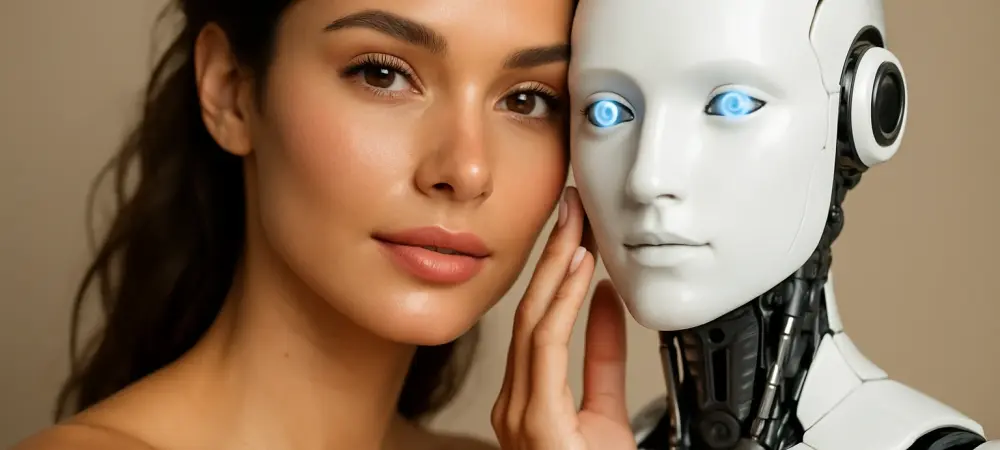
In today’s fast-paced beauty industry, artificial intelligence (AI) has rapidly gained significance, transforming how beauty products are marketed to consumers. The capability of AI to offer hyper-personalized experiences and automate content production is reshaping marketing strategies at unprecedented levels. This review delves into the nuances of AI’s impact on beauty marketing, exploring its evolution, remarkable capabilities, and the possibilities it holds for the future.
Uncovering AI’s Role in Beauty Marketing
The role of AI in beauty marketing is predominantly centered around hyper-personalization and content automation, which are revolutionizing how brands connect with consumers. With the advent of AI technology within beauty, companies are able to tap into vast consumer data, tailoring marketing campaigns to meet individual preferences and deliver targeted recommendations. Equipped with AI-driven technology, beauty brands have the tools to reimagine customer interaction, allowing them to simulate experiences that resonate with personal needs and desires.
Key Components of AI-Driven Marketing Strategies
The AI Assembly Line: Revolutionizing Content Creation
Beauty brands are leveraging what can best be described as an AI assembly line for content creation, resulting in a transformative shift toward speed and customized efficiency. This approach allows for rapid production of marketing materials, as AI technology adeptly manages various processes from concept to execution, reducing dependency on traditional agencies. Consequently, the dynamics between existing creative agencies and brands are changing, with AI systems increasingly taking on extensive roles in content development.
Hyper-Personalized Marketing in Beauty
With AI, beauty brands are able to harness consumer data to deliver hyper-personalized marketing campaigns tailored to individual preferences. Techniques like digital twin technology enable companies to simulate consumer experiences in virtual environments, enhancing personalization. Digital twin technology’s significance lies in its ability to provide a virtual, yet highly personalized, interaction, offering a glimpse into the consumer’s authentic experience.
Recent Innovations and Emerging Trends
Recent developments in AI technology have seen the introduction of AI-assisted global design studios, enabling brands to engage in vibe-based marketing. These innovations point to significant shifts in industry behavior, adapting to the evolving expectations of consumers who desire uniqueness in AI-generated content.
Real-World Applications and Brand Examples
Notable beauty brands like Dove and Tresemmé exemplify the use of AI-driven marketing initiatives to boost consumer engagement and brand differentiation. Through AI, these brands have successfully implemented campaigns that are deeply personalized, offering recommendations that resonate with individual consumers.
Real-world applications demonstrate the effectiveness of AI in creating meaningful interactions, with campaigns that showcase adaptability and clear comprehension of market demands.
Navigating Challenges and Acknowledging Limitations
Despite AI’s promising potential, significant challenges persist in maintaining creativity within AI-driven models and addressing consumer perceptions of synthetic content. Concerns around the authenticity and originality of AI-created marketing materials are prevalent, posing questions for brands on managing these perceptions.
Further challenges revolve around regulatory, ethical, and privacy implications of adopting AI technology. As businesses strive to overcome these obstacles, industry-wide efforts aim to harmonize technological advancement with ethical and privacy considerations, outlining the path forward for responsible AI utilization.
Envisioning Future Progress and Industry Transformation
The next phase of AI-driven beauty marketing is poised for considerable developments and advancements, shaping long-term industry transformation. Potential breakthroughs encompass improved AI capabilities that further enhance consumer experiences, alongside a deeper understanding of marketing dynamics.
As AI continues to advance, a significant shift in agency roles is anticipated, with greater focus on strategy, creativity, and ethics. In conclusion, the review of AI-driven beauty marketing reveals a transformative trend characterized by innovation, potential, and challenges. While AI presents an opportunity for enhanced personalization and efficiency, it also necessitates strategic considerations surrounding ethical implications and consumer perceptions. The beauty industry’s evolution under AI promises abundant possibilities for growth and uplifts how brands connect with audiences, redefining the marketing landscape in profound ways.