

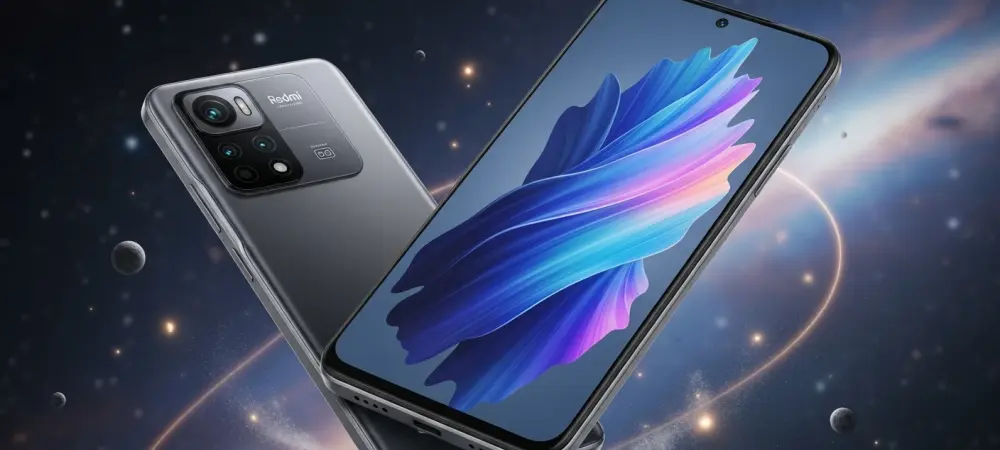
The smartphone market has reached a critical juncture where silicon scarcity and supply chain disruptions dictate engineering choices more than consumer desires. The Redmi Note 17 serves as a compelling case study in how a major manufacturer adapts to the 2026 global memory crisis and increasing geopolitical trade constraints. Rather than chasing the usual year-over-year performance gains, Xiaomi has pivoted toward extreme endurance, creating a device that feels like a survival tool as much as a communication hub. This shift represents a fundamental realignment of the mid-range philosophy, where reliability in constrained environments is now prioritized over sheer computational speed.
Evolution of the Redmi Note Series in a Challenging Market
The current economic landscape has forced a total reconsideration of core smartphone principles, as the lack of affordable high-speed NAND and DRAM components makes previous hardware trajectories unsustainable. Historically, this series pushed the boundaries of processing power, yet the modern era requires a strategy that values hardware longevity and power efficiency above all else. By focusing on a simplified chipset and a massive internal reservoir, Xiaomi maintains its market presence despite severe trade limitations that have hindered its rivals.
This evolution highlights a transition where the “bells and whistles” of previous years have been replaced by high-utility features that address real-world shortages. The technology has moved away from being a luxury media consumption device toward becoming a resilient utility. In a world where consistent access to high-end components is no longer guaranteed, the Note 17 prioritizes a stable, long-term user experience that can withstand the pressures of a fluctuating global economy.
Critical Hardware Components and Design Philosophy
Refined Aesthetics and the 7.0-inch AMOLED Display
The aesthetic direction of the Note 17 favors presence and utility, featuring a striking flat-edge design that accommodates its substantial internal components. A massive 7.0-inch 120Hz AMOLED panel serves as the centerpiece, offering vibrant colors and smooth scrolling that maintain a premium feel. However, the transition to this larger screen size has resulted in thicker bezels, particularly at the bottom, which signals a departure from the ultra-slim designs seen in earlier, less constrained production cycles.
Integrating an optical fingerprint scanner within the display provides a modern security layer, though its physical placement feels slightly lower than ideal given the massive verticality of the chassis. While the screen size is excellent for productivity, the sheer footprint makes it a two-handed device for the majority of users. This design choice reflects a broader industry belief that screen real estate is the ultimate commodity for a mobile-first workforce that values visibility over pocketability.
Power Management and the 8000mAh Battery Architecture
Engineers achieved a significant feat by housing an 8000mAh battery within a frame that remains relatively manageable for daily use. This architecture delivers a legitimate three-day lifespan under moderate usage, effectively eliminating the daily anxiety of finding a wall outlet. The power management system is meticulously optimized to squeeze every milliampere-hour from the cell, supported by 22.5W reverse wired charging that allows the device to act as a primary energy source for smaller peripherals.
This synergy extends to the broader accessory ecosystem, where the phone pairs naturally with external units like the Power Bank 5i. This focus on an “unplugged” lifestyle addresses the slow internal charging speeds of the phone by providing a massive, multi-day energy reserve. The engineering here is not about speed, but about the confidence that the device will remain operational in situations where traditional infrastructure might be unavailable or unreliable.
Latest Developments in Mid-Range Processing and Efficiency
The selection of the Snapdragon 4 Gen 4 chipset is a direct response to the global component shortages currently affecting the industry. This processor prioritizes energy efficiency over high-end performance, allowing the device to maintain its incredible battery life without sacrificing basic usability. While it handles standard navigation and social media applications with ease, users will notice limitations during heavy multitasking or when attempting to run resource-intensive games at high settings.
Moreover, consumer behavior suggests a growing segment of the market that values a phone that stays on over a phone that benchmarks high. This shift in demand has allowed Xiaomi to justify the use of more modest silicon while focusing on software optimizations that keep the interface fluid. By tailoring the operating system to a less demanding processor, the company provides a consistent, if not lightning-fast, experience that aligns with current market realities.
Practical Applications and Targeted User Scenarios
The immense battery capacity finds its true value in professional niches such as long-haul logistics or remote field work where power access is inconsistent. For workers who spend days away from charging stations, the ability to rely on a single charge for communication and navigation is a critical asset that outweighs the need for high-end photography. The device functions as a dependable anchor in an increasingly mobile and decentralized workforce.
Furthermore, the reverse charging capability enables unique use cases, such as powering wireless earbuds or small GPS units in the field. It is no longer just a communication tool; it is a portable energy reservoir that ensures the entire digital toolkit of a professional remains operational throughout the work week. It is no longer just a communication tool; it is a portable energy reservoir that ensures the entire digital toolkit of a professional remains operational throughout the work week.
Technical Bottlenecks and Competitive Market Challenges
Despite the battery triumphs, the device faces significant technical bottlenecks that hinder its overall appeal to a general audience. The audio-visual suite suffered a noticeable downgrade, featuring only a single bottom-firing speaker that lacks the depth and clarity of previous stereo setups. Additionally, the camera array was reduced to a basic 50MP sensor, which produces functional images but struggles significantly in low-light conditions and lacks the versatility of multi-lens systems.
Market dynamics further complicate the value proposition of the Note 17, as it often competes against its own predecessors that offered better cameras and faster chips. The existence of the Poco M8 Power, which shares nearly identical specifications at a lower price point, creates an internal rivalry that makes the Note 17 a difficult recommendation. This pricing paradox highlights the challenges manufacturers face when trying to balance rising production costs with consumer expectations for the “Note” branding.
Future Outlook for High-Endurance Mobile Technology
The trajectory of high-endurance mobile technology suggests that the industry may continue to diverge into distinct performance and utility tiers. Future breakthroughs in solid-state battery technology or more aggressive AI-driven software optimizations could eventually mitigate the current hardware compromises. If these innovations succeed, battery capacity could become the primary metric of a device’s worth, overshadowing traditional specifications like clock speed or camera resolution.
Long-term impacts on the budget segment may involve a permanent shift toward modular or high-efficiency designs that prioritize longevity. Whether manufacturers return to high-performance specifications will depend heavily on the stabilization of the global supply chain and the availability of next-generation semiconductors. Until then, the focus will likely remain on squeezing the maximum utility out of available, albeit modest, hardware components.
Final Assessment of the Redmi Note 17
The Xiaomi Redmi Note 17 proved to be a polarizing entry that redefined the priorities of the mid-range market during a period of global scarcity. While the record-breaking battery life provided unprecedented freedom, the regressions in audio quality and processing power were difficult to overlook. It stood as a testament to the hard choices required to maintain production in a constrained economic environment, prioritizing a single, massive advantage over a balanced feature set.
Ultimately, the device functioned as a niche powerhouse rather than a universal successor to the famous lineage. It succeeded in providing a specific solution for users prioritizing endurance above all else, yet it struggled to justify its premium cost against more balanced alternatives. The Note 17 represented a bold attempt to navigate a changing technological landscape by doubling down on utility, signaling a new era where staying powered was more important than staying at the cutting edge.