

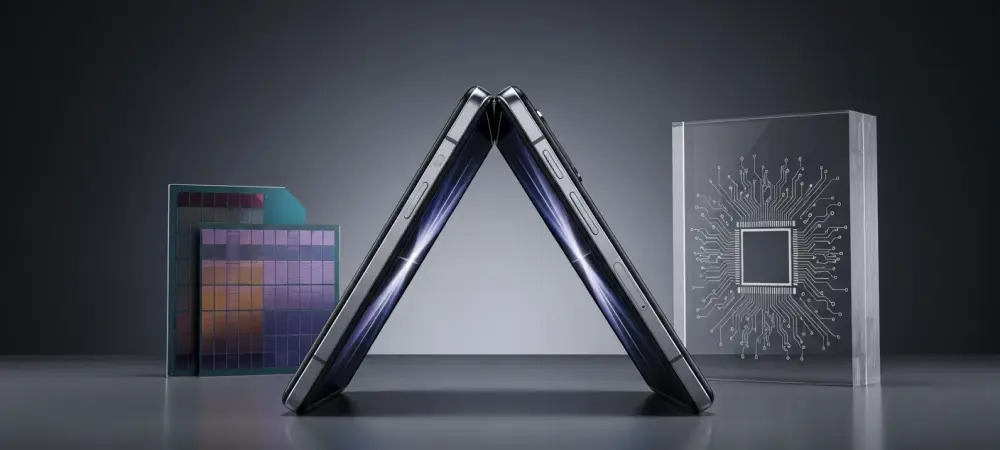
Whispers buried in HyperOS code pointed to a familiar silhouette taking shape again, with references to “Q18” and the model string 2608BPX34C reviving expectations that a book-style foldable would rejoin Xiaomi’s lineup after a brief pause, and the clues together created a portrait of a flagship engineered to trade brute-force specs for tighter integration, smarter power behavior, and a sharpened camera identity through Leica. Those breadcrumbs did more than hint at a device name; they mapped a strategy: a likely “Mix Fold 5” label favored in code over alternatives like “Xiaomi 17 Fold,” a summer cadence aligning with the brand’s busiest product window, and a focus on China-first distribution consistent with earlier Mix Fold patterns. The story in those strings was not just hardware—it was direction, suggesting a company betting on its own silicon to set the tone for what comes next.
Signals in the Code
Identity and Naming
Internal strings that tied the “Q18” codename to a foldable made the case for continuity, not reinvention, in Xiaomi’s book-style line. The company has repeatedly used the number 18 to signal foldable projects, and coupling it with 2608BPX34C strengthened the sense that this device sat on the premium track once held by Mix Fold 3. Among competing labels that circulate before launch, “Mix Fold 5” maintained the clearest trail in code, and that consistency matters: predictable naming anchors a device in a legacy of hardware choices and sets expectations for pricing, camera caliber, and hinge design. The Leica tag, also traced in software references, implied a repeat of tuned color science, nuanced contrast handling, and lens profile work that have differentiated previous co-branded cameras. Rather than shouting about megapixels, this approach typically leans on processing pipelines and optical character that feel deliberate, cohesive, and premium.
Silicon Strategy
The most consequential tell was the silicon path. Code markers indicated a “version 3” Xring platform, plausibly landing as Xring O3, which sidestepped Qualcomm’s Snapdragon 8 Elite Gen 5 despite its raw performance appeal. That choice spoke to a broader industry pattern: vertical integration to control thermal envelopes, camera ISP behavior, and on-device AI without deferring to a general-purpose flagship SoC roadmap. The jump from O1 to a “v3” label, while not explained, suggested an internal cadence decoupled from consumer-facing names, possibly aligning with development branches rather than retail iterations. For a foldable, this control pays dividends where it counts—sustained performance in tablet mode, adaptive refresh management across dual panels, and camera pipelines tuned for zipper-free lens switching. If Xring O3 delivered cohesive power-efficiency gains, the benefit would appear not only in benchmarks but in a quieter chassis, steadier frame rates, and fewer throttling dips during long photo sessions or multiwindow productivity.
Market Position and Timing
Availability and Launch Window
Early references implied a China-only debut, and that decision tracked with practical realities: domestic channels already understood Xiaomi’s foldable cycle, after-sales logistics were optimized for hinge and display service, and software like HyperOS could ship with region-specific integrations without global certification friction. A summer target fit recent pacing, clustering with other flagship reveals to amplify marketing reach while leaving runway for seasonal promotions. Such timing also placed the device in the thick of foldable momentum, where attention stretches beyond “can it fold” to “how well does it live open”—battery stamina, crease minimalism, and app continuity between cover and inner displays. Keeping distribution local at first would let Xiaomi iterate hinge tolerances and panel suppliers while monitoring real-world durability. If adoption patterns looked healthy, staged expansion could follow, but the plan as signaled remained focused: concentrate resources where channel muscle was strongest, then reassess.
Competitive Context and Next Moves
Competition around book-style formats tightened. Motorola pushed large-screen foldables toward slimmer frames and cleaner outer displays, while another major player readied its own take, raising the bar on mainstream polish and ecosystem lock-in. Against this, Xiaomi’s edge looked twofold: Leica-tuned imaging to answer the “pro camera in a foldable” challenge and a homegrown Xring O3 to influence every watt and workload. Success would depend on execution across mundane details—cover-screen ergonomics, edge touch rejection, app scaling quirks, and hinge resistance that feels both confident and effortless. Pricing strategy also mattered; a premium tag needed to be backed by perceivable advantages in image rendering, multitasking fluidity, and thermals. Building on this foundation, the next steps for buyers and developers had been clear: monitor early samples for color science consistency, watch for throttling behavior in tablet mode, and evaluate whether HyperOS offers frictionless continuity across inner and outer displays in daily productivity workflows.