

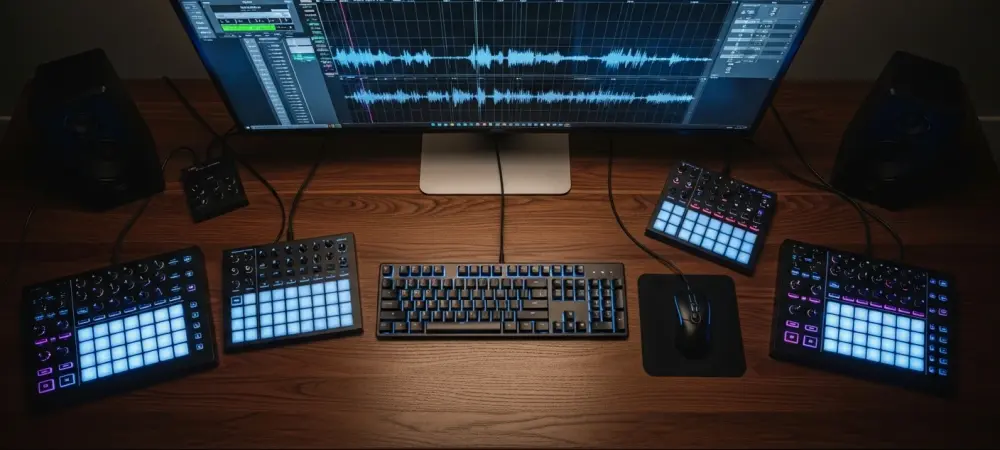
The long-standing frustration of musicians struggling with Windows’ legacy audio constraints has finally met its match in a ground-up architectural redesign. For decades, the creative community often viewed the platform as a second-tier choice for professional audio, primarily due to an aging MIDI stack that felt more like a relic of the nineties than a modern production tool. Microsoft’s introduction of Windows MIDI Services marks a definitive pivot, signaling a strategic intent to not just match but potentially surpass the stability and flexibility of macOS. This is not merely a patch or a driver update; it is a fundamental transformation of how the operating system perceives and processes musical data at the kernel level.
Modernizing the Windows Audio Architecture
The core of this evolution lies in the departure from a rigid, monolithic MIDI system toward a modular, service-oriented framework. In the past, MIDI on Windows relied on an API that was largely unchanged since the early 1990s, leading to significant bottlenecks in complex studio environments. By rewriting this stack, developers have provided a foundation that can handle the high-speed, high-resolution demands of modern digital audio workstations. This shift is crucial for Microsoft as it attempts to court elite producers and engineers who require absolute reliability during resource-intensive sessions.
This modernization effort places Windows on a more competitive footing by integrating MIDI functionality directly into the system’s core services. Unlike the previous implementation, which often felt like an afterthought, the new architecture treats MIDI as a first-class citizen alongside high-definition video and graphics. This systemic prioritization ensures that musical data receives the low-latency scheduling it needs to prevent timing jitter, which has been a persistent plague for electronic musicians relying on precise hardware synchronization.
Core Architectural Enhancements and Capabilities
Native Multi-Client Support and Driver Efficiency
One of the most transformative changes in this review is the implementation of universal multi-client support. Historically, Windows MIDI drivers were “single-client,” meaning that if one application was using a MIDI keyboard, no other software could access it. The new service acts as a central broker, allowing dozens of applications to subscribe to the same hardware endpoint simultaneously. This effectively ends the era of “device in use” errors and eliminates the need for unstable third-party virtual cables that many producers used as a desperate workaround.
MIDI 2.0 Integration and Backward Compatibility
As the industry moves toward the MIDI 2.0 standard, this new service provides the necessary plumbing to handle bidirectional communication and increased controller resolution. While MIDI 1.0 was limited to 127 steps of velocity, the new stack supports the 32-bit resolution required for ultra-expressive virtual instruments. Crucially, this system features a sophisticated translation layer that ensures legacy gear still works flawlessly. It bridges the gap between generations, allowing a vintage synthesizer from 1985 to coexist in the same software ecosystem as a cutting-edge 2026 controller.
Virtual Routing and WebMIDI Connectivity
The inclusion of native loopback functionality simplifies complex workflows by allowing software-to-software MIDI routing without external utilities. This is particularly beneficial for those who use specialized generative sequencers to drive their main recording software. Furthermore, the integration of native WebMIDI support means that browser-based synthesizers and configuration tools can now interact with hardware with the same low latency as desktop applications. This opens the door for a new wave of cloud-based collaborative tools that were previously hindered by the lack of direct hardware access.
Current Trends in Operating System Audio Standards
The industry is currently witnessing a broader shift toward “intelligent” audio peripherals that require more than just a simple data pipe. Windows MIDI Services reflects this trend by moving away from the “dumb” one-way messaging of the past toward a discovery-based system. Modern standards now emphasize property exchange, where a device can tell the operating system its name, its configuration, and its specific capabilities automatically. This reduces the time spent on manual mapping, allowing creators to focus on the artistic process rather than technical troubleshooting.
Real-World Implementation and Sector Usage
In practical scenarios, such as high-stakes live performances, the increased stability of the MIDI stack is a game-changer. Electronic music producers can now run a complex array of hardware drum machines, lighting rigs, and visual synthesizers from a single laptop with a level of timing precision that was previously the domain of dedicated hardware sequencers. The ability to sync stage lighting via MIDI over the same unified service used for audio ensures a cohesive performance without the risk of software conflicts or driver crashes during a show.
Technical Limitations and Adoption Challenges
Despite these advancements, the transition is not without its hurdles. The phased rollout means that users on older versions of Windows 11 may not see these features immediately, and full optimization requires software developers to migrate to the new MIDI App SDK. While the system is designed to be backward compatible, some archaic legacy drivers may still require updates to function correctly within the new multi-client environment. The success of this ecosystem ultimately depends on how quickly third-party plugin and DAW developers embrace the new architecture.
The Trajectory of the Windows MIDI Ecosystem
Looking forward, the development of the MIDI Console and PowerShell scripting capabilities suggests a future where MIDI management is as transparent and scriptable as network settings. We are likely to see breakthroughs in “jitter-free” performance as the service matures and more hardware manufacturers release native MIDI 2.0 devices. This trajectory indicates that Windows is no longer just a platform that can do music, but one that is actively being engineered to lead the industry in technical capability and raw performance.
Final Assessment of Windows MIDI Services
The modernization of the MIDI stack was a successful overhaul that addressed the most glaring weaknesses of the Windows platform. By introducing native multi-client support and a forward-looking MIDI 2.0 framework, the system provided a robust “glue” for modern production that felt both professional and intuitive. The transition from a legacy-bound architecture to a service-oriented model represented a significant victory for the creative community. Ultimately, the development moved the needle toward a more open and capable environment, establishing a new standard for how operating systems should handle professional musical data.