

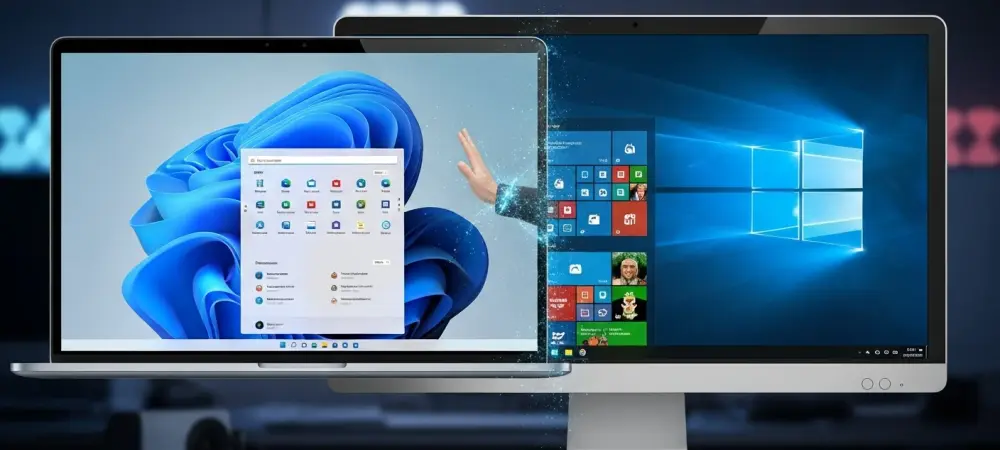
The technological landscape of mid-2026 presents a striking paradox where a supposedly retired operating system continues to command a massive global user base despite official efforts to sunset its utility. While software developers generally anticipate a rapid migration to the newest versions of their products, the transition from Windows 10 to Windows 11 has proved to be an exceptionally prolonged and difficult affair for Microsoft. Even though the company officially withdrew standard support for the older platform in late 2025, the reality on the ground reflects a deep-seated reluctance among both corporate and individual users to abandon a system they view as stable and sufficient. This resistance has created a fragmented environment where the newer operating system struggles to achieve the total dominance its predecessors once enjoyed with ease. The persistence of the older version highlights a significant disconnect between corporate software cycles and the practical realities of hardware longevity, economic constraints, and user preference, ultimately shaping a digital ecosystem that is far less unified than the industry giants had originally envisioned during the launch of the current generation.
The Statistical Gap and Technical Constraints
A Market Divided: Software Cycles and Adoption
Current data suggests a market that is deeply divided, with the newer version of Windows holding a lead that is far from absolute. As of mid-2026, Windows 11 occupies approximately 69 percent of the global market share, a figure that would normally indicate a successful takeover but actually masks a significant problem for the developer. The remaining 31 percent of users continue to rely on Windows 10, a legacy product that has officially entered its post-retirement phase without receiving standard functional updates. This high retention rate is unusual for an ecosystem that typically moves toward modernization within two to three years of a major release. The stubborn nature of this 30 percent block suggests that the traditional “end-of-life” warnings failed to act as the catalyst for change that Microsoft intended, leaving a substantial portion of the computing world operating on what is technically an obsolete foundation.
This market fragmentation introduces substantial challenges for developers and IT departments who must now support two distinct environments simultaneously. When a third of the user base refuses to migrate, software companies are forced to decide whether to optimize their products for the majority or maintain backward compatibility for a massive minority that still generates significant traffic. This situation prevents the industry from fully embracing new technologies that are exclusive to the Windows 11 architecture, such as advanced AI integration and deeper hardware-level security protocols. Consequently, the progress of the entire PC ecosystem is slowed by the weight of a legacy system that refuses to fade into the background. The current divide proves that technical superiority is often secondary to the practical habits of a global workforce that prioritizes consistency and reliability over the latest feature sets or design overhauls.
The Impact of Hardware Requirements: The Silicon Line
The primary barrier to total adoption is not merely a matter of user preference but is rooted in the strict technical requirements that define the current generation of hardware. Windows 11 introduced rigorous security standards, most notably the requirement for Trusted Platform Module (TPM) 2.0 and specific processor architectures that were not mandatory for its predecessor. This policy effectively created a “silicon line” that separated modern machines from older, yet perfectly functional, hardware. Millions of computers that are more than capable of handling everyday tasks like professional office work, high-definition video conferencing, and complex web browsing are technically barred from upgrading. For many users, moving to the new operating system would require a significant capital investment in a new machine, a step that feels unnecessary when their current hardware performs without any noticeable lag or mechanical failure.
This enforced obsolescence has sparked a debate regarding environmental sustainability and the ethics of hardware lifecycle management. By labeling millions of capable PCs as incompatible, the software industry has essentially orphaned a fleet of hardware that remains useful but is officially unsupported. In many cases, these machines are discarded or relegated to secondary roles, contributing to electronic waste despite their operational integrity. Users who find themselves on the wrong side of this silicon line often choose to stay with Windows 10, accepting the risks of an aging system rather than spending money on an upgrade they do not feel they need. This dynamic has slowed the natural replacement cycle, as the perceived value of Windows 11 does not always outweigh the tangible cost of a complete hardware refresh. As long as these barriers exist, the transition will remain incomplete, bound by the physical constraints of the existing global computer inventory.
Corporate Strategy and User Resistance
Moving the Official Deadline: Security over Migration
Recognizing that a massive segment of its audience was unable or unwilling to migrate by the original deadline, Microsoft has been forced to adapt its corporate strategy significantly. To prevent a global security crisis caused by millions of unpatched Windows 10 machines, the company introduced extended security update programs that are scheduled to run through 2027 for a subscription fee. This move is a tacit admission that the initial timeline for the phase-out was overly optimistic and failed to account for the slow pace of corporate and institutional migration. By pushing back the functional finish line, the developer has prioritized the stability of the global digital infrastructure over its desire for a unified platform. This extension provides a crucial safety net, but it also inadvertently reduces the urgency for many organizations to complete their transition to the modern operating system.
Building on this tactical shift, the availability of paid security updates has created a tiered system of software support. Large enterprises with the budget to pay for these extensions can afford to delay their hardware refreshes, maintaining their existing workflows while staying protected against emerging threats. However, this luxury is not always available to individual consumers or small businesses, creating a disparity in the security posture of different user groups. The strategy reflects a broader trend in the industry where software lifecycles are increasingly negotiated between the developer and the reality of the market. While the 2027 window provides temporary relief, it also prolongs the period of fragmentation, ensuring that Windows 10 remains a relevant part of the technical conversation for several more years. The company’s focus has shifted from forcing a migration to managing a long, controlled descent for its most successful legacy platform.
Navigating Interface Friction: User Psychology and Inertia
Beyond the technical and financial hurdles, the user interface of the current operating system has encountered significant friction among long-time professionals and casual users alike. The redesign of core elements, such as the centered taskbar and the simplified Start menu, was intended to modernize the look of the OS, but it often came at the cost of established productivity habits. For many, the removal of specific customization options—like the ability to move the taskbar to the sides or the top of the screen—felt like a step backward in terms of flexibility. When a tool that a person uses for eight hours a day changes its fundamental behavior, the result is often frustration rather than excitement. This interface friction acts as a psychological barrier, making the older, more familiar system appear more attractive despite its lack of modern features.
This phenomenon is compounded by a general sense of “user inertia,” where individuals are unlikely to change a system that is currently working well for them. In many professional environments, the operating system is merely a background layer that supports critical applications; if those applications run smoothly on Windows 10, there is little incentive to risk a major update that might introduce compatibility issues. To these users, the older version represents a “known quantity” that is stable, predictable, and requires no additional learning curve. The marginal benefits of the newer system, such as improved window snapping or aesthetic transparency effects, are often viewed as secondary to the reliability of a workspace that has been refined over a decade. Until the new platform can prove that it offers a transformative improvement in actual productivity, many will continue to choose the comfort of the system they already know and trust.
Alternative Solutions and the Path Forward
Beyond the Microsoft Ecosystem: The Rise of Linux
The barriers created by strict hardware requirements and interface changes have led some users to explore options outside of the traditional Microsoft ecosystem. Linux distributions, such as Linux Mint and Fedora, have seen a modest but notable increase in adoption among tech-savvy individuals who own high-quality hardware that the new Windows version rejects. Because Linux can run efficiently on older processors without requiring TPM 2.0, it has become a viable “escape hatch” for those who want a secure and modern experience without buying a new PC. This trend highlights a growing frustration with the perceived arbitrariness of official hardware requirements, as users prove that their “obsolete” machines are still capable of running sophisticated, modern software. While this has not yet reached the level of a mass exodus, it represents a shift in the way consumers view their relationship with software providers. Furthermore, the rise of web-based applications and cloud computing has reduced the dependence on a specific desktop operating system for many daily tasks. As long as a computer can run a modern web browser, the underlying OS becomes less critical for users who spend their time in tools like Google Workspace or specialized SaaS platforms. This shift has empowered users to stay on legacy systems or move to alternative platforms without losing access to their essential work tools. The decoupling of hardware, software, and services is a significant development that Microsoft must contend with as it attempts to maintain its dominance. By making the upgrade process difficult for those with older hardware, the company has inadvertently encouraged its user base to seek out more flexible and sustainable alternatives. This competition from below serves as a reminder that brand loyalty is often tied to accessibility and respect for the user’s existing investments.
A Transition Defined by Attrition: Lessons for the Future
The transition from the previous generation to the current one eventually became a long-term process of attrition rather than the swift replacement originally envisioned by industry analysts. It was observed that Windows 10 refused to disappear because it fulfilled a fundamental promise of being a tool that stayed out of the way while providing a stable platform for work. Organizations realized that the costs of massive hardware refreshes often outweighed the immediate benefits of a new user interface or minor performance gains. By mid-2026, it became clear that the traditional model of forced migration had met its match in a world that was increasingly prioritizing sustainability and fiscal responsibility. Users and IT administrators alike sought paths that maximized their existing investments while preparing for a more gradual, inevitable shift toward modern platforms over several years.
Ultimately, the decision to remain on legacy software represented a calculated choice for millions who valued continuity over novelty. This period proved that the lifespan of an operating system was no longer defined solely by its creator, but by the community of users who relied on it for their daily productivity and digital stability. The lessons learned during this era suggested that future software releases would need to be more inclusive of older hardware or offer more compelling reasons for a total system overhaul. The industry moved toward a model where compatibility and user choice were given greater weight, recognizing that a forced “silicon line” could alienate a significant portion of the market. As the ecosystem finally began to consolidate around newer standards, it did so through the natural replacement of old hardware rather than through the success of aggressive software mandates, marking a shift in how technology cycles were managed at a global scale.