
Will US Regulations Weaken NVIDIA’s RTX 5090D for China?

Article Highlights
Off On

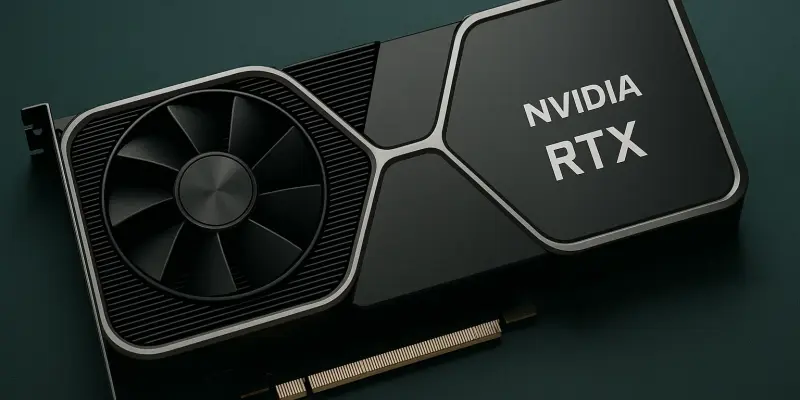
The evolution of NVIDIA’s graphics cards has long been a point of intrigue in the tech world, but recent developments have added new dimensions to this narrative. The anticipated launch of the RTX 5090D in China has shifted attention towards the implications of US export regulations on its design and performance. These rules enforce stringent limitations, compelling NVIDIA to make significant downgrades to its initial specifications. Initially envisioned to rival the high-performance RTX 5090, the Chinese variant has been stripped of its premium offerings to comply with the export mandates. Such constraints have necessitated a reduction in its gaming and productivity prowess, raising concerns about its attractiveness as a flagship competitor. This abbreviated form could profoundly influence both consumer expectations and market positioning, casting a shadow over the model’s debut.

Implications of Export Regulations on NVIDIA’s Market Strategy

Under current regulations, NVIDIA is preparing to release a model that significantly trails its global equivalent. The required technical alterations have sharply diminished the card’s core prowess. The new RTX 5090D features 14,080 CUDA cores, significantly fewer than the original’s 21,760. These changes extend to the memory bus, now set at a 384-bit configuration with 24 GB GDDR7 VRAM, yielding a maximum memory bandwidth of 1344 GB/s, which falls short of expected performance figures. Though these specifications limit its competitiveness, the price remains undisclosed, with speculation pointing toward alignment with the RTX PRO 5000.

Concurrently, industry buzz suggests the RTX 5060 might debut around May 20, coinciding with AMD’s RX 9060 XT launch. Enthusiasts anticipate a more robust addition to NVIDIA’s lineup, possibly named the RTX 5080 Super or RTX 5080 Ti, which could restore NVIDIA’s competitive position. In China, this model may be branded RTX 5090D, indicating a strategic approach to rekindle consumer interest. Export controls continue reshaping the landscape, requiring NVIDIA to adapt rapidly to navigate these challenges.

Explore more

Effective Email Automation Strategies Drive Business Growth

The digital landscape is currently witnessing a silent revolution where the most successful marketing teams have stopped competing for attention through volume and started winning through surgical precision. While many organizations continue to struggle with the exhausting cycle of manual campaign creation, a sophisticated subset of the market has mastered the art of “set it and forget it” revenue generation.

How Can Modern Email Marketing Drive Exceptional ROI?

Every second, millions of digital messages flood into global inboxes, yet only a tiny fraction of these communications actually manage to convert a passive reader into a loyal, high-value customer. While the average marketer often points to a return of thirty-six dollars for every dollar spent as a benchmark of success, this figure represents a mere starting point for organizations

Modern Tactics Drive High-Performance Email Marketing

The sheer volume of digital correspondence flooding the modern consumer’s primary inbox has reached a point where generic messaging is no longer merely ignored but actively penalized by sophisticated filtering algorithms. As the global email ecosystem navigates a staggering daily volume of nearly 400 billion messages, the traditional “spray and pray” methodology has transformed from a sub-optimal tactic into a

How Will AI-Native 6G Networks Change Global Connectivity?

Global telecommunications are currently undergoing a profound metamorphosis that transcends simple speed upgrades, aiming instead to weave an intelligent fabric directly into the world’s physical reality. While the transition from 4G to 5G was defined by raw speed and reduced latency, the move toward 6G represents a fundamental departure from traditional telecommunications. The industry is moving toward a reality where

How Is AI Redefining the Future of 6G and Telecom Security?

The sheer velocity of data surging through modern global telecommunications has already pushed traditional human-centric management systems toward a breaking point that demands a complete architectural overhaul. While the industry previously celebrated the arrival of high-speed mobile broadband, the current shift represents a fundamental departure from hardware-heavy engineering toward a software-defined, intelligent ecosystem. This evolution marks a pivotal moment where