

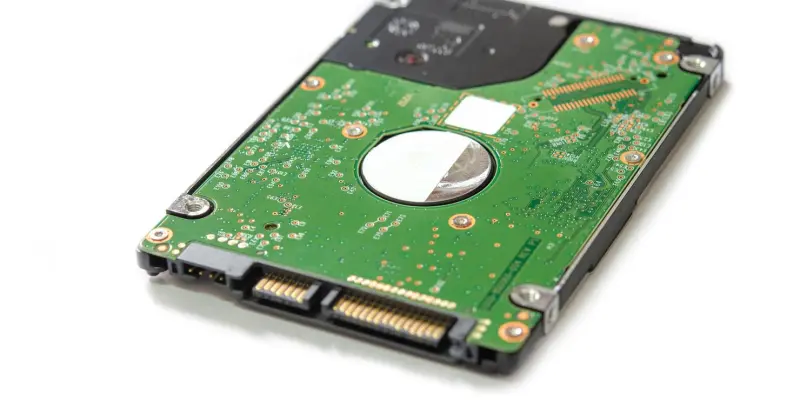
The rapid evolution of storage technology has been marked by significant advancements in the design, speed, and performance of Solid State Drives (SSDs). The Crucial P510 1 TB Gen5 NVMe SSD has emerged as a noteworthy player in this landscape, especially with its impressive DRAM-less architecture. By 2025, PCIe Gen5 NVMe SSDs have gained substantial traction, heralding a new era of high-speed storage capabilities regularly reaching read and write speeds upwards of 10 GB/s. These benchmarks have set a new standard, with expectations for even greater advancements as manufacturers continue to optimize thermal designs and introduce enhanced NAND solutions. Within this dynamic environment, Gen5 SSDs have transitioned from niche technology to mainstream use, propelled further by the broad availability of AMD and Intel boards supporting PCIe Gen5 technology. This article explores the nuances of the Crucial P510 SSD, its technological underpinnings, and its positioning within the broader market.
The Evolution and Positioning of the Crucial P510
Legacy and Affordability in Gen5 SSDs
The Crucial P510 SSD, a product of Micron’s robust manufacturing capabilities, stands as a key player in the Gen5 storage continuum. Following in the footsteps of its predecessors, such as Crucial’s high-end T700 series, the P510 seeks to democratize access to high-speed storage solutions. Priced at approximately $120 USD, this drive aims to deliver the core benefits of Gen5 SSDs to a wider audience. The drive’s Phison E31 controller indicates a strategic shift towards cost-effective yet high-performance solutions, allowing broader access to state-of-the-art technology.
The Crucial P510’s entry into the market represents a strategic move to make Gen5 SSD benefits more attainable. This model incorporates a Phison E31 controller, a choice that balances performance with affordability. Positioned within the SSD performance hierarchy, it manages to retain commendable capabilities while reducing costs through a DRAM-less design. Instead of traditional DRAM, it uses an onboard Host Memory Buffer (HMB), enhancing budget-friendliness without substantially compromising on performance. This integration of cutting-edge technology with cost-effective manufacturing techniques exemplifies the SSD’s intent to offer consumers solid performance at an accessible price point.
In addition to the controller, the P510 employs TLC-based 3D NAND flash, enhancing both performance and energy efficiency. As technology advanced, NAND solutions became more sophisticated, focusing on elevating speed and reducing power consumption. The Crucial P510 capitalizes on these advancements, reinforcing its position as an attractive option for users demanding high-speed storage without the financial burden typical of top-tier Gen5 SSDs.
Architecture and Technical Specifications
The architecture of the Crucial P510 SSD is a testament to its role as a bridge between high-performance technology and affordability. With a potential capacity of up to 2 TB, the drive is built on NVMe SSD form factors leveraging TLC-based 3D NAND flash. This choice underscores a commitment to high efficiency and robustness, hallmarks of storage technology that are both accessible and high-performing. The inclusion of the Phison E31 controller—which adheres to PCIe 5.0 standards—uses TSMC’s 7nm process and includes a single-core Cortex R5 CPU. This design reveals intentional positioning: providing an option for speed-conscious consumers that rivals higher-end models, despite lacking a DRAM cache.
The Phison E31 controller is equipped with advanced features such as LDPEC, ECC, and RAID ECC, further consolidating the drive’s performance profile. These capabilities help manage power consumption, typically peaking at 5W, while supporting both 3D TLC and QLC NAND flashes. With four channels integrated, these configurations allow flash rates to reach up to 3600 MT/s, resembling the performance standards of more expensive counterparts. Furthermore, Micron’s 276-layer G9 3D TLC NAND flash facilitates the drive’s objectives of efficiency within the boundaries of modern consumer expectations.
Performance Evaluation and Market Position
Assessing Performance Metrics
The Crucial P510 SSD’s performance offers insight into the broader impacts of Gen5 SSD technology within the storage market. Testing of the 2 TB variant demonstrates read speeds reaching up to 11,000 MB/s and write speeds around 9500 MB/s. These metrics not only illustrate the drive’s capability to keep pace with modern workloads but also reflect its endurance, rated at 600 TBW. Such durability signifies the drive’s potential to maintain consistency over extensive usage, fulfilling the demands of both everyday computing and more resource-intensive tasks. Benchmark evaluations provide a deep dive into the Crucial P510’s true capabilities, correlating with manufacturer claims and offering a comparative lens against competitor drives. Key testing protocols utilize industry-standard applications like AS SSD, ATTO Disk Benchmark, Crystal Disk Mark, and PCMark 10 Storage Benchmark. These assessments quantify the drive’s sequential read/write speeds, efficiency in random data handling, access times, and transfer rates. Such comprehensive testing yields a robust understanding of the P510’s operability across synthetic and real-world conditions, validating its middle-ground performance stature for budget-conscious consumers.
The results from these benchmarks indicate that the P510 competes favorably against pricier alternatives, attributing much of its prowess to the efficiency of the Phison E31 controller. There remains a discernible gap in speed when compared to more premium Gen5 SSDs, attributed to the absence of a DRAM cache. However, this trade-off is increasingly acceptable for users prioritizing cost efficiency alongside sufficient speed levels.
The Role of Thermal Design and Market Accessibility
Thermal designs have become a focal point in the evolution of SSD technology, and the Crucial P510 is no exception. By optimizing thermal characteristics, manufacturers have been able to offer drives that are not only faster but also cooler and more efficient. The availability of models with and without heatsinks in the P510 series provides flexibility to consumers, catering to those who need enhanced cooling capabilities without mandating them for all users. The drive adheres to NVMe 1.4 standards, allowing potential adopters to decide between extra thermal management and cost savings.
In recent years, prices for Gen5 SSDs have seen a substantial reduction, leading to broader market accessibility. This transition has democratized advanced storage solutions beyond tech enthusiasts to the general consumer. The Crucial P510 exemplifies this trend, bridging the gap between aspirational technology and everyday affordability. As the cost of technology diminishes, high-speed storage becomes standard, capturing the interests of users eager to upgrade from older generations to Gen5 standards.
Broader Impact on the SSD Market
Mainstream Adoption and Consumer Benefits
The Crucial P510 SSD plays an instrumental role in the ongoing transformation of the SSD marketplace. By offering competitive performance metrics at an approachable price point, it encourages a wider range of consumers to adopt SSD technology, facilitating the replacement of older, slower storage formats. This shift contributes significantly to the mass market adoption of SSDs, expanding the audience that can benefit from high-speed storage technology. As a result, even casual users can experience notable improvements in application loading times, data transfer speeds, and overall system responsiveness.
Furthermore, the drive’s alignment with PCIe Gen5 technology is pivotal in its broader appeal. The rising availability of motherboards supporting this standard has amplified consumer interest, fostering a market growth that accommodates diverse user preferences and financial constraints. As Gen5 platforms become ubiquitous, SSDs like the Crucial P510 leverage this expanding infrastructure, encouraging seamless upgrades and widening the accessibility of cutting-edge technology.
Future Trends and Innovations
Looking ahead, the SSD market is poised to continue its trajectory of innovation and expansion. The ongoing development of Gen5 technology, alongside the pursuit of even faster interfaces, indicates a future ripe with possibilities. As storage capacities expand and NAND flash technology advances, SSDs will likely see further enhancements in speed, efficiency, and reliability, bringing new levels of performance to consumers. The Crucial P510 and similar models are well-positioned to navigate these trends by adjusting strategies that enhance performance while maintaining cost-effectiveness. Manufacturers will continue refining their offerings, introducing iterations that incrementally push the boundaries of what’s possible with current technology. As the SSD market grows more competitive, consumers can anticipate a wealth of options catering to a wide array of storage needs, characterized by affordability and technological brilliance.
Reflecting on the Crucial P510’s Value Proposition
The Crucial P510 SSD, emerging from Micron’s impressive manufacturing prowess, is a significant player in the Gen5 storage arena. Building upon the success of its predecessors, like Crucial’s premium T700 series, the P510 aims to make high-speed storage solutions more accessible. Priced around $120 USD, this SSD seeks to offer the essential benefits of Gen5 technology to a broader audience. Featuring the Phison E31 controller, the drive reflects a purposeful move towards affordable yet powerful storage solutions, broadening the reach of cutting-edge technology.
By entering the market, the Crucial P510 marks a strategic shift towards making the advantages of Gen5 SSDs more accessible. With the integration of the Phison E31 controller, it effectively balances performance with cost-efficiency. Positioned within the SSD performance hierarchy, it maintains solid capabilities through a DRAM-less design, instead utilizing an onboard Host Memory Buffer (HMB) for increased affordability. This highlights the SSD’s goal: to deliver robust performance at a budget-friendly price.
Moreover, the P510 employs TLC-based 3D NAND flash, further boosting both its performance and energy efficiency. With technological advancements, NAND solutions have become more sophisticated, focusing on enhancing speed and minimizing power usage. The Crucial P510 leverages these improvements, solidifying its role as an appealing choice for users seeking high-speed storage without the high cost typically associated with top-level Gen5 SSDs.