

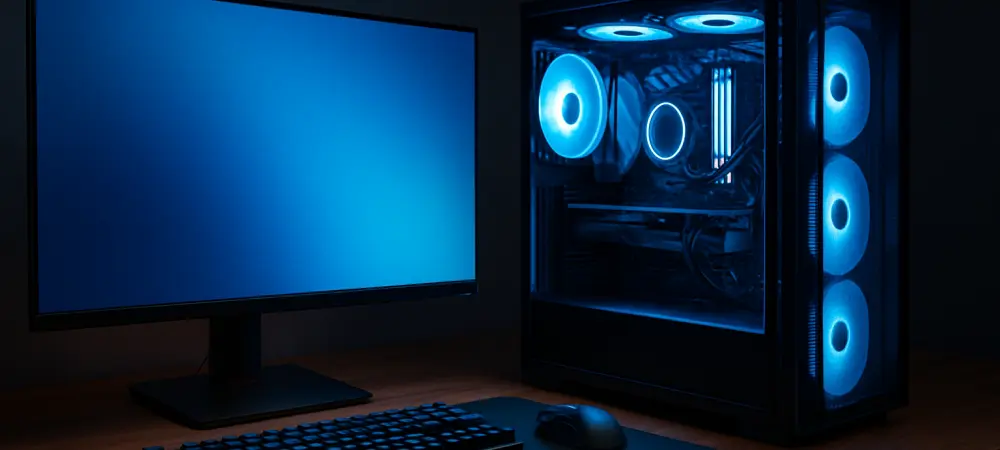
The traditional two-year cadence of graphics card releases has officially disintegrated as the industry faces a perfect storm of artificial intelligence demand and manufacturing shortages. The historical rivalry between dedicated gaming consoles and PC graphics cards is entering an unprecedented era defined by scarcity and shifting priorities. For decades, PC gamers expected a predictable upgrade cycle from Nvidia, while console players waited nearly a decade for a generational leap. This dynamic is currently being upended by global economic shifts and the explosive growth of artificial intelligence. This article explores the projected timeline of the next major hardware battle, specifically focusing on how Nvidia’s rumored RTX 6060 might struggle to keep pace with Sony’s PlayStation 6.
Understanding this timeline is vital for consumers deciding whether to invest in current-gen hardware or wait for the next leap. The scope of this analysis covers the technological bottlenecks currently facing the industry, the specific hardware specifications rumored for upcoming devices, and the economic factors driving prices to record highs. As the line between mid-range PCs and high-end consoles blurs, the timing of these releases will determine who holds the performance crown in the late 2020s.
A Chronological Roadmap of Hardware Delays and Breakthroughs
2024 to 2025: The Rise of the RTX 50 Series and the AI Pivot
The era leading into the present was defined by Nvidia’s transition to the Blackwell architecture with the RTX 50 series. While these cards represented a step forward, this period marked the beginning of a significant strategic shift. Nvidia began diverting a massive portion of its production capacity toward AI data centers, which offer much higher profit margins than consumer gaming. This pivot started to strain the supply of high-speed memory, setting the stage for the delays that plague the following generation.
2026 to 2027: The Global Memory Supply Bottleneck
During the current 2026 to 2027 window, the tech industry hits a wall regarding DRAM and NAND flash availability. The relentless demand for memory in AI training servers is creating a severe shortage for consumer-grade components. This scarcity is the primary catalyst for the delay of the RTX 60 series. Instead of the traditional two-year gap, Nvidia is forced to extend the lifecycle of its products, pushing the mainstream RTX 6060 further into the future while manufacturing costs for all memory-reliant hardware begin to climb.
Late 2027 to 2028: The Anticipated Launch of the PlayStation 6
As Nvidia grapples with supply chain issues, Sony is projected to strike with the release of the PlayStation 6. Building on a long-standing partnership with AMD, the PS6 is expected to utilize the RDNA 5 architecture. With rumors pointing toward 40 to 48 compute units, the console aims to deliver a massive leap over the PS5. This timing is critical, as it allows Sony to capture the market during a period when PC graphics card releases have slowed down, offering high-end performance to a public starved for new hardware.
2029: The Delayed Arrival of the Nvidia RTX 6060
Nearly four years after the previous generation, the RTX 6060 is finally expected to hit the market. However, the hardware landscape will have changed significantly by this point. While the 60-class cards were traditionally the entry point for mainstream enthusiasts, the 2029 release finds itself in a difficult position. It must compete with a console that has already established a foothold and potentially offers higher raw compute power, marking a rare moment in tech history where a console might objectively outperform a contemporary mid-range PC GPU.
Shifting Paradigms in Gaming Performance and Value
The most significant turning point in this timeline is the disruption of the Moore’s Law-style progression that gamers have relied on for decades. We are moving away from a world of rapid, affordable iterations and into a period of hardware stagnation. The overarching theme is the prioritization of enterprise needs over consumer desires, which has effectively extended the mid-range lifecycle to nearly double its previous length.
Another clear pattern is the narrowing gap between consoles and PCs. If the PlayStation 6 launches with the rumored RDNA 5 specs, it will likely rival the performance of an RTX 5070 Ti. This creates a notable gap where the RTX 6060, typically a card designed for value, may feel outdated upon arrival if it only matches the performance of older mid-to-high-end cards like the RTX 4070. Future exploration is needed to see if Nvidia will utilize software-side innovations, such as more advanced DLSS iterations, to bridge this raw horsepower deficit.
Economic Realities and the Future of Mainstream Gaming
The upcoming generation of hardware will likely force a reassessment of what affordable gaming looks like. One of the most discussed nuances is the projected price of the PlayStation 6. Due to the high cost of the Bill of Materials—specifically specialized memory and high-capacity SSDs—experts suggest the console could retail for over $1,000. This would be a historic high for the console market, potentially alienating the traditional player base but reflecting the true cost of high-performance silicon in an AI-dominated economy.
Misconceptions often suggest that PC gaming is always the superior performance choice, but the 2027 to 2029 window may prove otherwise for the mainstream segment. While ultra-high-end PC setups will always lead, the average gamer shopping for a 60-class card may find that a console offers better optimization and higher fidelity for the first time in years. Emerging innovations in chiplet design and 3D stacking by AMD may give Sony the edge it needs to maintain this lead until Nvidia can fully stabilize its consumer production lines toward the end of the decade.
The convergence of specialized AI silicon and consumer hardware constraints shifted the balance of power within the industry. Manufacturers successfully navigated the memory crisis by prioritizing high-margin sectors, which ultimately redefined the value proposition of mainstream devices. Moving forward, the focus must shift toward maximizing hardware longevity through aggressive software optimization and cloud-assisted rendering. Researching alternative cooling solutions and energy-efficient architectures became essential for maintaining performance gains in a post-Moore’s