

The Dawn of a New Era in Sustainable Technology
The global telecommunications landscape is currently undergoing a radical transformation as the historical preference for sleek, disposable aesthetics yields to a growing demand for functional longevity. For decades, the smartphone industry has thrived on a cycle of rapid obsolescence, where devices were intentionally designed to be replaced rather than repaired. In this landscape of “sealed-box” electronics, the Amsterdam-based social enterprise Fairphone has emerged as a persistent disruptor, challenging the status quo with an uncompromising focus on supply chain transparency and hardware modularity. The arrival of the Fairphone 6 marks a critical turning point for the brand as it moves beyond its roots as a niche choice for environmental activists. The company is now positioning its latest flagship to compete directly for mainstream consumer attention by bridging the traditional gap between high-end performance and ethical production.
This strategic shift arrives at a moment when global awareness of electronic waste and the carbon footprint of manufacturing has reached an all-time high. Consumers are no longer satisfied with incremental hardware updates that offer little more than aesthetic changes; instead, there is a burgeoning market for devices that promise a decade of utility. The Fairphone 6 aims to satisfy this demand by offering a sophisticated blend of modern technology and radical repairability. By analyzing the technical specifications, software commitments, and economic hurdles facing this device, one can see how it potentially sets a new standard for the entire mobile industry. This article explores the multifaceted approach Fairphone is taking to ensure that the “performance penalty” often associated with ethical products becomes a thing of the past.
From Niche Activism to Market Contender
To understand the significance of the Fairphone 6, it is essential to look at the historical evolution of the brand and the broader movement it represents. Founded over a decade ago, Fairphone did not start as a hardware manufacturer but as a campaign against “conflict minerals” used in consumer electronics. The transition to phone production was a radical experiment intended to prove that a fairer supply chain was possible. Early models, while groundbreaking in their intent, were often criticized for having outdated specifications, bulky designs, and mediocre camera systems. Consumers who purchased these early devices often did so as a form of “ethical taxation,” accepting a subpar user experience in exchange for the peace of mind that their device was produced responsibly.
However, the industry landscape has shifted dramatically from the early days of boutique ethical electronics toward a more mature market where sustainability is a primary selling point. The Fairphone 6 represents the culmination of years of engineering refinements and rigorous supply chain audits. It reflects a brand that has matured from a reactionary protest project into a serious technological contender capable of standing alongside global giants. This evolution is driven by a deep understanding that for sustainable technology to truly succeed, it must be desirable to the average user, not just the dedicated activist. The current market environment, characterized by rising inflation and a desire for value-driven longevity, provides the perfect backdrop for a device that prioritizes durability and repairability above all else.
Strategic Shifts: Hardware and Software Integration
The Software-First Approach: Targeting Android 16
A major hurdle for previous Fairphone models was the “software lag,” a phenomenon where ethical devices launched with versions of Android that were already several months old. Recent developments within the Android Open Source Project (AOSP) suggest that Fairphone is taking a radical new approach with the sixth generation. The company is actively developing the device to ship with Android 16 from day one, aiming for a late 2025 or early 2026 launch window. This move is not merely about having the latest features; it signals a deeper engineering collaboration with Google and a commitment to ensuring that the user experience remains modern and secure for the duration of the phone’s extended lifespan. By achieving “Day One” parity with the latest operating system, Fairphone is attempting to eliminate one of the primary reasons consumers choose mainstream flagships over ethical alternatives. This software-first strategy is essential for a device intended to last until 2034, as it provides a solid foundation for future security patches and feature updates. Furthermore, targeting the most recent Android version demonstrates a level of technical maturity that was absent in previous generations. It proves that a small, mission-driven company can keep pace with the software development cycles of industry leaders like Google and Samsung, provided they prioritize engineering resources effectively.
Bridging the Performance Gap: Better Silicon Integration
Historically, Fairphone prioritized long-term driver support over raw processing power, often opting for industrial Internet of Things (IoT) chips. While these chips allowed for an impressive eight-year support window, they often struggled with modern demands like high-end computational photography, complex multitasking, or generative AI applications. For the sixth generation, industry observers expect a transition to a more consumer-centric Qualcomm Snapdragon platform, likely within the Snapdragon 7-series or 8-series. This shift would provide the necessary processing “overhead” to handle the increasingly heavy demands of modern mobile software without sacrificing the longevity that defines the brand.
This transition in silicon strategy addresses a long-standing complaint that ethical phones feel underpowered compared to their mainstream rivals. With a more powerful processor, the Fairphone 6 can finally compete in the realm of mobile photography, utilizing advanced image signal processors to deliver photos that rival those of the Pixel or iPhone. The challenge remains for Fairphone to secure long-term firmware support from Qualcomm, a task that has historically been difficult for smaller manufacturers. However, as the industry moves toward longer support cycles across the board, the availability of long-term drivers for mainstream chips is becoming more common, allowing Fairphone to finally offer a “no-compromise” performance experience.
Engineering the Future: Modular Repairability Refined
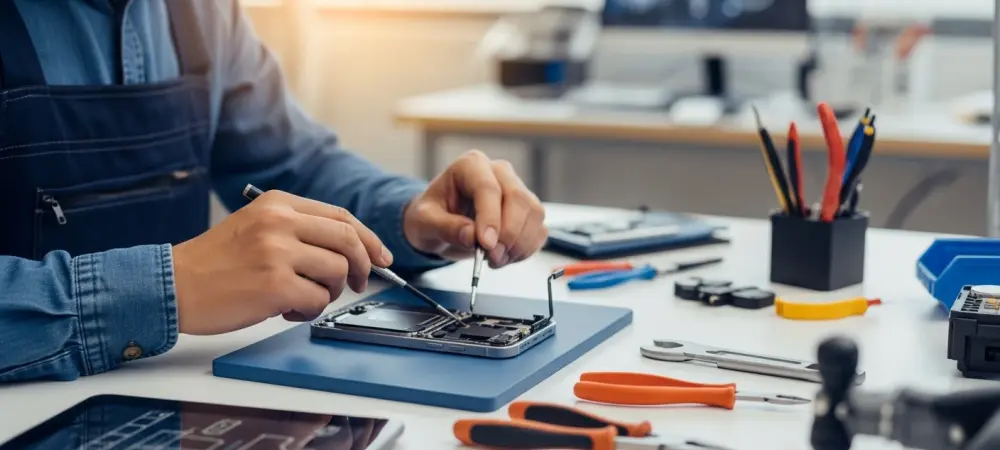
At its core, the Fairphone 6 remains a modular device, a design philosophy that stands in stark contrast to the adhesive-heavy “glass sandwiches” produced by the rest of the industry. By utilizing standard Phillips head screws and avoiding permanent glue, Fairphone allows users to replace screens, batteries, and camera modules in minutes using basic tools. The sixth generation aims to refine this modularity into a “future-proof” architecture that is even more resilient than its predecessors. This approach consistently earns the brand a perfect 10/10 repairability score from organizations like iFixit, providing a tangible solution to the problem of planned obsolescence.
By decoupling the lifespan of the device from its most fragile components, Fairphone ensures that a cracked screen or a fading battery does not result in a total device replacement. This modularity also opens the door for potential hardware upgrades, such as improved camera sensors or expanded memory modules, though this remains a secondary goal compared to pure repairability. For the conscious consumer, the ability to fix a device at home for a fraction of the cost of a new phone is a powerful economic incentive. It transforms the smartphone from a disposable commodity into a long-term investment, fundamentally changing the relationship between the user and their technology.
Navigating Regulatory Shifts and Economic Hurdles
As the market moves deeper into the late 2020s, the regulatory environment is finally catching up with the vision Fairphone championed for years. The European Union has introduced aggressive mandates, including the Ecodesign for Sustainable Products Regulation (ESPR) and mandatory repairability labeling. These laws are forcing larger manufacturers to adopt more accessible designs and provide spare parts for longer periods, effectively narrowing the “usability gap” between mainstream flagships and Fairphone. While this validates Fairphone’s mission, it also introduces new competition, as every manufacturer must now compete on the grounds of sustainability to some degree.
However, Fairphone still faces what economists call the “scale paradox.” Despite its ideological success, the company’s lifetime sales are dwarfed by the weekly output of global giants like Samsung or Apple. This lack of scale makes it difficult to negotiate lower prices for premium components and limits the budget available for global marketing campaigns. To overcome this, Fairphone must find creative ways to expand its reach, such as through enterprise partnerships and increased carrier presence in major European and North American markets. For many businesses, the Fairphone 6 represents a way to meet corporate sustainability goals and reduce the total cost of ownership for employee hardware fleets, providing a stable path for growth.
Key Insights: The Conscious Consumer’s Perspective
The analysis of the Fairphone 6 reveals that the “performance penalty” for choosing an ethical device is rapidly disappearing, making it a viable choice for a much wider audience. Consumers looking to apply these insights should consider the total cost of ownership over a five-to-eight-year period; a phone that is easily repairable often proves more economical than a cheaper, disposable alternative. For professionals who rely on their devices for daily productivity, the shift toward higher-performance silicon means they no longer have to sacrifice speed for their values. The best practice for any modern consumer is to look beyond the initial purchase price and evaluate the long-term support and repair infrastructure provided by the manufacturer.
Furthermore, the Fairphone 6 highlights the importance of software longevity as a core component of sustainability. A device that is physically durable but software-obsolete is still a piece of electronic waste. By targeting the latest Android versions and promising nearly a decade of updates, Fairphone is setting a benchmark that other companies are now feeling pressured to match. This competitive pressure benefits all consumers, regardless of which brand they eventually choose, as it raises the minimum standard for support across the entire industry. The insights gained from Fairphone’s journey suggest that the most successful products of the future will be those that empower the user to maintain and upgrade their own hardware.
Defining the Future of the Circular Economy
The Fairphone 6 functioned as a pivotal litmus test for the viability of the circular economy within the high-technology sector. By aligning its hardware with the latest software from the moment of launch, the company successfully proved that sustainability and high performance were not mutually exclusive concepts. The refined modular engineering showcased in the device allowed for a level of user autonomy that remained unmatched by larger competitors, even as those giants began to adopt more repairable designs under regulatory pressure. This model demonstrated that a mission-driven approach could survive the transition from a niche activist project to a legitimate mainstream contender.
Ultimately, the success of the Fairphone 6 provided a clear roadmap for how the industry could move toward a more responsible and durable future. It challenged the notion that consumers inherently preferred disposable technology, showing instead that many were willing to invest in longevity when given a high-quality option. The strategic focus on enterprise partnerships and carrier expansion helped the brand overcome its scale limitations, proving that ethical manufacturing could be a profitable and scalable business model. As the industry continued to evolve, the Fairphone 6 stood out as the catalyst that forced the world to rethink the lifecycle of the most ubiquitous tool in modern life.