

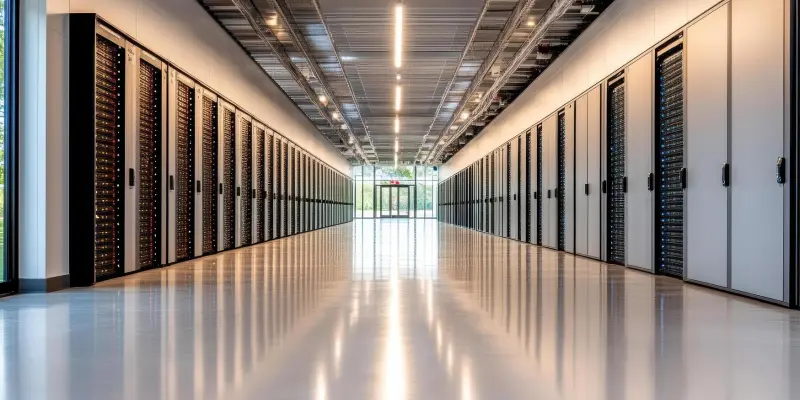
While solar power presents an attractive option for powering data centers due to its affordability and clean energy profile, its adoption remains limited within the industry. Data centers, notorious for consuming huge quantities of electricity, are increasingly exploring renewable sources like solar to mitigate their carbon footprints. However, the industry exhibits both optimism and hesitation about fully embracing solar energy. Compared to other renewables, such as geothermal, solar power has advantages like being cheaper and quicker to install. Yet, despite these benefits, the industry hesitates, illustrated by solar energy’s minority share among the power sources utilized in data centers. A major factor contributing to this reluctance is the monumental energy consumption unique to data centers, which necessitates substantial land area for solar panels. The narrative unfolds in a dual-toned fashion, highlighting both the opportunities solar energy presents and the challenges that have led to its underutilization as the primary energy source in data center operations.
Solar Technology and Industry Adaptation
Over the past years, technological developments have significantly improved solar panels’ efficiency and reduced their cost, making solar energy more feasible for large-scale commercial use, including data centers. Data centers, mostly operated by major tech companies, have started to collaborate with utility providers to increase solar capacity in power grids or even establish their own solar farms. This proactive stance mirrors the industry’s growing commitment to greener operations and reduced fossil fuel dependence. Such collaborations aim to deliver cleaner energy balance while mitigating environmental impacts. However, the shift is gradual, with solar complementing but not overwhelmingly dominating the energy mix. The declining cost of solar technology continues to encourage broader adoption, though full integration within data centers involves intricate challenges tied to energy density, geographical dependencies, and grid composition.
Energy Density and Land Commitment Challenges
A prominent barrier to complete solar reliance within data centers is the extensive land requirement due to energy density constraints associated with solar panels. Considering the immense electricity demand of a large data center, nearly 1,446 acres of solar panels are needed to power a 100 MW facility using solar alone. Smaller data centers may demand less land, but the substantial acreage required still represents a significant environmental investment. This requirement poses environmental risks, as large land areas needed for solar farms may contradict the environmental benefit by potentially disrupting local ecologies. Land repurposing for solar panels entails a delicate balancing act, attempting to achieve sustainable energy production without compromising natural landscapes. These concerns form a pushback against fully implementing solar energy, urging data centers to calculate environmental costs and benefits carefully before committing vast swathes of land to solar energy production.
Intermittency and Supplemental Energy Sources
Intermittency remains an inherent challenge for solar energy, complicating its solitary use in high-demand environments like data centers. Solar power generation depends significantly on weather conditions and daylight, creating gaps that must be bridged by supplemental energy sources to maintain consistent operations. The intermittency necessitates supporting systems or alternative energy supplies during low production periods, often leading to reliance on non-renewable sources. Battery storage solutions are theoretically feasible to save excess energy generated on sunny days, but practical implementation is hindered by prohibitive costs, given the scale of energy required. Bridging the gap through solar consistently during sunless or low-production periods is a constraint yet to be economically or technologically overcome, casting doubt on solar energy’s full replacement potential for fossil fuels in data centers’ power strategies.
Geographic Limitations and Solar Viability
Geographic factors critically influence solar power’s viability as the sole energy source for data centers. Regions endowed with consistent sunlight, such as the southwestern United States, offer more suitable conditions for extensive solar energy utilization. However, the location of data centers often hinges on factors beyond solar viability, such as land costs and infrastructure quality, sometimes resulting in siting decisions that direct operations to areas unsuitable for primary solar reliance. Beyond the merely geographic, integrating solar energy into a diverse power grid also complicates full dependency on solar power. Power grids comprise mixed sources, including renewables and fossil fuels, so even when data centers expand solar components, the grid energy they use isn’t exclusively solar-derived. True dependence on solar power would necessitate entirely separate power infrastructures, imposing significant financial and logistical burdens beyond most data centers’ routine capabilities.
The Future of Solar Integration in Data Centers
Solar energy offers an appealing option for powering data centers due to its cost-effectiveness and clean energy benefits, yet its adoption in the industry remains limited. Data centers, infamous for their massive energy consumption, are increasingly turning to renewable sources like solar to reduce their carbon emissions. Despite showing interest, the industry displays both enthusiasm and caution regarding solar power. Compared to other renewables like geothermal energy, solar is cheaper and faster to implement. However, these advantages haven’t led to widespread adoption; solar power still holds a minor share among the energy sources used in data centers. One significant reason for this sluggish adoption is the enormous energy needs of data centers, which require extensive land for solar panel installation. The narrative is twofold, shedding light on the potential solar energy possesses while also addressing the hurdles that prevent it from becoming the dominant energy source in data center operations.