

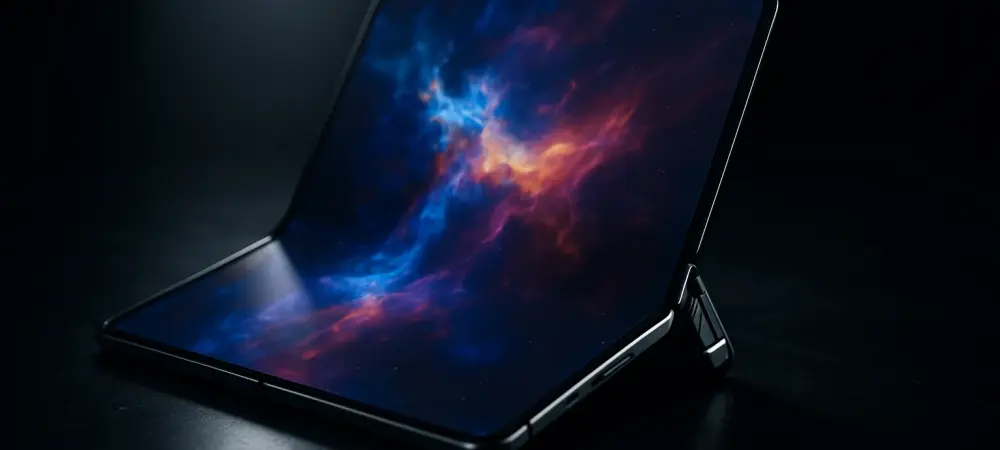
As the foldable smartphone market continues to mature beyond its initial novelty, industry observers and tech enthusiasts have eagerly anticipated the next significant evolution in form factor, with many eyes on Samsung’s ambitious tri-fold device. This next-generation concept, which was teased at the APEC summit, promised to redefine the boundaries of mobile computing by offering a tablet-sized screen that collapses into a standard phone profile. Such a complex engineering feat, involving a sophisticated dual-hinge system, naturally led to widespread speculation of an astronomical price tag, placing it firmly in the realm of ultra-luxury tech. However, a recent and compelling leak has sent ripples through these expectations, suggesting that while the device will undoubtedly be a premium offering, its final cost might be substantially lower than initial projections. This new information forces a re-evaluation of Samsung’s strategy and raises the crucial question of just how accessible this cutting-edge technology will be at launch.
Rethinking the Price Point and Launch Strategy
The core of the recent speculation stems from a South Korean blogger on Naver, who has suggested a significant downward revision of the device’s anticipated cost. Early estimates had placed the Galaxy Z TriFold at a staggering KRW 4.4 million, a price that would have made it one of the most expensive consumer smartphones ever released. The new leak, however, proposes a figure closer to KRW 3.6 million, which translates to approximately $2,600 USD. While still firmly in the premium category, this represents a considerable reduction that could alter the device’s market positioning. This updated pricing information was also accompanied by hints of a potential December launch, suggesting the product’s debut could be imminent. A more moderate price, even at this level, could indicate Samsung’s confidence in its manufacturing process or a strategic decision to encourage broader adoption among early tech adopters rather than positioning it solely as a collector’s item. This move could be pivotal in testing market appetite for multi-panel foldable devices.
Exclusive Hardware for a Niche Market
Based on the available information, the device was positioned as a highly exclusive product, intended to serve as both a halo device and a real-world test for this new form factor. Its G-style, dual-hinge design was engineered to allow the screen to fold inward into three distinct sections, creating a conventional bar-style phone when fully closed. The rumored specifications pointed toward a true flagship experience, featuring a massive 9.96-inch inner display with 1,600 nits of brightness and a very usable 6.54-inch cover screen boasting 2,600 nits. Internally, it was expected to be powered by the top-tier Snapdragon 8 Elite chipset, paired with 16GB of RAM and a novel 5,437mAh silicon-carbon battery. The camera system, headlined by a 200-megapixel primary sensor, was tipped to be a major highlight. This powerful hardware was reportedly set to be offered in a single color and a single storage configuration, reinforcing its limited-edition nature. The planned production run of only 20,000 to 30,000 units for select markets underscored a strategy that prioritized innovation and exclusivity over mass-market sales.