

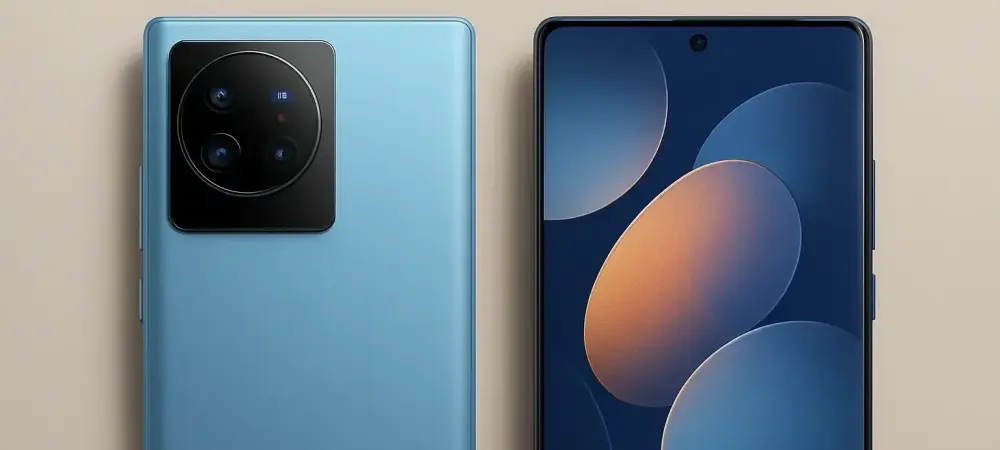
Introduction: Decoding Vivo’s Flagship Strategy
As Vivo continues to solidify its position in the competitive smartphone market, its X series has consistently been the vanguard of its technological ambition, earning a formidable reputation for camera-centric innovation and premium design. This lineup often represents the best the brand has to offer, pushing the boundaries of mobile photography and performance with each new generation.
Within this flagship family, Vivo employs a dual-pronged strategy to capture a wider audience. The standard model, in this case the anticipated Vivo X200, is engineered to be the pinnacle of performance, showcasing the latest and greatest technology without compromise. In contrast, the Fan Edition (FE) variant, the Vivo X200 FE, is crafted to deliver a core flagship experience in a more accessible and often more compact package, balancing high-end features with strategic trade-offs to achieve a compelling value proposition.
The upcoming generation is shrouded in high expectations, with rumors pointing toward significant advancements, most notably the integration of MediaTek’s top-tier Dimensity 9400 chipset in the standard X200. This sets the stage for a fascinating comparison, pitting raw, unadulterated power against a thoughtfully curated and value-driven alternative.
Core Feature Comparison: Performance, Pixels, and Power
Processing Power and Performance
At the heart of the standard Vivo X200 lies its expected powerhouse, the flagship Dimensity 9400 chipset. This processor is designed to deliver chart-topping performance, promising an exceptionally fluid and responsive user experience. For demanding tasks like high-fidelity gaming, 4K video editing, and intensive multitasking, the X200 is positioned to excel, leaving no room for lag or stutter.
Conversely, the Vivo X200 FE will likely adopt a different processor to achieve its more attractive price point. While not expected to match the raw horsepower of the Dimensity 9400, its chipset will be more than capable for everyday use and moderate gaming. The real-world difference will be most apparent to power users who push their devices to the absolute limit; for the average user, the X200 FE is expected to provide a smooth and reliable performance that feels every bit like a premium device.
Design, Display, and Ergonomics
One of the most significant distinctions between the two models is rumored to be their physical footprint. The Vivo X200 FE is anticipated to feature a compact 6.31-inch form factor, catering to a growing demand for smaller, more manageable smartphones that are comfortable to use with one hand. This focus on ergonomics could make it a standout choice for those who find modern flagships unwieldy.
The standard Vivo X200, however, is expected to feature a larger display, providing a more immersive canvas for media consumption and gaming. This larger size will likely be complemented by more premium build materials. While both phones will likely boast high-quality displays with fast refresh rates, the X200 may offer a higher resolution or superior brightness, further separating the premium and value-oriented offerings.
Camera Systems and Zeiss Optics
Vivo’s partnership with Zeiss is a hallmark of the X series, and both the X200 and X200 FE are expected to feature this acclaimed branding on their triple-camera setups. This ensures a high standard of image quality across the board, with excellent color science and software tuning.
However, the hardware itself will likely differ. The premium Vivo X200 is poised to receive the more advanced camera system, potentially featuring larger primary sensors for better low-light performance and a more capable telephoto lens for superior zoom capabilities. The X200 FE, while still offering a versatile and high-quality triple-camera array, may use slightly smaller sensors and a less powerful telephoto lens, representing a key area of cost-saving without sacrificing the core Zeiss experience.
Battery Endurance and Charging Technology
On the power front, both devices are rumored to impress with support for fast 90W wired charging, minimizing downtime for all users. Interestingly, speculation suggests the compact X200 FE could house a surprisingly large battery, possibly around 6,500 mAh, which would give it exceptional endurance, especially when paired with its smaller screen.
The standard X200 is also expected to have a substantial battery, but its larger, higher-resolution display and more power-hungry chipset could result in comparable, if not slightly shorter, battery life than its FE counterpart. Ultimately, chipset efficiency and screen size will be the deciding factors, potentially giving the smaller X200 FE an unexpected edge in longevity despite its positioning.
Target Audience and Use-Case Scenarios
The Vivo X200 clearly targets tech enthusiasts, mobile photographers, and power users who demand the absolute best performance available. This user is willing to invest in cutting-edge technology for a no-compromise experience, whether for professional-grade photography, competitive gaming, or heavy multitasking. The larger screen and superior camera hardware are key selling points for this demographic.
In contrast, the Vivo X200 FE is tailor-made for a different consumer. Its ideal user prioritizes value, portability, and a balanced, all-around experience. This individual wants the look and feel of a flagship device, including a great camera and fast charging, but in a more pocketable and affordable package. It is the perfect choice for those who find standard flagships too large or expensive but are unwilling to settle for a mid-range device.
Final Verdict and Purchase Recommendation
The comparative analysis revealed a clear and deliberate distinction in Vivo’s strategy. The Vivo X200 stood as the uncompromising flagship, defined by its peak processing power with the Dimensity 9400 and its superior camera system. Its appeal was rooted in offering the most advanced technology for users who refused to compromise on any front. In contrast, the Vivo X200 FE emerged as a champion of balance and ergonomic design. It successfully blended essential flagship features, such as Zeiss optics and fast charging, with a compact form factor and a more accessible price point. Its strength was not in topping benchmark charts but in delivering a complete and satisfying user experience. The ultimate purchase decision hinged on specific priorities: the X200 catered to the demand for raw power and photographic excellence, while the X200 FE better served the need for a portable, high-value, and well-rounded daily driver.