
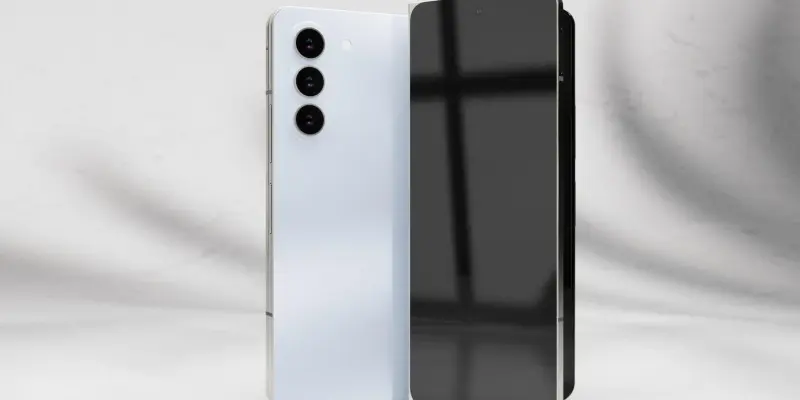
Will Samsung Galaxy S25 Edge Wow With Camera Features?

Article Highlights
Off On

Samsung’s latest advance in smartphone technology has piqued the interest of enthusiasts and experts alike, especially in the realm of photography. The anticipation builds around the impending launch of the Samsung Galaxy S25 Edge, a device set to join the prominent Galaxy S25 line. Cutting-edge camera features are expected to match the high standards set by its counterparts, the Galaxy S25 and Galaxy S25 Ultra. Unlike earlier predictions, it seems the Galaxy S25 Edge will carry a 12-megapixel front-facing camera, aligning it with its series partners. This directly challenges earlier speculations which hinted at a 10-megapixel front camera. Emphasis is likely on a unique 200-megapixel main camera, reminiscent of the remarkable camera system of the Galaxy S25 Ultra, loaded with innovations such as 2x in-sensor zoom capability and optical image stabilization, enhancing the photographic experience.

A Unified Design and Feature Set

The Galaxy S25 Edge exemplifies Samsung’s strategic focus on consistency and design refinement, which extends across the smartphone’s architecture and camera functions. This is evident in the uniformity of port placement and design layout within the entire Galaxy S25 series. Expected features include the strategic location of the power and volume buttons on the device’s right side, with USB Type-C connectivity at the bottom. Also incorporated are the speaker grille, microphone, and SIM slot at the lower edge, supplemented by another microphone at the top. A dual rear camera with a vertical design housed within a pill-shaped module is anticipated as well. Samsung aims for stylistic cohesion by integrating a hole-punch design to house the front camera, reflecting a consistent pattern throughout its lineup. This illustrates Samsung’s intention to offer a cohesive design experience, cementing their commitment to high-end features that emphasize both elegance and usability, signifying a future driven by innovation and aesthetic harmony in mobile technology.

Explore more

AI Redefines Software Engineering as Manual Coding Fades

The rhythmic clacking of mechanical keyboards, once the heartbeat of Silicon Valley innovation, is rapidly being replaced by the silent, instantaneous pulse of automated script generation. For decades, the ability to hand-write complex logic in languages like Python, Java, or C++ served as the ultimate gatekeeper to a world of prestige and high compensation. Today, that gate is being dismantled

Is Writing Code Becoming Obsolete in the Age of AI?

The 3,000-Developer Question: What Happens When the Keyboard Goes Quiet? The rhythmic tapping of mechanical keyboards that once echoed through every software engineering hub has gradually faded into a thoughtful silence as the industry pivots toward autonomous systems. This transformation was the focal point of a recent gathering of over 3,000 developers who sought to define their roles in a

Skills-Based Hiring Ends the Self-Inflicted Talent Crisis

The persistent disconnect between a company’s inability to fill open roles and the record-breaking volume of incoming applications suggests that modern recruitment has become its own worst enemy. While 65% of HR leaders believe the hiring power dynamic has finally shifted back in their favor, a staggering 62% simultaneously claim they are trapped in a persistent talent crisis. This paradox

AI and Gen Z Are Redefining the Entry-Level Job Market

The silent hum of a server rack now performs the tasks once reserved for the bright-eyed college graduate clutching a fresh diploma and a stack of business cards. This mechanical evolution represents a fundamental dismantling of the traditional corporate hierarchy, where the entry-level role served as a primary training ground for future leaders. As of 2026, the concept of “paying

How Can Recruiters Shift From Attraction to Seduction?

The traditional recruitment funnel has transformed into a complex psychological maze where simply posting a vacancy no longer guarantees a single qualified applicant. Talent acquisition teams now face a reality where the once-reliable job boards remain silent, reflecting a fundamental shift in how professionals view career mobility. This quietude signifies the end of a passive era, as the modern talent