

The landscape of premium mobile photography has reached a critical financial crossroads as the “Ultra” flagship models from prominent Chinese manufacturers face an increasingly precarious future. While these devices have recently dominated the high-end market with sophisticated camera systems developed in partnership with industry icons like Leica, Hasselblad, and Zeiss, escalating production expenses and market saturation may soon render them economically unsustainable. The core of the issue lies in the soaring costs of internal components, particularly high-capacity memory and the specialized sensors required for elite photography. Industry insiders suggest that these rising overheads are pushing retail prices to levels that may alienate even the most dedicated enthusiasts. For example, the upcoming Vivo X300 Ultra is rumored to carry a European price tag of nearly €2,000. This trend points to a looming price ceiling, particularly in the Chinese domestic market, where a psychological limit of approximately 10,000 yuan exists.
The Economic Barriers to High-End Production
Surging Component Costs and Supply Chain Volatility
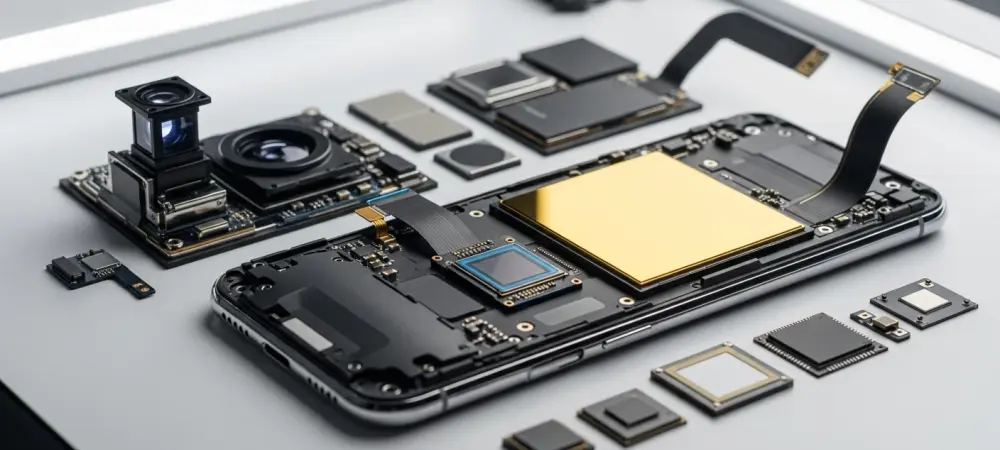
The primary catalyst for the current pricing crisis stems from the astronomical costs associated with cutting-edge hardware, especially the one-inch type sensors and periscope lenses that define the “Ultra” experience. These specialized optical components require precision manufacturing and high-grade glass, which have seen significant price hikes throughout 2026 due to raw material shortages and increased labor costs in specialized factories. Additionally, the move toward higher RAM and storage capacities to support generative AI applications has forced manufacturers to purchase expensive LPDDR5X memory modules in bulk. These financial pressures are not isolated incidents but represent a systemic shift in how mobile hardware is valued and sold. Consequently, the bill of materials for a top-tier flagship has increased by nearly twenty percent compared to just two years ago, leaving brands with razor-thin profit margins despite the high retail prices.
Beyond the physical components, the financial burden extends into the realm of intellectual property and brand partnerships, which have become a staple of the premium smartphone marketing strategy. Collaborations with legendary camera manufacturers like Hasselblad or Zeiss involve significant licensing fees and shared research and development costs that must be recouped through sales. As these partnerships evolve, the complexity of integrating custom image signal processors and proprietary color science further inflates the total investment required for each product cycle. Manufacturers are finding that the prestige gained from these alliances is increasingly difficult to justify when the final unit cost exceeds what the average professional consumer is willing to pay. This economic friction is forcing companies to reevaluate whether a halo product is worth the financial risk if it cannot generate a sustainable return on investment in a crowded marketplace.
Consumer Psychologies and Competitive Pressures
Market data reveals a stark reality where Android flagships struggle to maintain momentum once they cross the critical threshold of 10,000 yuan or roughly 1,400 dollars. At this price point, the consumer decision-making process shifts fundamentally, as potential buyers begin to weigh the long-term value and social status of their purchase more heavily. Historical sales patterns indicate that when a device reaches these luxury price levels, consumers often pivot toward the iPhone, perceiving it as a safer investment with superior resale value and a more cohesive ecosystem. This “price ceiling” acts as a natural barrier that prevents Android manufacturers from passing increased production costs directly to the end user without risking a total collapse in sales volume. Even the most technologically advanced features, such as advanced satellite connectivity or record-breaking zoom capabilities, struggle to overcome the brand loyalty.
This competitive pressure is exacerbated by the fact that the flagship market has reached a state of relative maturity where incremental updates no longer spark the same fervor they once did. Many users now perceive the difference between a standard “Pro” model and an “Ultra” variant as negligible for daily use, making the steep price hike for the latter harder to defend. As a result, companies like Oppo and Xiaomi are facing a situation where their most ambitious projects are competing for a shrinking pool of enthusiast buyers. The saturation of the high-end segment means that every price increase must be accompanied by a revolutionary feature, yet the laws of physics and economics make such breakthroughs increasingly expensive to achieve. If the perceived value does not align with the cost of ownership, the “Ultra” category may find itself relegated to a niche collector’s market rather than a viable mass-market segment.
Strategic Crossroads for Global Manufacturers
The Trade-Off Between Innovation and Profitability
Current industry analysis suggests that major players are caught in a difficult bind where they must choose between maintaining their reputation for innovation or securing their financial future through cost-cutting. Continuing the current trajectory of adding more glass and larger sensors would inevitably push prices toward the €2,200 mark by 2027, a move that could alienate the European market entirely. Some brands are reportedly considering a “de-escalation” strategy where future models focus on software-based image enhancement and AI-driven features rather than hardware-intensive optics. This pivot would allow manufacturers to keep component costs in check while still offering a premium experience, though it risks losing the professional photographers who comprise the core demographic of the Ultra series. The decision-making process is further complicated by the need to maintain a diverse portfolio that caters to different price points without cannibalizing internal sales.
The third quarter of 2026 serves as a pivotal moment for long-term planning, as internal roadmaps for the next generation of devices are finalized based on current market performance. If the upcoming releases fail to meet specific sales targets, manufacturers may be forced to consolidate their flagship lineups, potentially merging the “Pro” and “Ultra” tiers into a single, more balanced offering. This consolidation would streamline production lines and reduce the overhead associated with maintaining separate supply chains for specialized parts. However, such a move could also be seen as a retreat from the technological forefront, giving competitors an opportunity to seize the narrative of being the ultimate mobile photography leader. The delicate balance of brand prestige and fiscal responsibility remains the primary challenge for executive teams who must navigate these turbulent waters while keeping investors satisfied with quarterly earnings.
Future Viability and Categorical Transformation
Speculation regarding the 2027 lineup, including the Xiaomi 18 Ultra and Oppo Find X10 Ultra, suggests that these devices may represent a final push for the category before a major restructuring occurs. If the industry cannot find a way to mitigate the impact of inflation on high-end components, the “Ultra” moniker might be retired in favor of more specialized, perhaps foldable, flagship designs that offer a different value proposition. The transition toward foldables could provide a new justification for high prices, as the form factor itself is seen as a premium feature that differentiates the device from standard slabs. This shift would allow companies to move away from the “camera wars” that have driven hardware costs to unsustainable heights. By refocusing on multi-tasking and display technology, brands might find a new path to profitability that does not rely solely on the inclusion of the world’s most expensive mobile camera sensors.
Ultimately, the survival of the ultra-premium segment depends on the global supply chain’s ability to stabilize and the development of new manufacturing techniques that lower the cost of advanced optics. If technological breakthroughs in metalenses or more efficient sensor fabrication emerge by 2027, the industry might see a resurgence of the “money-is-no-object” philosophy. Conversely, if economic pressures persist, we may witness the end of an era where hardware specifications were the primary battleground for smartphone supremacy. The market is currently testing the limits of consumer elasticity, and the results will define the next decade of mobile communication. Manufacturers who can adapt by focusing on holistic user experiences rather than just raw hardware power will likely be the ones to emerge successful from this period of transition. The focus is shifting from what a phone can do at its peak to how it can provide consistent value across a longer ownership cycle.
The era of the uncompromising ultra-flagship faced its most significant challenge as the realities of global inflation and market saturation forced a fundamental rethink of product strategies. Manufacturers realized that technical superiority alone could not justify price tags that rivaled professional workstations or luxury timepieces. To navigate this landscape, brands prioritized efficiency in their supply chains and sought to differentiate themselves through proprietary software ecosystems that offered value beyond hardware specifications. The industry shifted toward more sustainable release cycles, focusing on longevity and meaningful software support rather than yearly hardware overhauls. This transition allowed companies to maintain their premium status while ensuring that their top-tier offerings remained accessible to a broader segment of the high-end market. By embracing a more balanced approach to innovation, the mobile industry successfully preserved the essence of the flagship experience while adapting to the harsh economic demands of the late 2020s.