

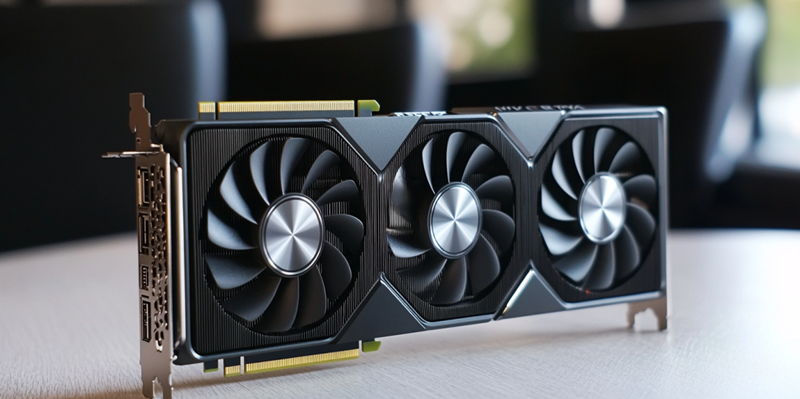
The potential dominance of Nvidia’s upcoming RTX 5000 series GPUs in the market has many industry insiders buzzing, with prominent figures predicting a significant impact beginning in December. This latest generation of GPUs, dubbed the Blackwell series, promises to bring unprecedented advancements in graphics technology, igniting anticipation among tech enthusiasts and professionals alike. Some experts even suggest that the market response to the RTX 5000 could mimic the fervor seen during the release of the RTX 4000 series, making it a highly anticipated event in the tech calendar.
Nvidia’s Strategic Moves and Production Increases
Increased Production and Supplier Shifts
Recent comments from Yu-Shen Lin, CEO of Taiwanese cooling supplier Auras Technology, have sparked further excitement and speculation about the RTX 5000 series. Lin’s assertion that Nvidia’s Blackwell GPUs could cause a major market impact aligns with rumors and leaks that hint at a substantial increase in production. This increase is coupled with supplier shifts that emphasize a strong focus on the new GPUs. Lin’s predictions underscore a broader industry sentiment that Nvidia’s next-gen offerings are set to dominate, drawing significant interest from both consumers and suppliers.
This production ramp-up comes on the heels of Nvidia CEO Jensen Huang’s confirmed appearance at CES 2025 in January, fueling speculation about a potential reveal. With such high-profile events on the horizon, Nvidia appears poised to solidify its market leadership further. The strategic move to boost production is likely a response to the anticipated high demand, preparing suppliers and ensuring availability to meet consumer expectations.
Anticipation of High Demand
The tech community is abuzz with speculation, partially fueled by Nvidia’s own strategic moves. The ramp-up in production indicates Nvidia’s confidence in the demand for the RTX 5000 series, which mirrors trends seen during previous launches. Lin’s insights suggest that the supplier network is gearing up to meet this projected surge in interest, a sentiment that echoes across the industry. The expectation is that Nvidia’s Blackwell GPUs will attract substantial consumer attention, potentially leading to early sellouts similar to past GPU releases.
Nvidia’s readiness to meet this demand is a significant focus. Suppliers are adjusting their operations to prioritize these new GPUs, indicating a robust pipeline capable of handling large-scale production. However, the challenge remains not just in manufacturing but also in delivering these advanced products to the market efficiently, minimizing bottlenecks and ensuring consumers can access the latest technology as quickly as possible.
Competitive Landscape and Scalping Concerns
AMD’s Market Position
Nvidia’s anticipated dominance in the high-end GPU segment gains further credence considering its main competitor, AMD, is not expected to challenge this space. Historically, AMD has battled Nvidia in various segments of the GPU market, but the RTX 5000 series is predicted to reign supreme without significant competition. This scenario leaves Nvidia a clearer pathway to market leadership, potentially consolidating its position as the preeminent GPU manufacturer.
Industry analysts point out that AMD’s current focus appears to be on other market segments, possibly mid-range to entry-level GPUs, which might leave the high-end segment more accessible to Nvidia. As a result, consumers looking for the most advanced and powerful GPU technology may find themselves turning to Nvidia’s latest offerings. However, this could also mean fewer competitive pricing pressures, allowing Nvidia to set higher price points for its top-tier products.
Scalping and Pricing Issues
One of the significant issues that has marred previous GPU launches is the persistent problem of scalping. The anticipated high demand for the RTX 5000 series raises concerns about third-party sellers exploiting the market. If the rumored price of the RTX 5090, around $2,500, proves accurate, it could create the perfect storm for scalpers looking to profit from supply shortages and high consumer demand.
Suppliers and retailers are preparing for this eventuality, but minimizing the impact of scalping remains a challenging task. While Nvidia and its partners might implement measures to curb this practice, the effectiveness of such strategies remains to be seen. High pricing can also be a double-edged sword, potentially limiting access to these advanced GPUs to only the most affluent consumers, thereby dampening broader market enthusiasm.
Technological Advancements and Market Sentiment
Successor to DLSS 3
The RTX 5000 series is expected to introduce significant technological advancements, including the successor to Nvidia’s Deep Learning Super Sampling (DLSS) 3. These enhancements promise to deliver major improvements in performance and visual fidelity, making the new GPUs particularly appealing to gamers and professionals alike. This next-gen DLSS is expected to leverage advanced AI and machine learning techniques to provide smoother, more immersive experiences.
The potential capabilities of this technology have fueled substantial excitement within the tech community. The anticipation is that these innovations will set new benchmarks for what GPU technology can achieve, further cementing Nvidia’s reputation as a leader in the field. These advancements are expected to attract a wide range of consumers, from hardcore gamers to professional users seeking the highest performance for demanding applications.
Market Enthusiasm and Cautious Optimism
Anticipation is building in the tech community as Nvidia prepares to launch its highly awaited RTX 5000 series GPUs, expected to hit the market in December. Dubbed the Blackwell series, these GPUs are generating plenty of buzz among industry insiders and enthusiasts. The latest generation promises groundbreaking advancements in graphics technology, which has tech professionals and gamers alike eagerly awaiting its arrival. The RTX 5000 series is predicted to significantly impact the market, potentially mirroring the intense excitement seen during the release of the RTX 4000 series. Experts suggest that the response could be similar, creating a fever pitch of enthusiasm across the tech landscape. Given Nvidia’s reputation for cutting-edge innovation, the upcoming release is considered a marquee event on the tech calendar, set to potentially redefine graphics capabilities and elevate them to new heights. All eyes are on Nvidia as the industry anticipates how the Blackwell series will shape the future of GPU technology and set new benchmarks in performance and capability.