

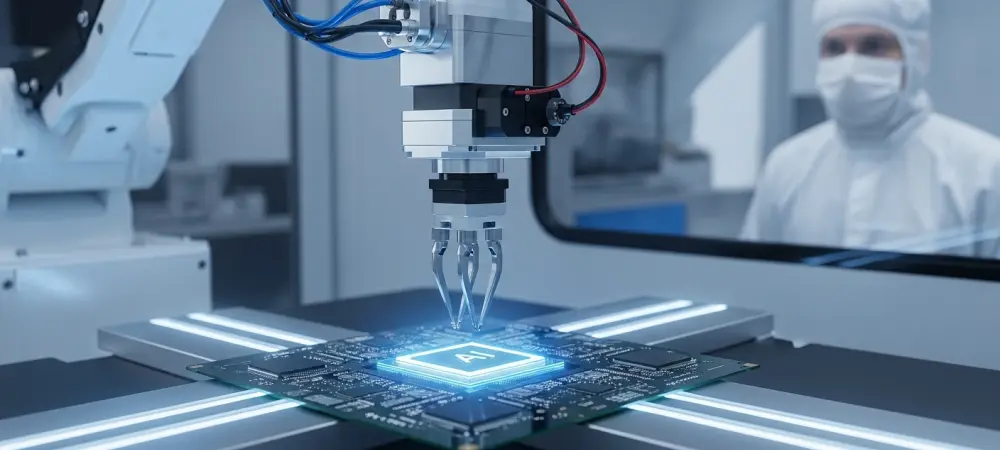
In the intricate global dance of technological supremacy, no company feels the tension between Washington and Beijing more acutely than NVIDIA, the undisputed leader in artificial intelligence hardware. The world’s most powerful AI chipmaker has a multi-billion dollar China problem, but its CEO believes he has a long-term solution. The central question now is whether the company is planning to bring its next-generation technology to a market its own government is actively trying to restrict, a move that could redefine the future of global AI competition.
The High-Stakes Balancing Act
American technology firms operate on a geopolitical tightrope, caught between the stringent demands of U.S. national security export controls and the immense commercial pull of China’s market. This delicate balance forces companies like NVIDIA to navigate a complex web of regulations designed to limit China’s access to advanced semiconductor technology while simultaneously trying to meet shareholder expectations. The pressure is immense, as compliance with U.S. law is non-negotiable, yet completely withdrawing from one of the largest and fastest-growing tech ecosystems is commercially untenable.
For NVIDIA, the stakes are particularly high. The revenue generated from the Chinese market is not merely profit; it is the fuel that powers the extensive research and development necessary to create subsequent generations of AI chips. Ceding this ground would not only cut off a vital income stream but also create a vacuum that burgeoning domestic competitors would eagerly fill. Maintaining a strong, compliant presence is therefore a strategic necessity for funding future innovation and preserving its global leadership position.
A Strategy of Compliance and Competition
NVIDIA has already demonstrated a viable path forward with its H20 chip, a powerful processor specifically engineered to meet U.S. export guidelines. The successful launch of this compliant chip allowed the company to reclaim significant market share and established a clear blueprint for future engagement. This strategy proved that it is possible to serve the Chinese market effectively without violating national security protocols, offering a model of coexistence in a divided technological world.
However, this success exists on a ticking clock. The rapid advancements from Chinese technology giants like Huawei mean that today’s cutting-edge compliant chip could become tomorrow’s obsolete hardware. To fend off this rising competition and prevent its products from losing their edge, NVIDIA cannot afford to stand still. The company’s leadership recognizes that the H20 is a temporary solution, necessitating a continuous cycle of innovation to stay ahead. Consequently, NVIDIA has openly stated its intention to develop compliant versions of its future architectures, including the powerful Blackwell platform and the forthcoming “Rubin” series, to sustain its competitive advantage over the long term.
The View from the CEO’s Office
From the perspective of CEO Jensen Huang, China is not a market to be abandoned but a core component of NVIDIA’s global business strategy. In public statements, Huang has consistently affirmed his commitment to serving customers in the region, always within the strict boundaries of U.S. law. His stance reflects a pragmatic understanding that American technology leadership is best maintained by competing globally, not by retreating from key international arenas.
Beyond simple compliance, Huang has become an advocate for what he terms “smart” regulation. This approach calls for a policy framework that is nuanced enough to protect legitimate national security interests without crippling the ability of American companies to compete and innovate on a global scale. It is a call for rules that are clear, consistent, and strategically targeted, allowing U.S. technology to thrive and lead rather than ceding ground to international rivals by default.
What Does the Future Hold?
While NVIDIA has not announced an official timeline, previous product cycles offer clues about the potential arrival of next-generation chips in China. Based on the development and release of past compliant hardware, it is reasonable to speculate that a modified version of the “Rubin” architecture could become available in the Chinese market within two to three years of its primary global launch. This would place its potential debut sometime after 2028, depending on the initial rollout schedule.
Ultimately, the future of NVIDIA’s most advanced chips in China hinges on the evolving landscape of U.S. export policy. The company can design and prepare compliant technology, but its ability to sell it is entirely contingent on the approval of regulators in Washington. Any tightening or easing of these controls will directly determine what is possible. NVIDIA’s strategy is therefore not about a single, one-off sale; it is a continuous effort to supply the Chinese market with the most powerful technology permitted, ensuring its enduring leadership in a critical and contested global market.