

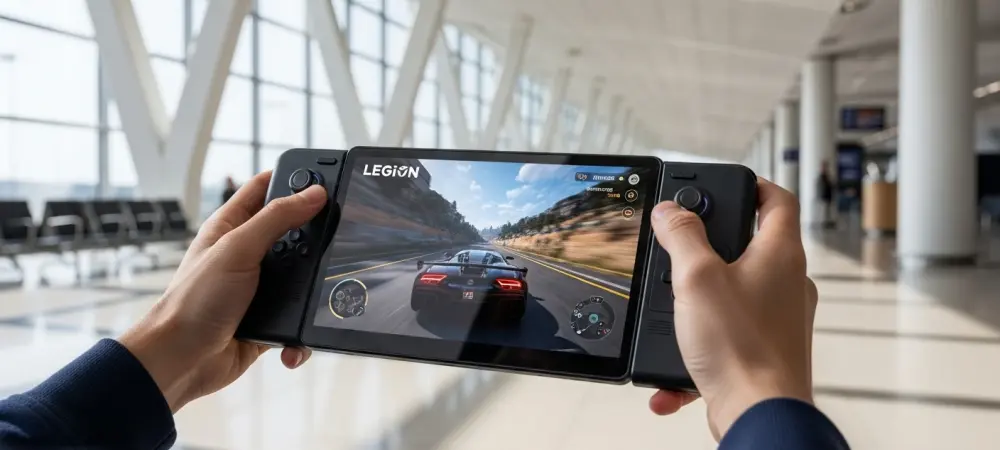
The rapid evolution of PC gaming handhelds has fundamentally reshaped the landscape of portable entertainment, but the divide between powerful hardware and a truly optimized software experience has remained a persistent challenge. This review examines Lenovo’s strategic decision to adopt SteamOS for its Legion Go, a move that aligns its formidable hardware with a dedicated gaming operating system. The purpose is to provide a thorough analysis of this reimagined device, its performance capabilities, and its potential impact on a fiercely competitive market.
An Introduction to the Reimagined Handheld
Lenovo’s choice to launch a Legion Go variant with SteamOS marks a significant pivot from the general-purpose nature of Windows toward a streamlined, console-like environment. This strategic shift is a direct response to the market’s demand for a more focused, “pick up and play” experience, eliminating the complexities and overhead associated with a traditional desktop operating system on a portable device. It represents an acknowledgment that for many gamers, user interface and ease of use are just as critical as raw processing power.
This move firmly positions the new Legion Go as a direct competitor to Valve’s Steam Deck, not just in hardware but now in software and ecosystem philosophy. By embracing a dedicated gaming OS, Lenovo is betting that a seamless, integrated experience will be the key differentiator in the next generation of handhelds.
Hardware and Software Synergy
Unchanged Premium Hardware Specifications
Beneath the new operating system lies the same powerful hardware that defined the original Legion Go. The device is powered by the 8-core AMD Ryzen Z2 Extreme processor, a chipset renowned for its ability to handle demanding modern titles with impressive efficiency. This is complemented by generous memory configurations of up to 32 GB of high-speed LPDDR5X RAM and storage options reaching up to a 2 TB Gen4 SSD, ensuring swift load times and ample space for an extensive game library.
Powering these high-performance components is a substantial 74WHr battery, one of the largest in its class, designed to support extended gaming sessions away from a power source. When a recharge is needed, the inclusion of 65W USB-C fast-charging technology minimizes downtime, allowing users to get back into the action quickly. This robust hardware foundation ensures the device has the raw capability to deliver a top-tier gaming experience.
The Best in Class 8.8 Inch OLED Display
The Legion Go’s most striking feature remains its large, high-quality display. The 8.8-inch OLED panel boasts a WUXGA (1920×1200) resolution, delivering sharp visuals and the vibrant colors and true blacks characteristic of OLED technology. This screen provides an immersive canvas for games, making visual details pop in a way that is simply unmatched by traditional LCDs.
Beyond its stunning color reproduction, the display’s technical specifications are tailored for high-performance gaming. A 144Hz refresh rate enables exceptionally smooth gameplay, providing a tangible advantage in fast-paced genres. Furthermore, its 500 nits of peak brightness ensures that the screen remains clear and legible in a wide variety of lighting conditions, solidifying its status as a best-in-class display for a portable gaming device.
The SteamOS Experience and Its Advantages
The most transformative change is undoubtedly the adoption of SteamOS. This switch delivers a more focused and intuitive gaming experience, moving away from a desktop-centric interface to one designed for controller navigation. The result is a device that feels less like a miniaturized PC and more like a dedicated gaming console, allowing users to jump straight into their library with minimal fuss.
This integration brings with it the full suite of Steam’s ecosystem features. Seamless access to a user’s entire game library, cloud saves, and friend lists is just the beginning. The native support for features like Family Sharing, Remote Play for streaming games from a home PC, and local network file transfers for quicker game installations creates a cohesive, user-friendly environment that stands in stark contrast to the often fragmented experience on Windows-based handhelds.
Market Positioning and Competitive Analysis
With the integration of SteamOS, the Legion Go carves out a unique niche in the handheld market. It now directly challenges the Steam Deck on its home turf while offering a hardware package that is demonstrably superior in almost every metric, from its processor to its display. This blend of premium hardware and a dedicated gaming OS positions it as an aspirational device for those who found the Steam Deck’s hardware wanting. However, its premium positioning is reflected in its starting price of $1,199. This places the device in a completely different category from the more budget-friendly Steam Deck and even many of its Windows-based rivals. Its market competitiveness will therefore depend heavily on its ability to convince enthusiasts that the significant price increase is justified by the superior screen, more powerful processor, and the seamlessness of the SteamOS experience.
Real World Gaming Performance and Usability
The synergy between the powerful AMD Ryzen Z2 Extreme processor and the lightweight, Linux-based SteamOS is expected to unlock new levels of performance. By reducing the background processes and system overhead inherent to Windows, more of the chip’s power can be dedicated directly to gaming. This optimization could translate to higher and more stable frame rates in demanding AAA titles, pushing the hardware closer to its full potential.
The user experience extends beyond raw performance. The combination of the large, high-refresh-rate screen and the versatile detachable controllers with the intuitive SteamOS interface creates a cohesive and adaptable gaming platform. Whether playing a blockbuster title that takes full advantage of the display, an indie gem, or diving into the world of emulation, the streamlined software is designed to make the process simple and enjoyable.
Potential Challenges and Limitations
Despite its many advantages, the reliance on SteamOS introduces a significant technical hurdle: game compatibility. While Valve’s Proton translation layer has made incredible strides in enabling Windows games to run on Linux, it is not a perfect solution. Certain titles, particularly those employing aggressive anti-cheat software, may fail to launch or suffer from performance issues, a problem that does not exist with native Windows support. Furthermore, the high price point remains a major market obstacle. While the hardware is undeniably premium, the $1,199 entry fee severely limits its potential audience. This positions the Legion Go as a niche, enthusiast-grade product rather than a mainstream competitor, which may ultimately constrain its widespread adoption and impact on the broader handheld market.
The Future of the Legion Go and PC Handhelds
This move raises important questions about Lenovo’s long-term strategy in the handheld space. The release of a SteamOS model could signal a deeper, more permanent commitment to offering non-Windows alternatives, potentially leading to a dual-OS approach for future hardware generations. The success or failure of this device will likely serve as a crucial data point in shaping the company’s future roadmap. The Legion Go’s embrace of SteamOS could also act as a catalyst for the rest of the industry. If it proves to be a commercial success, other manufacturers who have thus far exclusively used Windows may be encouraged to develop their own SteamOS-powered variants. This could lead to a healthier, more diverse market, giving consumers a clear choice between streamlined gaming-focused devices and more versatile, all-purpose Windows handhelds.
Conclusion and Final Verdict
The Lenovo Legion Go with SteamOS presented a compelling vision for the future of handheld PC gaming, successfully pairing best-in-class hardware with an operating system finally suited for the form factor. The device delivered on its promise of a premium, console-like experience, leveraging its stunning OLED display and potent internals to create a truly impressive portable powerhouse. Its refined user interface stood as a significant improvement over its Windows-based predecessor.
Ultimately, its potential was weighed against the practical realities of game compatibility and a prohibitive price tag. While the streamlined performance and user-friendly ecosystem were significant achievements, the persistent challenge of the Proton compatibility layer and the high cost of entry defined its place in the market. The final verdict was clear: this was the ultimate enthusiast handheld for those with deep pockets, a device that set a new, albeit costly, benchmark for what portable PC gaming could be.