

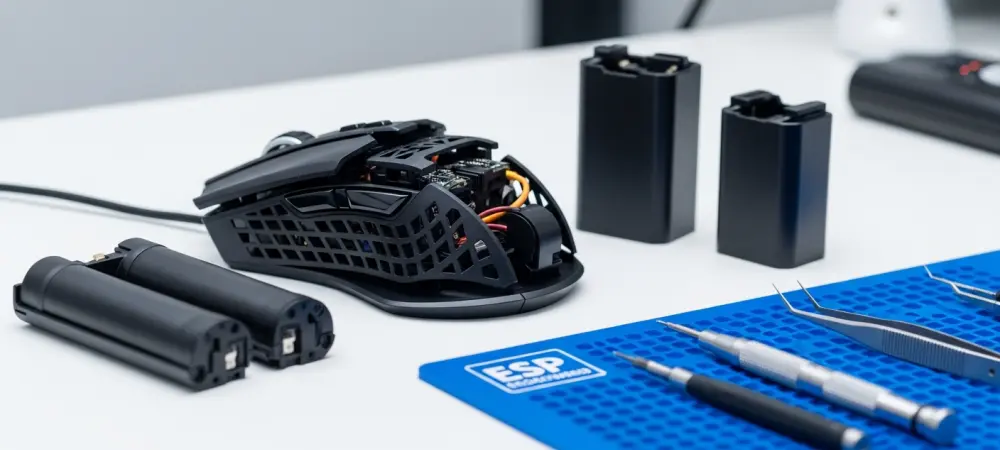
Dominic Jainy is a seasoned IT professional with deep expertise in how emerging technologies like AI and blockchain intersect with consumer hardware. He has spent his career analyzing the evolution of high-performance peripherals and the manufacturing shifts that define our digital interactions. Our discussion today explores the strategic landscape of the tech industry as it grapples with new European regulations regarding battery repairability. We summarize the tension between manufacturing costs and environmental sustainability, focusing on why some brands are creating region-specific hardware variants and the engineering challenges of making small devices both safe and modular.
How do you interpret the decision by manufacturers to restrict repairable hardware designs to the European market rather than implementing a global standard?
The decision to ship specific European editions of products like gaming mice reveals a reactive stance toward sustainability that prioritizes existing manufacturing pipelines over global innovation. By only making these changes where legally mandated, companies like Logitech are performing a balancing act to see if they can maintain their current sealed-unit designs in the rest of the world. These new models will be more expensive to manufacture and heavier to account for protective casing against lithium-ion fire hazards. It creates a fragmented market where global consumers might miss out on longevity simply because their local laws do not demand it yet. It is a pragmatic but somewhat cynical approach that prioritizes short-term manufacturing costs over a unified, repair-friendly user experience.
Logitech’s gaming leadership has suggested that making a mouse sturdier is more valuable than making it repairable. What are your thoughts on this trade-off between device longevity and component accessibility?
There is a valid engineering concern here regarding the physical vulnerability of modern batteries, as any accidental puncture in a lithium-ion cell can lead to a dangerous fire hazard. To meet the incoming EU standards, manufacturers are building thicker shells and more robust internal structures, which naturally adds weight to devices that gamers usually want to be as light as possible. The industry argues that users are more likely to irreversibly damage a $50 to $100 mouse by trying to fix it than they are to wear out the battery naturally. However, once a non-replaceable battery fails, the whole device inevitably becomes e-waste regardless of how sturdy the outer shell is. This focus on “sturdiness” over “repairability” feels like a defensive move to protect the status quo of disposable tech in the mid-range peripheral market.
Considering the struggle of the G Cloud handheld, where only about 20% of owners are still active users, what does this tell us about the future of specialized gaming hardware?
The fact that only roughly 20% of G Cloud buyers are still using the device since its 2022 release is a sobering statistic for the specialized handheld market. It highlights how difficult it is to sustain a niche hardware category when cloud gaming remains a space dominated by just a few major players like Microsoft and Nvidia. This low retention rate suggests that consumers are quick to abandon streaming-only devices if the experience is not seamless or if their primary gaming habits shift back to traditional consoles. It also explains why a company might hesitate to invest heavily in the repairability of experimental products that appear to lack a long-term user base. When you see such high churn, the priority shifts back to core categories like mice and keyboards rather than perfecting the modularity of a struggling handheld project.
What is your forecast for the future of consumer electronics repairability as we approach the February 2027 EU battery legislation deadline?
Initially, we will see more companies follow the lead of Nintendo and Logitech by creating regional hardware variants, such as the Europe-only Switch 2 or specific mouse models. However, this will eventually become a logistical nightmare for global supply chains, likely forcing a shift where the strictest regulations become the default global manufacturing standard. We will probably see a new era where high-end peripherals are marketed on their “modular endurance” rather than just their raw speed or weight. By the time the law takes full effect in 2027, the industry will have to move past the idea that a $50 mouse is a disposable item and start designing for a decade of use. Ultimately, the consumer will win as manufacturers are forced to innovate past current safety limitations to deliver devices that are both high-performing and genuinely sustainable.