

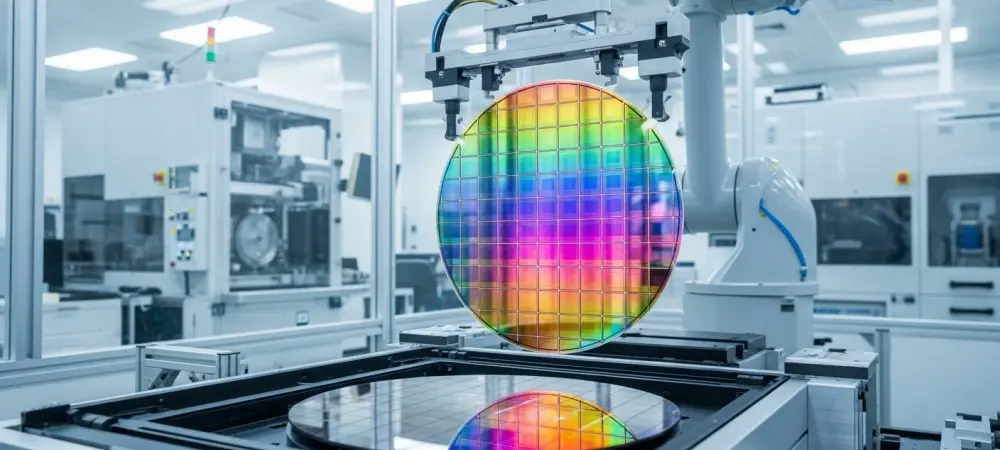
As Nanotube Random-Access Memory (NRAM) shifts from the highly controlled environment of experimental laboratories into the broader commercial market, the technological landscape is preparing for a shift that could redefine data processing for the next several decades. This technology represents more than just an incremental improvement; it is a fundamental reimagining of how digital information is stored and retrieved. By leveraging the unique physical properties of carbon nanotubes, NRAM offers a versatile solution that effectively bridges the historical gap between volatile and non-volatile memory types. This transition is arriving at a critical moment when the demands of edge computing and high-performance artificial intelligence are pushing existing hardware to its absolute limits. Over the coming years, NRAM is expected to evolve from a niche curiosity used in specialized prototypes into a cornerstone of the global digital infrastructure, providing a path forward for industries that require both extreme speed and permanent data retention in a single, efficient hardware package. The potential for this technology to consolidate the disparate features of Static RAM, Dynamic RAM, and NAND flash into a unified standard represents one of the most ambitious goals in modern computer science.
Technical Foundations: The Physics of Resilience
The excitement surrounding NRAM stems from the unique physical properties of carbon nanotubes, which function through a mechanical process rather than the purely electronic methods used by traditional silicon-based memory. Instead of relying on trapped electrical charges that are prone to leaking or degrading over time, NRAM operates through the physical movement of nanotubes that touch or separate to create binary states of zero and one. When a voltage is applied, the nanotubes are drawn together by Van der Waals forces to create a conductive path, and a reverse voltage pulls them apart to break the circuit. Because these nanotubes are incredibly durable and operate at a microscopic scale, they can endure trillions of write-and-erase cycles without exhibiting the wear and tear that eventually destroys traditional flash memory. This structural integrity ensures that data remains persistent even when power is completely removed, providing a level of reliability that has historically been impossible to achieve with high-speed volatile memory. The simplicity of this mechanical switch at a molecular level allows for a degree of miniaturization that challenges the physical limits of current semiconductor fabrication, potentially leading to much higher data densities in future chip designs.
Beyond its inherent durability, NRAM is naturally resistant to a variety of harsh environmental conditions that would cause standard consumer-grade or even industrial-grade chips to fail instantly. It is widely considered “radiation-hardened,” a property that makes it an essential choice for satellites, space probes, and military hardware where electromagnetic interference and cosmic radiation are constant threats. Unlike silicon transistors, which can have their logic states flipped by high-energy particles, the mechanical state of a carbon nanotube matrix remains remarkably stable. Furthermore, the technology exhibits extraordinary thermal stability, maintaining data integrity in extreme temperatures that range from the absolute cold of outer space to the intense heat found inside high-performance automotive engines or industrial furnaces. This resilience allows engineers to place memory modules in locations that were previously considered too hostile for sensitive electronics, opening up new possibilities for localized data processing in the aerospace and heavy machinery sectors. As global industries push further into extreme environments, the demand for memory that does not require heavy shielding or complex cooling systems will likely become a major driver for the adoption of nanotube-based solutions.
The Three Phases: Path to Commercialization
The commercial rollout of NRAM is currently following a disciplined three-stage trajectory designed to move the technology from specialized military applications into the pockets of everyday consumers. The first stage, which characterizes the present market, is the high-reliability phase, where the focus remains on high-value, low-volume applications where cost is a secondary concern to survival and performance. During this period, the primary purchasers are government agencies, aerospace contractors, and defense firms that require specialized memory for next-generation missile systems, advanced avionics, and deep-space exploration tools. These early adopters provide the necessary capital to refine manufacturing processes and prove the long-term viability of nanotube architectures in real-world scenarios. This phase is critical for establishing the standards and certifications required for broader industrial use, ensuring that the technology meets the rigorous safety and performance benchmarks demanded by the most sensitive sectors of the global economy. By focusing on these high-stakes environments, developers can justify the initial high costs of production while building a reputation for unparalleled reliability. By the late 2020s, the market is expected to reach a significant growth inflection point as manufacturing techniques improve and the cost of producing carbon nanotube wafers begins to drop significantly. This middle phase will see NRAM moving aggressively into the enterprise sector, appearing in high-end data centers and localized edge AI processors that require high-speed persistent storage. During this time, the technology will act as a “storage-class memory,” filling the performance gap that currently exists between ultra-fast but volatile DRAM and the much slower persistent storage provided by traditional solid-state drives. Enterprise users will benefit from the ability to process massive datasets in real-time without the risk of data loss during power fluctuations, a feature that is becoming increasingly important as businesses rely more heavily on live analytics. This transitional period will also see the development of more standardized interfaces, allowing NRAM to be integrated into existing server architectures with minimal disruption. As volume increases, the economies of scale will begin to take effect, making the technology attractive to a wider range of industrial clients who require a balance of speed, durability, and cost-effectiveness. The final stage of this rollout is projected to occur in the mid-2030s as NRAM achieves mainstream integration across the global consumer landscape. At this point, the technology will likely become a standard feature in high-end consumer electronics, including smartphones, laptops, and autonomous vehicle data recorders. This phase will be characterized by massive volume growth and a steady climb in total market value as nanotube memory becomes a commodity found in everyday devices. Consumers will experience the benefits of “instant-on” computing, where devices can resume complex tasks immediately without the lengthy boot-up cycles required by current hardware. Moreover, the increased durability of NRAM will extend the functional lifespan of consumer gadgets, reducing electronic waste and providing a more sustainable path for the electronics industry. This widespread adoption will mark the transition of NRAM from an experimental laboratory success to the dominant memory standard of the mid-21st century, effectively replacing several legacy technologies that have reached their physical limits.
Emerging Technology: Driving Global Adoption
One of the primary catalysts for the rapid adoption of NRAM is the significant “memory wall” currently facing the artificial intelligence industry, where the speed of data movement has failed to keep pace with the speed of processors. Modern AI models require massive amounts of data to move constantly between the central processing unit and the memory modules, creating a bottleneck that leads to increased latency and significant power waste. By integrating NRAM directly onto the processor package or in close proximity, designers can create AI systems that are not only faster but also much more energy-efficient than those relying on traditional DDR5 or HBM configurations. This capability is particularly vital for generative AI and large language models that must access vast parameters instantaneously to provide fluid interactions. As AI continues to permeate every aspect of modern software, the need for a memory architecture that can support these intensive workloads will only grow more urgent.
The explosion of the Internet of Things and the proliferation of edge computing also create a desperate need for the specific advantages that nanotube memory provides to hardware designers. Billions of sensors in smart cities, automated factories, and healthcare monitoring systems require memory that consumes very little power while remaining highly durable over many years of operation. Because NRAM allows for “instant-on” capabilities, these remote devices can remain in a deep-sleep state, wake up instantly to process a specific task or transmission, and then shut back down without the energy-intensive cycles required to reload data from flash into RAM. This efficiency can significantly extend the battery life of wearables and remote environmental sensors, reducing the maintenance costs associated with frequent battery replacements. In a world where data is increasingly processed at the source rather than in a centralized cloud, the reliability of local storage becomes paramount. NRAM provides the necessary robustness to ensure that critical sensor data is not lost during power interruptions, making it an ideal candidate for the backbone of the global IoT infrastructure.
Furthermore, the rollout of 5G and the upcoming development of 6G infrastructure will demand faster caching solutions to handle the immense data throughput required by modern telecommunications. These next-generation networks require ultra-low latency to function correctly, especially for critical applications like remote surgery, real-time traffic management for autonomous fleets, and immersive augmented reality. NRAM provides the necessary reliability and speed to manage this high-volume traffic in base stations and localized servers that must operate twenty-four hours a day without failure. Unlike traditional memory that might struggle with the constant read-write demands of a busy telecommunications node, the mechanical nature of nanotubes ensures a much longer service life. This reduces the total cost of ownership for network providers, who can deploy hardware in remote or difficult-to-access locations with greater confidence in its longevity. As the world becomes more interconnected and the volume of transmitted data grows exponentially, the underlying memory technology must be capable of supporting these speeds while maintaining absolute data integrity across the entire network fabric.
Economic Realities: Competition and Constraints
Despite the clear technical advantages, NRAM faces significant hurdles regarding manufacturing yields and the intense competition from established semiconductor technologies. Working with carbon nanotubes at a nanometer scale requires extreme precision, and even a tiny impurity or misalignment during the deposition process can ruin an entire batch of chips. This sensitivity has kept initial production costs high and limited the technology to niche markets where performance justifies the premium price tag. Additionally, the semiconductor industry is notoriously conservative, and manufacturers are often hesitant to move away from well-understood silicon processes that have been refined over several decades. NRAM must also compete for market share with other emerging memory types, such as Magnetoresistive RAM (MRAM) and Phase-Change Memory (PCM), which are also vying to become the next universal memory standard. These competing technologies have their own unique strengths and are currently further along in terms of large-scale commercial availability, presenting a significant challenge for NRAM proponents who must prove their technology is not only better but also scalable. When looking at specific industry sectors, high-performance computing is expected to lead the way in adoption, likely accounting for about a quarter of the total NRAM market share in the coming years. Other major segments include the aerospace and defense industries, which value the technology’s ruggedness and radiation resistance, and the automotive sector, which needs reliable, high-speed memory for increasingly complex self-driving features. The automotive industry, in particular, requires components that can withstand extreme vibrations and temperature swings while processing terabytes of sensor data in real-time. Consumer electronics also represent a significant portion of the potential demand, particularly for high-end smartphones and wearables where extending battery life is a top priority for manufacturers. However, for NRAM to truly dominate these sectors, the industry must overcome the “yield gap” and demonstrate that it can produce millions of units with the same consistency as current silicon-based DRAM. The economic success of the technology will ultimately depend on whether developers can bring the cost-per-bit down to a level that is competitive with legacy technologies while maintaining its superior performance characteristics.
Regional Dynamics: The Global Competitive Landscape
The Asia-Pacific region remains the dominant force in the physical manufacturing of these components, as it houses the massive foundries and clean-room facilities needed for large-scale production. Countries like Taiwan, South Korea, and China have invested billions in the infrastructure required to handle advanced materials, and their expertise in lithography and wafer processing is essential for bringing nanotube memory to the mass market. These regions are also the primary hubs for the assembly and testing of consumer electronics, giving them a direct line to the manufacturers who will ultimately integrate NRAM into their products. However, the reliance on a few specific geographical locations for manufacturing also introduces risks related to geopolitical stability and supply chain disruptions, which has led many nations to consider diversifying their domestic production capabilities. In contrast, North America leads the way in intellectual property and design innovation for nanotube-based systems, driven by high levels of defense spending and the presence of major AI chip designers who are eager to integrate new memory solutions. Many of the fundamental patents and architectural designs for NRAM originated in American research universities and specialized startups that have spent years perfecting the carbon nanotube matrix. This region’s strength lies in its ability to conceive of new use cases and design the complex controllers needed to manage nanotube arrays effectively. European nations also contribute significantly to the ecosystem, particularly in the development of the specialized chemical and material processing equipment required to manipulate carbon nanotubes at the atomic level. This global interplay ensures that while one region might control the production, another controls the innovation and the specialized tools required for the process. The success of NRAM ultimately depends on this complex ecosystem of startups, established tech giants, and equipment providers working in unison to turn a laboratory breakthrough into a global commodity.
Strategic Considerations: The Path Toward Integration
The industry recognized that successful NRAM implementation required a multi-faceted approach involving material science innovation and supply chain stabilization. Stakeholders invested heavily in the refinement of deposition techniques to ensure that nanotube purity levels met the rigorous standards of modern fabrication facilities. This proactive stance allowed developers to overcome the initial skepticism regarding the scalability of molecular-scale components. Consequently, the focus shifted toward integrating these memory modules into existing heterogeneous computing architectures to maximize throughput. Engineers prioritized the development of standard interfaces that permitted NRAM to operate alongside traditional silicon processors without necessitating a complete redesign of motherboard layouts. Strategic maneuvers ensured that the technology did not remain a laboratory curiosity but instead transformed into a viable commercial asset. Moving forward, the emphasis remained on reducing the cost-per-bit to compete more effectively with legacy NAND technologies. The lessons learned during this period of early adoption provided a roadmap for future explorations into carbon-based electronics. Sustained collaboration between foundries and design houses ultimately paved the way for a more resilient and high-performance global memory market.