

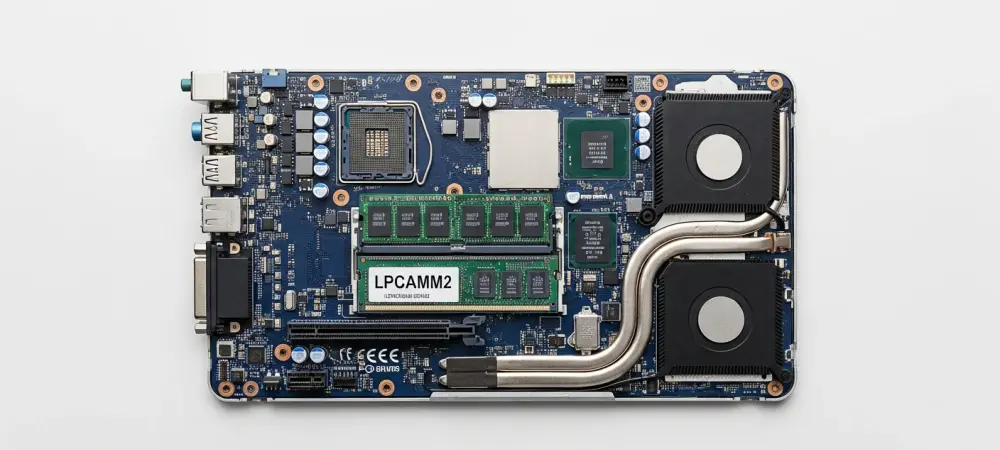
The long-standing conflict between ultra-thin laptop aesthetics and the necessity for user-driven hardware upgrades is finally reaching a definitive resolution. For years, sleek designs meant permanent, soldered memory, but the arrival of LPCAMM2 changes the equation. This technology bridges the gap between high efficiency and repairability, suggesting that thin and light no longer requires a compromise on longevity.
From SO-DIMM to Soldered: Understanding the Memory Evolution
Early portable computers relied on SO-DIMM slots for flexibility, yet these physical connectors eventually hit a performance ceiling. As processors demanded higher frequencies, manufacturers shifted to soldered LPDDR memory to maintain signal integrity and thin profiles. This evolution prioritized battery life and speed at the cost of modularity, making systems essentially disposable once memory needs outpaced original specs.
Breaking the Compromise: Performance and Modularity
Engineering Feat: LPDDR5X and CXMT’s Market Entry
CXMT has now entered the market with LPDDR5X modules reaching 8533 MT/s, proving that modular parts can match the bandwidth of soldered alternatives. With 32 GB capacities, these components power AI-intensive tasks without the bulk of traditional slots. The current integration into consumer devices like the Lenovo ThinkBook proves this is no longer a niche workstation feature.
Bridging the Gap: Modularity vs. Power Efficiency
By utilizing a compression-mount interface, LPCAMM2 maintains the low-power profile required for modern mobility. It sits flat against the motherboard, mirroring the space-saving benefits of permanent chips. This design allows users to upgrade their systems without sacrificing the slim chassis or all-day battery performance they expect.
Overcoming Hurdles: Integration and Market Misconceptions
Adopting this standard requires a complete redesign of motherboard topography and thermal management systems. While players like Micron led early development, the arrival of diverse manufacturers is essential for driving down costs. Diversifying the supply chain will eventually move this technology from premium models to mainstream hardware.
The Road Ahead: Mainstream Adoption and Industry Shifts
Global Right to Repair regulations are forcing a shift away from non-serviceable designs across the tech sector. As AI-capable PCs demand even higher speeds, the industry is moving toward broader adoption by 2027. The economic benefit of using standardized modular parts is becoming a primary driver for major manufacturers.
Navigating the Transition: Guidance for Professionals
Professionals should prioritize the LPCAMM2 designation to ensure their hardware remains competitive as software requirements climb. For businesses, modular memory extends the lifecycle of device fleets, reducing the total cost of ownership. Looking for this standard in upcoming specifications provides a safeguard against early obsolescence.
The Future: Portable Computing Is Modular
The industry recognized that the era of soldered-only designs had reached its limit for high-performance computing. By adopting a modular approach, manufacturers successfully synthesized efficiency with consumer rights. This transition provided a sustainable blueprint that respected both the machine’s power and the owner’s long-term investment.