

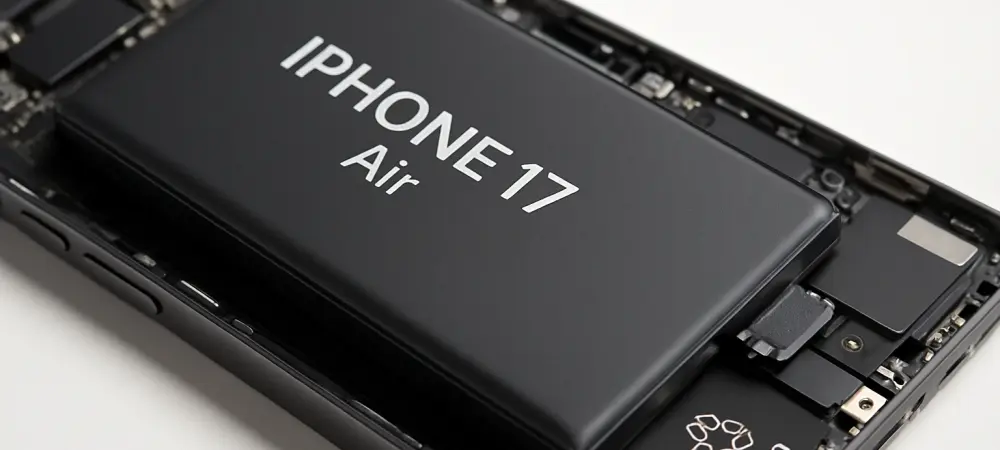
Imagine a smartphone so thin it slips effortlessly into a pocket, yet the question looms—can it keep up with a day’s worth of calls, apps, and streaming without faltering? The iPhone 17 Air, rumored to launch this September, has sparked intense curiosity with its ultra-slim profile, particularly concerning its battery specs. This roundup gathers insights, opinions, and speculation from various tech sources and industry voices to explore whether this sleek design might come at the cost of performance. The purpose here is to sift through the buzz, compare differing perspectives, and provide a balanced view on what consumers might expect from Apple’s latest innovation.
Unpacking the Slim Battery Speculation
The tech community is abuzz with leaks about the iPhone 17 Air’s battery, reportedly measuring a mere 2.49mm in thickness. Shared by a user on a Korean blogging platform, this detail suggests a battery half as thick as that of comparable models in the iPhone lineup. Many enthusiasts express awe at the engineering feat, with some speculating that this could redefine smartphone portability standards. However, a significant portion of online forums highlights a pressing concern—does such a thin component inevitably mean reduced power capacity?
Diving deeper into the numbers, sources point to a capacity of 2,800mAh for this device, a stark contrast to higher capacities seen in other recent iPhone models, which range significantly above this mark. Tech blogs and social media discussions often frame this as a potential drawback, especially for power users who rely on their devices for extended periods. Yet, a few optimistic voices argue that raw capacity isn’t the full story, urging patience until real-world testing reveals the true impact on daily usage.
Apple’s Optimization Prowess: A Saving Grace?
A recurring theme across tech podcasts and review channels is Apple’s storied ability to maximize efficiency through hardware and software synergy. Commentators frequently note that the company has a track record of squeezing impressive endurance from smaller batteries, often outperforming competitors with larger capacities. Speculation about upcoming iOS updates tailored for power management fuels hope that the iPhone 17 Air might defy expectations despite its compact battery.
On the flip side, some industry watchers caution against over-reliance on software fixes. They argue that a smaller battery inherently limits the total energy available, potentially leading to shorter usage times under heavy workloads like gaming or video editing. This divide in opinion underscores a broader tension—whether technological optimization can fully compensate for physical constraints in a device designed for style as much as function.
Rumored Battery Innovations Stir Excitement
Whispers of advanced battery technology have surfaced in various tech newsletters and analyst reports, hinting at high-density solutions that could pack more power into less space. These rumors suggest that Apple might be exploring cutting-edge approaches to offset the slim battery’s limitations, aligning with industry trends toward balancing aesthetics and functionality. Such possibilities have sparked enthusiasm among those who believe this device could set a new benchmark for ultra-thin smartphones.
However, skepticism persists among other observers who question the feasibility of untested tech in a mass-market product. Discussions on platforms frequented by tech insiders often point out that rumored innovations remain unconfirmed, and relying on them to solve capacity issues might be premature. This split highlights a cautious excitement—while the potential for breakthroughs is tantalizing, tangible evidence is still awaited to validate these claims.
Design vs. Durability: Where Do Priorities Lie?
Apple’s design philosophy, often praised for its minimalist and portable focus, is a hot topic in this debate. Many design-focused blogs applaud the push toward sleeker devices, viewing the iPhone 17 Air as a natural evolution of this ethos. They argue that for a segment of consumers, the appeal of a lightweight, unobtrusive phone might outweigh occasional battery concerns, especially in an era of ubiquitous charging options.
Contrastingly, user feedback on tech forums frequently emphasizes practicality, with many expressing a preference for all-day battery life over a thinner profile. Some voices in the community speculate that prioritizing style could alienate users who value performance above all. This clash of priorities raises a fundamental question about whether the industry’s drive for thinness might be outpacing the demand for reliable, long-lasting power.
Key Takeaways from the Tech Community
Synthesizing these perspectives, it’s clear that the iPhone 17 Air’s 2.49mm battery and 2,800mAh capacity have ignited a polarized discussion. While some corners of the tech world marvel at the design innovation and trust in Apple’s ability to optimize performance, others remain wary of the practical trade-offs. The possibility of new battery tech adds a layer of intrigue, though doubts linger until official details or hands-on reviews emerge.
Another insight gleaned from this roundup is the diversity in consumer needs—style-driven buyers may embrace the slim form factor, while power users might hesitate. This split opinion mirrors broader debates about what defines a premium smartphone in today’s market, where form and function often compete for dominance. The community’s mixed reactions reflect a wait-and-see attitude, with many eager for concrete data over speculation.
Reflecting on the Debate and Next Steps
Looking back, the discourse around the iPhone 17 Air’s battery captures a fascinating intersection of innovation and concern within the tech sphere. Voices across the spectrum weighed in, from those championing Apple’s design boldness to others who prioritized uncompromised performance. The split in sentiment underscores how deeply personal smartphone preferences have become, shaped by individual lifestyles and expectations. For those intrigued by this upcoming release, a practical next step would be to monitor credible tech announcements and early user reviews following the launch. Potential buyers might also assess their daily usage patterns—whether a slim design aligns with their needs or if battery longevity remains non-negotiable. Staying engaged with evolving leaks and industry updates can further inform decisions, ensuring a well-rounded perspective as more details unfold.