

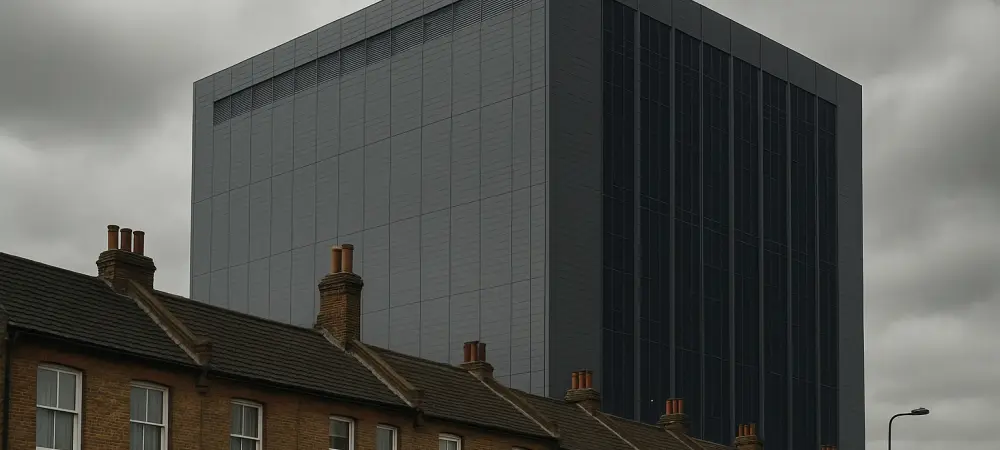
London is currently facing a fundamental urban planning dilemma as the urgent demand for AI-ready data centers clashes with the city’s critical shortage of affordable residential space. As the metropolis pivots toward a future dominated by generative artificial intelligence and high-speed cloud computing, the physical footprint of the internet is expanding into areas once reserved for urban regeneration and housing. A specific flashpoint has emerged in the Charlton Riverside area of Southeast London, where a proposal for a massive one-million-square-foot data center has ignited a fierce debate among local residents, government officials, and tech developers. This site, long earmarked for residential development to ease the city’s housing crisis, now stands as a symbol of the tension between technological progress and the basic human need for shelter. The decision made here will likely set a precedent for how global cities balance their digital ambitions with the well-being of their inhabitants, making it a critical case study for urban planners worldwide in the coming decade.
The Competition Between Economic Hubs and Housing
Proponents of the Charlton Riverside facility argue that the project is not merely an industrial warehouse but a cornerstone of the modern digital economy. With the recent designation of data centers as Critical National Infrastructure, these buildings are now viewed by the government as being as vital as power plants or water treatment facilities. The developers behind the 100,000-square-meter proposal suggest that the site, currently occupied by Stone Foundries and various logistics buildings, is a disorganized industrial patch that contributes little to the local economy. By transforming it into a high-tech hub, they claim they can stimulate growth, provide high-skilled jobs, and even fund necessary infrastructure improvements. Specifically, the project includes plans for road upgrades and green spaces that developers argue would actually facilitate the viability of surrounding housing projects. In this view, the data center is a catalyst that provides the connectivity and infrastructure required for a truly modern, functional community to thrive in 2026.
Conversely, the Greenwich Council and local community advocates see the data center as a significant setback to their long-term vision for the Riverside area. For years, the council has worked on a master plan to deliver approximately 8,000 new homes, aiming to transform the waterfront into a vibrant residential neighborhood. To local officials, every square foot dedicated to server racks is a square foot taken away from a family in need of affordable housing. Many residents currently live in overcrowded conditions, and the promise of a windowless industrial block offers no relief for those struggling with the city’s skyrocketing rents and property prices. Critics argue that while the tech industry claims to create jobs, a facility of this scale often employs relatively few people once construction is complete compared to the mixed-use residential developments originally envisioned. For the people of Greenwich, the trade-off between hosting the cloud and housing the population feels increasingly lopsided and unfair.
Concerns Over Resources and Community Impact
Beyond the debate over land use, the staggering consumption of electricity and water by these facilities has become a primary point of concern for environmentalists and local residents alike. Keeping thousands of high-performance servers cool requires a massive amount of water, often totaling billions of liters annually across the nation’s data center network. While industry representatives from companies like Telehouse point out that their water usage is a tiny fraction compared to the three billion liters lost daily due to leaking utility pipes, the local impact remains a point of contention. Residents worry that a facility of this magnitude will place an unsustainable strain on a local power grid that is already struggling to meet the demands of an electrifying city. The sheer volume of resources needed to sustain 24-hour AI processing is difficult for many to reconcile with the city’s broader sustainability goals. Without clearer transparency and more efficient cooling technologies, the public remains skeptical about the true environmental cost of their digital lives.
The environmental footprint of a data center is not just measured in resource consumption but also in the tangible impact on the daily lives of those living nearby. A major concern for Charlton Riverside neighbors is the persistent noise generated by industrial-scale cooling fans and backup generators that must operate around the clock to prevent system failures. Even with the most advanced noise-dampening technology and acoustic barriers, the low-frequency hum of a one-million-square-foot facility can be pervasive in a residential setting. Operators emphasize their shift toward closed-loop water systems and silent cooling technologies, yet the reality of living adjacent to a high-intensity industrial site is a daunting prospect for many. This friction highlights a growing disconnect between the invisible nature of digital services and the very visible infrastructure required to support them. As London continues to densify, finding ways to mitigate these sensory impacts is becoming a crucial hurdle for developers seeking to integrate tech into the urban fabric.
Global Connectivity and National Regulation
From a broader economic perspective, maintaining London’s status as a premier global hub for finance and technology requires a rapid expansion of its digital infrastructure. The rise of AI applications necessitates lower latency, which means data centers must be physically located as close as possible to the businesses and consumers they serve. Industry experts argue that if London fails to provide the space for these facilities, it risks losing its competitive edge to other European or global cities that are more accommodating to tech giants. Mark Pestridge and other industry leaders emphasize that the acceleration of AI technology has created an unprecedented demand that the current infrastructure simply cannot meet. They advocate for a more streamlined planning process that recognizes the strategic importance of these sites for the national economy. In this context, the Charlton Riverside project is seen as an essential component of a larger national strategy to lead the global technological shift, ensuring that the city remains at the forefront. The UK government eventually established a more nuanced regulatory framework that sought to balance the needs of the tech industry with the housing rights of local citizens. Rather than granting developers a blank check for expansion, officials mandated that all new data center projects incorporate significant public benefits, such as district heating systems that recycle waste heat for local homes. This approach encouraged a more collaborative planning process where technological infrastructure was integrated into the community rather than isolated from it. Planners focused on identifying brownfield sites that were less suitable for high-density residential use, thereby reducing the direct competition for prime housing land. Future developments were required to demonstrate a net-positive impact on local resources through the implementation of advanced water recycling and onsite renewable energy generation. By shifting the focus toward dual-purpose infrastructure, the city began to resolve the land-use dilemma.