

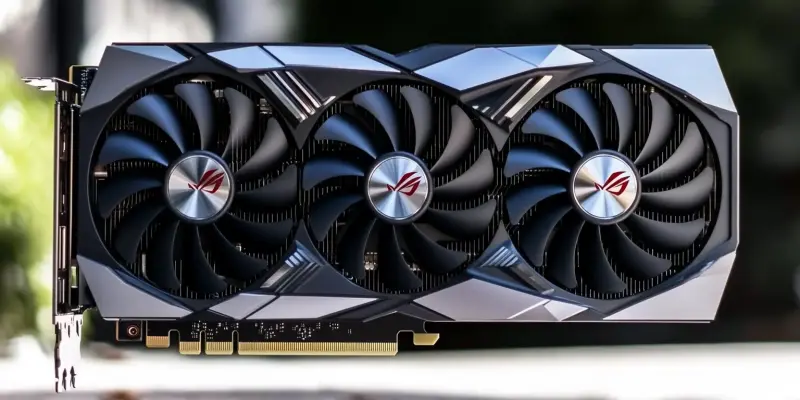
The highly anticipated competition between AMD’s Radeon RX 9070 XT and NVIDIA’s RTX 5070 Ti has tech enthusiasts wondering which company will come out on top in the mid-range graphics card market. With both companies vying for dominance, AMD has shown strategic planning in the development and release of their RX 9070 XT and RX 9070 GPUs, part of the RDNA 4 lineup. Initially planned to be priced at $899 for the RX 9070 XT and $749 for the RX 9070, AMD’s launch has faced several delays, now expected in March. The delays are due to AMD’s efforts to optimize the software stack and better strategize against NVIDIA’s RTX 50 series, particularly the RTX 5070 Ti and RTX 5070, priced at $749 and $549 respectively.
Initial Pricing and Strategic Delays
Originally, a Bulgarian retailer revealed the initial pricing during a YouTube video showcasing the PowerColor Red Devil Radeon RX 9070 XT, suggesting that AMD’s early pricing might have been unrealistic given the performance comparisons with the existing RX 7900 XT. This revelation has led to concerns that AMD’s pricing might need adjustments to remain competitive. Furthermore, industry insider Frank Azor hinted that AMD’s “70-class” cards, especially the RX 9070 series, are designed to compete directly with NVIDIA’s similar tier GPUs, causing speculation that final prices might align more competitively below the $700 mark.
In light of early leaks showing a $529 price tag for a Gigabyte edition of the RX 9070 XT, it becomes evident that the prices are subject to change based on market conditions and competitive responses. The overarching trend indicates AMD aims to strategically price these GPUs in response to NVIDIA’s offerings while making the necessary software stack optimizations. Retailers and board partners have the inventory ready, but official sales are on hold until AMD finalizes their strategy, likely in March.
Competing Against NVIDIA’s RTX 5070 Ti
When evaluating whether AMD’s Radeon RX 9070 XT will compete effectively against NVIDIA’s RTX 5070 Ti, it’s crucial to consider performance, optimization, and pricing strategies. While performance benchmarks and real-world testing will ultimately determine the answer, AMD’s focus on software stack optimizations indicates a commitment to maximizing the potential of their GPUs. Pricing will play a significant role in their competitive strategy, as early price points have shown the need for adjustments to enhance market competitiveness.
AMD’s early pricing strategy, although initially perceived as advantageous, might have been premature without a comprehensive understanding of NVIDIA’s competitive landscape. This realization has led to speculation that AMD could reposition its GPUs to provide better value for money, potentially undercutting NVIDIA on price. Given that both RX 9070 series’ hardware and software optimizations are aimed at gaining a foothold within a specific market tier, AMD’s delayed launch might allow for a more competitive positioning and alignment with market demands.
Expected Outcomes and Competitive Landscape
The eagerly awaited showdown between AMD’s Radeon RX 9070 XT and NVIDIA’s RTX 5070 Ti has tech enthusiasts buzzing about which company will dominate the mid-range graphics card market. Both giants are vying for supremacy, with AMD strategizing meticulously for the development and unveiling of their RX 9070 XT and RX 9070 cards, part of the RDNA 4 series. Initially, AMD planned to price the RX 9070 XT at $899 and the RX 9070 at $749. However, their release has encountered multiple delays, now anticipated for March. These delays stem from AMD’s determination to optimize their software stack and refine their strategy against NVIDIA’s RTX 50 series, particularly the RTX 5070 Ti and RTX 5070, which are priced at $749 and $549 respectively. The competition between these two tech giants is ramping up, making it an exciting time for consumers looking for high-performance, mid-range graphics solutions.