

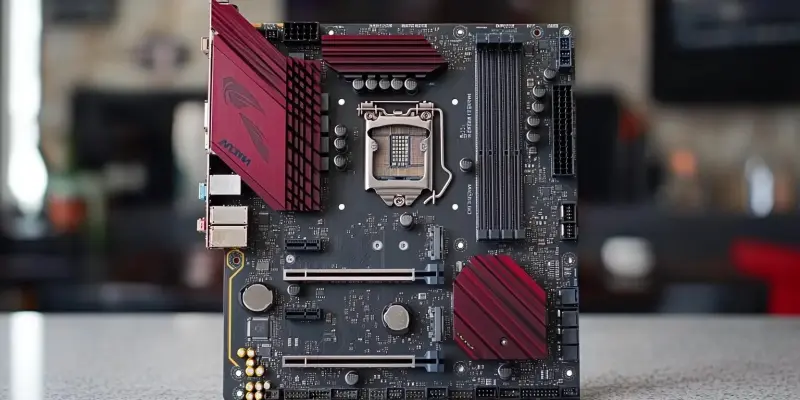
In a striking revelation, leaks have emerged detailing several new Gigabyte and ASUS AMD B850 and B840 motherboards, poised for release around early 2025. These new entries in the AM5 lineup promise to enhance the current selection of X870/X870E motherboards that were initially released alongside the Ryzen 9000 CPUs. With a total of eight motherboard models unveiled, anticipation is building for what these innovations will bring to gamers and tech enthusiasts alike. This comprehensive leak hints at significant advancements in motherboard technology aimed at various market segments, ensuring an exciting future for AMD’s hardware portfolio.
ASUS’s New Offerings
ASUS ROG Strix B850-A Gaming WiFi
The ASUS ROG Strix B850-A Gaming WiFi model stands out among the newly leaked motherboards, catering to gamers who seek mid-range functionality with a flair for aesthetics. This model features a white PCB paired with stylish RGB integration, ensuring not only powerful performance but also a visually striking addition to any gaming setup. Equipped with Gen 5 and Gen 4 PCI-E and M.2 slots, the ROG Strix B850-A Gaming WiFi is suitable for those seeking robust connectivity options alongside high-speed data transfer capabilities.
Wireless connectivity is another standout feature, with WiFi capabilities that ensure gamers remain connected without the hassle of wired connections. These features collectively make the ROG Strix B850-A Gaming WiFi a strong contender for mid-range gaming builds, promising both performance and aesthetic appeal. The attention to detail in design and functionality underscores ASUS’s commitment to delivering products that meet a wide array of gaming and productivity needs.
ASUS TUF Gaming B850-Plus WiFi
For those seeking a more rugged and durable solution, the ASUS TUF Gaming B850-Plus WiFi motherboard offers a compelling option. Featuring an all-black PCB design, the TUF Gaming B850-Plus WiFi emphasizes durability and reliability, essential qualities for gaming rigs subject to intensive use. This model, like its ROG Strix counterpart, comes with Gen 5 and Gen 4 slots, making it a versatile choice for various hardware components, ensuring future-proofing for upcoming advancements in PCI-E hardware.
The integration of WiFi capabilities enhances its appeal, providing consistent and reliable wireless connectivity. The TUF Gaming B850-Plus WiFi is designed with long-term performance in mind, standing up to the rigorous demands of dedicated gamers and users who need steadiness in their computing experiences. This focus on resilience and capability makes it an ideal option for users whose needs go beyond mere aesthetics.
Gigabyte’s Array of Models
Gigabyte B850 AORUS Elite WiFi 7
Among Gigabyte’s new releases, the B850 AORUS Elite WiFi 7 captures attention with its two distinct color themes, black and white. These mid-range motherboards are designed to cater to a broad audience of gamers and tech enthusiasts who require both dependability and performance. The WiFi 7 integration ensures cutting-edge wireless connectivity, making it suitable for users who need fast and reliable internet connections for gaming or professional workloads.
Both variations of the AORUS Elite WiFi 7 come with Gen 5 PCI-E slots, ensuring high-speed data transfers and compatibility with next-gen GPUs and storage solutions. The inclusion of multiple M.2 slots further enhances the board’s appeal, providing ample options for expanding storage without sacrificing speed or efficiency. The AORUS Elite models exemplify Gigabyte’s commitment to delivering high-quality hardware that caters to the evolving needs of its user base.
Gigabyte B850I AORUS PRO
Gigabyte continues to diversify its offerings with the B850I AORUS PRO, a compact motherboard that does not compromise on performance or features. This mini-ITX board is tailored for builds where space is at a premium but high performance is still a necessity. Despite its smaller footprint, the B850I AORUS PRO is equipped with Gen 5 PCI-E slots and multiple M.2 slots, making it an excellent choice for compact yet powerful gaming or professional machines.
Wireless connectivity is also a strong focus for this model, with integrated WiFi capabilities ensuring that users can maintain stable and fast internet connections even in limited spaces. The B850I AORUS PRO exemplifies how innovative design can accommodate high performance in a smaller form factor. Gigabyte’s ability to pack substantial power and connectivity into a compact board ensures that users have versatile options, irrespective of their building constraints or spatial limitations.
Gigabyte B850 EAGLE WiFi6E and B850 GAMING WiFi6
Targeting the budget-conscious segment, Gigabyte introduces the B850 EAGLE WiFi6E and the B850 GAMING WiFi6 models, which emphasize affordability without sacrificing crucial features. While these models integrate older WiFi standards, they still promise reliable wireless performance ideal for users not requiring the absolute latest in connectivity technology. The B850 EAGLE WiFi6E, with a more sophisticated design, is aimed at users who desire aesthetically pleasing yet cost-effective boards.
Conversely, the B850 GAMING WiFi6 focuses on providing fundamental gaming features at an attractive price point. Both models are equipped with Gen 4 PCI-E slots, offering solid performance for various hardware components and ensuring that users can still expect speedy data transfer rates and compatibility with a wide range of peripherals. These models underscore Gigabyte’s ability to deliver economical yet capable solutions, catering to diverse preferences and budgetary constraints.
Industry Implications and Future Outlook
Diverse Product Lineup
The diverse array of leaked motherboards from both ASUS and Gigabyte signals a clear trend towards specialization and catering to different user bases, from high-end gamers demanding top-tier performance to budget-conscious consumers seeking reliable yet affordable options. This strategic diversification allows both companies to address the varied needs of their customers effectively. By offering motherboards with varying levels of performance, aesthetic appeal, and connectivity options, both ASUS and Gigabyte can maintain a strong foothold in the competitive motherboard market.
This extensive lineup also hints at a broader industry trend where manufacturers need to offer a wide range of products to stay relevant and meet growing consumer demands. As new technologies and gaming requirements evolve, having a flexible product range ensures that companies like ASUS and Gigabyte can quickly adapt to changing market dynamics. This flexibility is crucial for maintaining competitive parity with industry giants like Intel and NVIDIA, whose hardware developments continue to set high standards in the tech world.
Anticipation for 2025 Launch
In an exciting turn of events, leaks have surfaced revealing several new Gigabyte and ASUS AMD B850 and B840 motherboards, scheduled for release around early 2025. These forthcoming additions to the AM5 lineup are set to enhance the current offering of X870 and X870E motherboards, which debuted with the Ryzen 9000 CPUs. A total of eight new motherboard models have been unveiled, sparking significant anticipation for the innovations they promise to bring to gamers, tech enthusiasts, and professionals in the computing world. These comprehensive leaks suggest remarkable advancements in motherboard technology, tailored to cater to various market segments, from entry-level options to high-end models. This development underscores a thrilling future for AMD’s hardware portfolio, which continues to push the boundaries of performance and capability. As the tech industry eagerly awaits these new releases, it’s clear that AMD aims to cement its position at the forefront of motherboard technology, promising robust support and superior experiences for an increasingly discerning customer base.